
Territorial organization of the People's Republic of China
Territorial Organization of China |
Level province Municipality Province Autonomous region Special region |
Subprovince level City-subprovince Subprovincial Autonomous Prefecture Subprovincial district |
Prefectural level Prefecture City-prefecture Autonomous Prefecture League |
City level City-subprefecture |
County level County Autonomous county City-distrito Ethnic district City-condado City-subprefecture Flag Autonomous flag Forest district Special district |
Level of people Subdistrict Population Ethnic population Sumu Villa Ethnic village Ethnic County District |
Village level Village Committee Neighborhood Committee |
Command (abolited) |
Due to the large population and area of China, the territorial organization or political-administrative division of the country has consisted of various levels since ancient times. The current Constitution of the People's Republic of China provides, de jure, for three levels of government:
- Article Nro. 30
- The administrative division of the People ' s Republic of China is as follows:
- (1) The country is divided into provinces, autonomous regions and municipalities that depend directly on the Central Government;
- (2) Autonomous provinces and regions are divided into autonomous prefectures, counties, autonomous counties and cities; and
- (3) Autonomous counties and counties are divided into municipalities, municipalities of nationality and cities.
- Municipalities that directly depend on the Central Government and other major cities are divided into districts and counties. Autonomous prefectures are divided into counties, autonomous counties and cities.
- All autonomous regions, autonomous prefectures and autonomous counties are national autonomous areas.
Constitution of the People ' s Republic of China
Though currently in practice (de facto) there are five levels of government: province, prefecture, county, town and village.
Since the 17th century in China, provincial boundaries have remained largely unchanged. The main changes since then have been the reorganization of the provinces in the northeast after the creation of the People's Republic of China and the formation of autonomous regions, which have been inspired by the ethnic policies implemented in the former Soviet Union. Provinces play an important cultural role in China, as people tend to identify with their home province.
Levels of territorial organization
As previously mentioned, the Constitution of the People's Republic of China officially provides that the country is organized into three levels. However, in the actual application, two more levels have been inserted: the prefecture, in the provinces, and the people, in the municipalities (There is a sixth level, the district public office, below the counties, but it is being each level corresponds to a level in the Civil Service of the People's Republic of China).
Thus, the provincial, district and cantonal levels are made more flexible to adapt to the ethnic or economic particularities of the territory: the autonomous regions, autonomous prefectures and autonomous districts are divisions of 1.er or 2nd level inhabited by the 55 minority ethnic groups that enjoy their own autonomy to make specific laws. The municipalities of Beijing, Tianjin, Shanghai and Chongqing include some of the largest cities in the world and are under direct administration. Finally, the former European colonies of Hong Kong and Macao maintain great autonomy as special administrative regions, retaining their own economic and judicial system, in addition to many characteristics of independent states, such as their own currency, Internet domain, telephone code, flag etc Under this model, Taiwan is considered one of the 23 provinces of the People's Republic of China, although in practice the island is independent, and has been administered by the regime of the Republic of China (Taiwan) since the end of the civil war in 1949..
Table
| Structural hierarchy of the basic administrative divisions and autonomy of the People ' s Republic of China | ||||
|---|---|---|---|---|
| Provincial level (1°)laundering | Prefectural level (2°)▪ | County level (3°)级 bold passage | People ' s level (4°)乡 乡 乡 乡 乡 乡 乡 乡 乡 。 | Village level (5°)أعربية |
| Autonomous region
| Sub-provincial Autonomous Prefecture ▪ refinement innovation | District Ø ♫ ♫ City-condado 级 bold County Self-contained Flag Autonomous flag | Subdistrict 简体字 繁體字 繁體字 繁體字 繁體字 Русский 简体 简体 简体 简体 简体 简体 简体 简体 简体 简体 简体 简体 简体 简体 简体 / . Population ▪Villa . Ethnic village ▪ County District Sumu ENDEthnic ▪ | Neighborhood Committee . / . Village Committee ♫ / Gaqa 查 |
| City-prefecture أعربية | ||||
| Autonomous Prefecture bundling Prefecture ##League ▪ | ||||
| Province
Remembrance | ||||
| Sub-provincial City مع مع مع مع مع مع مع مع مع مع م م م م م م م م م م م | District Ø ♫ ♫ Special district ▪City County 级 bold County Self-contained | |||
| Prefectural City أعربية | ||||
| Autonomous Prefecture bundling Prefecture ## | ||||
| City of sub-prefecture level | ||||
| Forest district sourcing | ||||
| Municipality
Русский | New sub-provincial area ‐ ‐ ‐ ‐ ‐ ‐ ‐ ‐ ‐ ♫ ♫ ♫ ♫ ♫ ♫ ♫ ♫ ♫ ♫ ♫ ♫ ♫ ♫ ♫ ♫ ♫ ♫ ♫ ♫ ♫ ♫ ♫ ♫ ♫ ♫ ♫ ♫ ♫ ♫ ♫ ♫ ♫ ♫ ♫ ♫ ♫ ♫ ♫ ♫ ♫ ♫ ♫ ♫ ♫ ♫ ♫ ♫ ♫ ♫ ♫ ♫ ♫ ♫ ♫ ♫ ♫ ♫ ♫ ♫ ♫ ♫ ♫ ♫ ♫ ♫ ♫ ♫ ♫ ♫ ♫ ♫ ♫ ♫ ♫ ♫ ♫ ♫ ♫ ♫ ♫ ♫ ♫ ♫ ♫ ♫ ♫ ♫ ♫ ♫ ♫ ♫ ♫ ♫ ♫ ♫ ♫ ♫ ♫ ♫ ♫ ♫ ♫ ♫ ♫ ♫ ♫ ♫ ♫ ♫ ♫ ♫ ♫ ♫ ♫ ♫ ♫ ♫ ♫ | |||
| District Ø ♫ ♫ | ||||
| County | ||||
| Special administrative region
of the United Nations addressed to the Secretary-General(Part of One Country. Two Systems) | Region ♪ (informal) | Districts ・ | ||
| Office of Civic and Municipal Affairs מוווווווה Municipalities. (informal) | Freguesia _ (informal) | |||
Provincial level (1st)
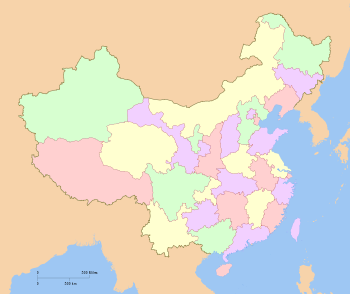


There are 34 provincial-level territories in the People's Republic of China: 23 provinces (22 without Taiwan), 4 municipalities, 5 autonomous regions, and 2 special administrative regions. The five autonomous regions are associated with the five largest ethnic minorities: the Tibetans, the Uyghurs, the Mongols, the Hui, and the Zhuang. The metropolitan areas of the four cities of Beijing, Tianjin, Shanghai and Chongqing have a rank similar to the provincial one, constituting the so-called municipalities under direct administration of the central government. Lastly, the former European colonies of Hong Kong and Macao. The People's Republic of China also considers Taiwan as one more province, although in practice the island is an independent state, officially recognized by 25 countries in the world that do not recognize the People's Republic of China (see Political Status of Taiwan).
Most of China's provinces, except those in the Northeast, have boundaries established during the Yuan, Ming, or Qing dynasties. Provincial borders often differ substantially from the borders of cultural or geographic areas, due to the technique described as "dog tooth parting" (in Chinese, 犬牙交错; pinyin, quǎnyájiāocuò) developed by the imperial government to prevent feudalism and separatism in accordance to the idea of divide and conquer. Even so they have come to play an important cultural role, people tend to identify slightly with their birth and each one has developed a corresponding stereotype of its inhabitants.
The most recent administrative changes have been the elevation of Hainan (1988) and Chongqing (1997) to the provincial level (as a province and a municipality, respectively), as well as the incorporation to this level of Hong Kong (1997) and Macao (1999), as Special Administrative Regions.
The following is a list of all the provincial level divisions along with the name in sinograms, the map that appears at the beginning of the article on the right also corresponds to the provincial level.
Provincial level subdivisions
| 22 provinces (Remembrance; shěng): A standard provincial government is nominally headed by a provincial committee headed by a secretary. The committee secretary is the first head of the province, and the second is the governor of the provincial government. |
| 5 autonomous regions (; zìzhìqū): A minority subject that has a larger population of a particular ethnic minority group together with its own local government, but an autonomous region has theoretically more legislative rights than in practice. The governor of the Autonomous Regions is usually appointed from the respective minority ethnic group. |
| 4 municipalities (Русский; zhíxiáshì): A higher-level city that depends directly on the Chinese government, with a status equal to that of the provinces. In practice, their political status is superior to that of the common provinces. |
| 2 special administrative regions (RAE) (Facilitation/▪; tèbié xíngzhèngqū): Highly autonomous and self-managed subnational subject of the People ' s Republic of China. Each RAE has an executive head as head of the region and head of government. The RAE government is not entirely independent, since foreign policy and military defense are the responsibility of the central government, according to the Basic Laws of the two RAE. |
| 1 claimed province:أعربية; shēngchēng shěngfèn): The People ' s Republic of China claims the island of Taiwan and its surrounding islets, including Penghu, as the province of Taiwan. (The People's Republic of China claims Kinmen and the Matsu Islands as part of its Fujian province. Pratas and Itu Aba are claimed by the RPC as part of the provinces of Guangdong and Hainan, respectively). The territory is controlled by the Republic of China (ROC, commonly called "Taiwan"). |
Prefecture level (2nd)
The prefectural or second level divisions are the second level of the administrative structure. Most of the provinces are divided only into prefectural-level cities and do not contain other second-level administrative units. Of the 22 provinces and 5 autonomous regions, only 3 provinces (Yunnan, Guizhou, Qinghai) and 1 autonomous region (Xinjiang) have more than three second-level or prefecture-level divisions that are not prefecture-level cities. As of June 2020, there were 339 prefecture-level divisions:
| 7 prefectures (##; dìqū): formerly the second-level dominant division, so this administrative level is often called "prefecture level". From 1983 until the 1990s they were replaced mostly by prefectural cities. Currently, there are only prefectures in Heilongjiang, Tibet and Xinjiang. |
| 30 autonomous prefectures (bundling; zìzhōu): Prefectures with one or more designated ethnic minorities, especially in the western regions of China. |
| 299 Prefectural level cities (أعربية; dìjíshì): the largest number of prefectural divisions, usually composed of an urban centre and surrounding rural areas much larger than the urban nucleus and, therefore, are not "city" but municipalities in the strict sense of the term |
| 3 leagues (▪; méng): They are the same as prefectures, but they are only found in the interior Mongolia. Like the prefectures, the leagues have been replaced mostly by cities at the prefecture level. The unique name is a remnant of the previous forms of administration in Mongolia. |
County level (3rd)
As of August 18, 2015, there were 2,852 divisions at the county level:
| 1,408 counties ( ; xiàn): the most common divisions at the county level, which exist continuously since the period of the Guerrero States, long before any other level of government in China. Xiàn is often translated as "distrito" or "prefecture". |
| 117 autonomous counties (; zìzhìxiàn): counties with one or more designated ethnic minorities, similar to regions and autonomous prefectures. |
| 360 county-level cities (级 bold; xiànjíshì): similar to prefectural-level cities, covering both urban and rural areas. In the 1990s, counties became county-level cities, although this has stopped. |
| 913 districts (♪♪♪; shìxiáqū / qū): formerly the urban subdivisions, which consisted only in built areas. Recently, many counties have become districts, so now districts are often like counties, with cities, towns and farmlands. |
| 49 flags ( ; qí): the same as counties, except in the name, a remnant of previous forms of administration in Mongolia. |
| 3 autonomous flags (; zìzhíqí): the same as autonomous counties except in the name, a vestige of previous forms of administration in Mongolia. |
| 1 forest area (sourcing; Benin): a special county-level forest district located in Hubei province. |
| 1 special district (▪; tèqū): a special division at county level located in the province of Guizhou. |
Village level (4th)
| 13,749 villages (.; xiāng): smaller rural areas are divided into this unit |
| 1,098 ethnic villages (▪; minzúxiāng): small divisions of rural areas designated for one or more ethnic minorities are divided into this unit |
| 19,322 Towns (▪; zhèn): division of larger rural areas is divided into this unit |
| 6,686 sub-districts (简体字 繁體字 繁體字 繁體字 繁體字 繁體字 Русский; jiēdào / jiē): small urban divisions are divided into this unit |
| 2 county districts ( ; xiànxiáqū): they are a level of vestigeal government. In the past they represented an additional level of government between the county and the municipality. Today there are very few left and are gradually being eliminated. |
| 181 sumus (END; sūmù) are the same as the municipalities, but they are exclusive of Mongolia Interior. |
| 1 ethnic sumus (▪; mezúsūmù) are the same as the ethnic municipalities, but they are unique to the interior Mongolia. |
Village level (5th)
Basic level or village level autonomy serves as an organizational division (census, mail system) and does not have much importance in representative political power. Basic local divisions, such as neighborhoods and communities, are not informal as in the United States, but have defined boundaries and elected chiefs (one per zone):
In urban areas, each sub-district of a city district administers many residential communities or committees. Each of them has a residential committee to manage the inhabitants of that neighborhood or community. Rural areas are organized into village committees or groups of villagers. A "village" in this case it can be a natural village, which exists spontaneously and naturally, or a virtual village, which is a bureaucratic entity.
| 80.717 neighbourhood committees (NERSHIP; jūmínwěiyuánhu)
Residential groups (▪; jūmínxiăoz) |
| Communities (buck; shèqū / shè) |
| 623.669 Village Committees (▷✅; cūnmínwěiyuánhu)
Village groups (⋅; cūnmínÄ⁄4⁄4⁄4⁄4⁄4⁄4⁄4⁄4⁄4⁄4⁄4⁄4⁄4⁄4⁄4⁄4⁄4⁄4⁄4⁄4⁄4⁄4⁄4⁄4⁄4⁄4⁄4⁄4⁄4⁄4⁄4⁄4⁄4⁄4⁄4⁄4⁄4⁄4⁄4⁄4⁄4⁄4⁄4⁄4⁄4⁄4⁄4⁄4⁄4⁄4⁄4⁄4⁄4⁄4⁄4⁄4⁄4⁄4⁄4⁄4⁄4⁄4⁄4⁄4⁄4⁄4⁄4⁄4⁄4⁄4⁄4⁄4⁄4⁄4⁄4⁄4⁄4⁄4⁄4⁄4⁄4⁄4⁄4⁄4⁄4⁄4⁄4⁄4⁄4⁄4⁄4⁄4⁄4⁄4⁄4⁄4⁄4⁄4⁄4⁄4⁄4⁄4⁄4⁄4⁄4⁄4⁄4⁄4⁄4⁄4⁄4⁄4⁄4⁄4⁄4⁄4⁄4⁄4⁄4⁄4⁄4⁄4⁄4⁄4⁄2) |
Special cases
Five formally prefectural-level cities have special planning and budget status. They appear separately in the five-year and annual state plans at the same level as provinces and national ministries, making them financially independent from their provincial government. These specifically designated cities in the state plan (Chinese: 计划单列市) are
- Dalian (Liaoning)
- Ningbo (Zhejiang)
- Qingdao (Shandong)
- Shenzhen (Guangdong)
- Xiamen (Fujian)
In terms of budgetary authority, its governments have the de facto status of a province, but its legislative bodies (National People's Congress and Chinese People's Political Consultative Conference) and other non-economic authorities are at the level of a province. prefecture and under the leadership of the province.
Other large prefecture-level cities, known as sub-provincial cities, are half a level below a province. The mayors of these cities have the same rank as the lieutenant governor of a province, and their district governments have half the rank higher than those of normal districts. The capitals of some provinces (seat of the provincial government) are sub-provincial cities. In addition to the five cities specifically designated in the state plan, the sub-provincial cities are:
- Harbin (Heilongjiang)
- Changchun (Jilin)
- Shenyang (Liaoning)
- Jinan (Shandong)
- Nanjing (Jiangsu)
- Hangzhou (Zhejiang)
- Guangzhou (Guangdong)
- Wuhan (Hubei)
- Chengdu (Sichuan)
- Xi'an (Shaanxi)
The case of some county cities is similar. Some county cities have more autonomy. These cities are known as sub-prefectural cities, which means they are given a level of power higher than a county, but still lower than a prefecture. These cities are also half a level higher than they normally would be. Sub-prefectural level cities are usually not integrated into any prefecture (that is, they are directly administered by their province). Some examples of sub-prefecture level cities are Jiyuan (Henan), Xiantao, Qianjiang and Tianmen (Hubei), Golmud (Qinghai), Manzhouli (Inner Mongolia), Shihanza, Tumushuk, Aral, and Wujiaqu (Xinjiang).
Some districts are also sitting half a level higher than they should be. Examples of this are Pudong (Shanghai) and Binhai (Tianjin). Although its status as a district of a municipality would define it as prefecture-level, the district chief of Pudong has sub-provincial powers. That is, it is half a level above what would normally correspond to it.
Subdivisions in special cases
| 1 sub-provincial autonomous prefecture (▪ refinement innovation; fùshěngjízìzhōu) |
| 15 sub-provincial cities (مع مع مع مع مع مع مع مع مع مع م م م م م م م م م م م; fùshěngjíchénghi) |
| 2 new sub-provincial areas (‐ ‐ ‐ ‐ ‐ ‐ ‐ ‐ ‐ ♫ ♫ ♫ ♫ ♫ ♫ ♫ ♫ ♫ ♫ ♫ ♫ ♫ ♫ ♫ ♫ ♫ ♫ ♫ ♫ ♫ ♫ ♫ ♫ ♫ ♫ ♫ ♫ ♫ ♫ ♫ ♫ ♫ ♫ ♫ ♫ ♫ ♫ ♫ ♫ ♫ ♫ ♫ ♫ ♫ ♫ ♫ ♫ ♫ ♫ ♫ ♫ ♫ ♫ ♫ ♫ ♫ ♫ ♫ ♫ ♫ ♫ ♫ ♫ ♫ ♫ ♫ ♫ ♫ ♫ ♫ ♫ ♫ ♫ ♫ ♫ ♫ ♫ ♫ ♫ ♫ ♫ ♫ ♫ ♫ ♫ ♫ ♫ ♫ ♫ ♫ ♫ ♫ ♫ ♫ ♫ ♫ ♫ ♫ ♫ ♫ ♫ ♫ ♫ ♫ ♫ ♫ ♫ ♫ ♫ ♫ ♫ ♫ ♫ ♫ ♫ ♫ ♫ ♫; fùshěngjíchéngshìxiáqū) |
| 8 sub-prefecture cities (; fùdìjíti) |
Contenido relacionado
Abandonment of nuclear energy
Francisco Pascasio Moreno
UKUSA
Anarchocapitalism
Nobel Peace Prize