
Sole

The sole is the part of the shoe that is generally made of a more resistant material than the shoe itself. It serves to protect the sole of the foot and provide traction and greater friction to prevent falls. The soles can be of different shapes depending on the shoe, providing different characteristics for each one. A clear example of this is a skating shoe, which has greater friction and, on the contrary, in a ballet shoe it is softer.
Classification by type of material

.jpg)
We must not forget that there are shoes for every occasion and that not because they are lighter or more comfortable are they suitable and adapted to our needs.
- Example 1: to play football it is recommended to use a sole that does not slip
- Example 2: ballet shoes should be comfortable and flexible, almost without sole.
Soles can be classified according to the material from which they are made:
- PVC floors — are the soles whose material is basically made up of Vinyl Polychloride resin (PVC) and DOP Di-Octilphtalte. Characteristics: are relatively heavy soles compared to other materials.
- Floors in expanded materials. These soles are composed of P.V.C or T.R. differ in that they have one or more components that allow to expand these materials (such as the Spancel or CelogenAnd so the sole weighs less. In some cases the resistance to abrasion is diminished.
- Polyurethane (PU) — are the soles whose material is composed of the mixture of two components Polyol and Isocianato, in addition to a reactive. This material is light so often you select this material for ladies' soles that have high platforms or heels.
- Rubber or Hule floors — are soles made of vulcanized hule, so they are very resistant and heavy, they are very resistant to abrasion.
- Thermoplastic rubber soles (TR).
- EVA floors - are made of ethylene vinyl acetate, is very lightweight and are also durable of excellent quality, resistant.
- Leather floors — these are made from the leather of the cattle.
- TPUs — are manufactured by injection molding from thermoplastic polyurethane. The sole has the property of being very resistant to abrasion, has longer duration than the rubber soles, better property of resilience, this makes walking more comfortable, besides having very good glossy and matt finishes.
- Porolivian soils — they are made of porous materials and, at the same time, light, such as aerographite, used for special applications, such as the soles of the orthesis (or immobilizing boots) of ankle.
How is a sole made?
There are several processes for manufacturing them, they can be injected or molded in a compression machine. In most cases, the raw material is granulated and melted at temperatures between 100 °C and 170 °C to then be stamped in molds made of aluminum, steel, Zamac or paste with the negative design of the sole.
Gallery

Ancient bronze soles of the Greek Empire
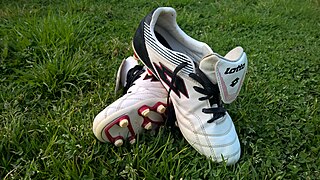
Soccer boots with tacos

Golf shoes with metallic tacos
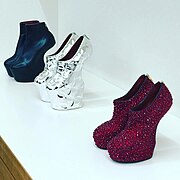
High soles in shoes without heels
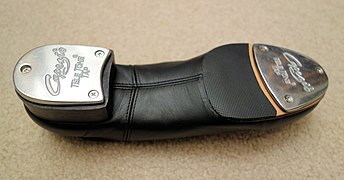
Metallic punch and heel in the claqué shoes

Roller mounted on the sole


.jpg)


Contenido relacionado
XDMCP
Cluster (file system)
Free radius