
Roxelana
Haseki Hürrem Sultan (Ottoman Turkish:خُرَّم خصيكي; "She who brings joy") (Rohatyn, c. 1502 or 1504 — Istanbul, April 15, 1558) known as Roxelana (Ukrainian: Роксолана; i.e.: «the Ruthenian») (birth name: Alexandra or Anastasia Lisowska), was the only legitimate wife of Suleiman the Magnificent, as well as one of the women who have had influence in the government of the Ottoman Empire and therefore one of the most powerful and important women in Ottoman history. She ruled the harem as head for almost 30 years. She set a unique female precedent in Ottoman history.
Due to her great intelligence and cunning, Hürrem managed to become the Magnificent's main advisor. The investigation has established that Ella Hürrem was born in Rohatyn, a Ruthenian town belonging to the Kingdom of Poland and currently located in the Ivano-Frankivsk Oblast, and that she must have been the daughter of a parish priest of the Orthodox Church.
Hürrem Sultan had six children, of which the third ascended to the throne as Selim II, Hürrem is known for being the first slave to marry the sultan, since since Mehmed II marriages were prohibited.
Hürrem is a controversial personality in Ottoman history, for indirectly causing the executions of Pargalı İbrahim Paşa and Şehzade Mustafa. Although the latter is not confirmed, she was accused by followers of Şehzade Mustafa; However, she gained the esteem of all women, children and the poor for her works of charity and beneficence. Her türbe or her mausoleum is in the Süleymaniye Mosque in Istanbul along with that of her husband the Sultan, whose desolation and sadness at the loss of her wife led him to a bitter end.
Origin
Name
In Western sources and in some historical works it is called in Europe, Roxelana or Alexandra, Rojelana, Rosselana, Roxolana, < i>Rossa and Fortunata, but its official name was Hürrem Sultan, from the Persian (خرم) "Khorram", "the one that brings joy" or "the joyful one.
In some records of her foundations she is written as "Karima Sultan", Karima means "The shining one among the favorites" but in Arabic it means "Kind, Generous or Noble", on the other hand, "Hürrem Haseki" at the time of her husband became famous with other names "Haseki Sultan" and "Hurrem-Şah". (Şah, means king or ruler).
Identification
For a long time (and there is still some controversy) it was thought that Alexandra was an Italian noblewoman named Margherita Marsili (known in the Tuscany of her time as "La Bella Marsilia"), born in Siena. Margherita Marsili, when she was thirteen years old, was kidnapped on April 22, 1543 and taken to the Istanbul seraglio, however the chronology, due to a small difference in time (the young Marsilia died before 1550), and other indications, give a greater probability that Roxelana was the Ottoman Haseki.
Appearance and personality
The European ambassadors of the time portrayed her as a redhead with green (or blue) eyes and a whitish complexion.
Among the harem she was a girl with a lively temperament, being very cheerful: the reason why she was baptized as "cheerful" or "smiling."
However, their first meeting took place thanks to (probably) Ayşe Hafsa Sultan, who may have sent Hürrem to Süleyman's chambers. The Venetian ambassadors described her as attractive but not beautiful, slender and elegant. The combination of her fine Russian features, her unusual red hair, her delicacy, and her cheerful attitude must have been a captivating combination for Süleyman, as he even went so far as to request her in person.
Biography
In 1512 or 1513 she was kidnapped by the Tatars and sold by them to the Crimean Palace; She was subsequently given away as a slave to Istanbul in the last years of Sultan Selim I, where she became odalisque of the harem, until the arrival of Sultan Suleiman the Magnificent (in Turkish: Süleyman ). She became the Sultan's only legitimate wife, a rare event since the founding of the Empire two centuries earlier. This marriage caused the sultan to create the honorific title of "Haseki Sultan" ("Only favorite" or "he who belongs excessively to the sultan", in literary Persian), one of the most important at the time of its creation and used since then only by the sultan's legal wife.
Hürrem probably entered the harem around twelve to fourteen years of age, sometime between 1514 and 1516, but certainly before Suleiman became sultan in 1520. He quickly caught the attention of his master and attracted the jealousy of his rivals. His cheerful spirit and playful temperament earned him a new name, Hürrem, from the Persian Khurram (& # 34; the cheerful & # 34;) . In the harem of Istanbul, Hürrem became a possible rival to Mahidevran Hatun, a concubine of Suleiman, and her incredible influence on the Sultan soon became the stuff of legend.
Hürrem was allowed to give birth to more than one son, which was a great violation of the old principle of the Ottoman imperial harem, “one concubine—one son” or "one mother one son&# 34;, which was designed to avoid both the mother's influence on the sultan and blood feuds between brothers for the throne. After having 6 children she destroyed Mahidevran's status as the mother of the Sultan's only son while Suleiman's mother, Ayşe Hafsa Sultan, managed to partially suppress the rivalry between the two women. Although a rivalry between the two women is certainly not accepted today, Mahidevran seemed to be more interested in Mustafa and Hürrem's education of their children, which may have been because they had not seen each other many times and these had been unfounded rumors.
Between 1526 to 1530 (the exact date is unknown), Suleiman married Hürrem in a magnificent formal ceremony, becoming the first Ottoman sultan to marry except for Orhan I (1326-1362), and with the rape of a more than 200-year-old rule of the Ottoman imperial house according to which sultans could not marry their concubines. Never before had a slave girl been elevated to the status of legal spouse of the sultan, to the astonishment of observers in the palace and in the city; Hürrem also received the title Haseki Sultan and became the first consort to hold it. This, which was used for more than a century, reflects the great power of imperial consorts (most of them former slaves) at the Ottoman court of the 16th and 17th centuries, elevating their status to one higher than that of Ottoman princesses (aunts, sisters, cousins and even daughters) and making them equal to the empress consorts of Europe.
Hürrem Sultan not only received great power but no one could take it away from her, offending her was considered an offense towards the Sultan himself, which is why not even the mother sultana could despise her, in fact, Hürrem's power was only below Valide Sultan. Suleiman not only broke the old custom, but created a new tradition for future Ottoman sultans by marrying in a formal ceremony and having his consorts have significant influence in the government, especially in matters of succession. Hürrem's allowance was 2,000 aspers a day, making her one of the wealthiest Haseki of all time, and second wealthiest after her daughter, Mihrimah Sultan.
Later, Hürrem also became the first woman to remain at the sultan's court throughout her life. In the tradition of the Ottoman imperial family, a sultan's wife was to remain in the harem only until her son came of age (around 16 or 17), after which she would be sent away from the capital to governing a distant province with his mother, this tradition was called Sanjak Beyliği. The consorts could not return to Istanbul unless their son succeeded to the throne. Ignoring this ancient custom, Hürrem stayed in the harem with her son Cihangir (who suffered from having a hump), even after her three other sons left to govern the provinces of the empire. Furthermore, she moved out of the harem located in the old palace (Eski Saray) to Suleiman's quarters located in the New Palace (Topkapi) after a fire destroyed the old palace.
The love between Hürrem and Suleiman
The love story between Hürrem and Suleiman became a legend. In one version, Suleiman is said to have passed by the part of the palace where Hurrem worked, and was enchanted by her beautiful voice, stopped to chat with her, and was impressed by her carefree nature and his skill. to talk. In other stories, it was Suleiman's mother, Ayşe Hafsa Sultan, who selected Hürrem to spend a night pleasing her son. There were hundreds of women in the sultan's harem, and the likelihood of these women ever meeting the sultan in person was slim. In preparation for this meeting, Hürrem would have been bathed, anointed with fragrant oils, and dressed in fine clothing to please her master.
Under his pen name Muhibbi, the Sultan composed poems for Hürrem.
In the affairs of the State
Controversial figure
Hürrem not only became Suleiman's advisor on issues regarding the harem, but also on state affairs. Thanks to her intelligence, she acted as Suleiman's main advisor, and had a great influence on foreign policy and international politics. For this reason, she became a controversial figure in Ottoman history, being the subject of accusations of plotting and manipulating against her political rivals. Especially because of her rivalry with Mahidevran, her son Mustafa, Pargalı İbrahim Paşa and Kara Ahmed Paşa.
Hürrem and Mahidevran had given Suleiman six şehzades (Ottoman princes), four of whom survived beyond 1550: Mustafa, Selim, Bayezid and Cihangir. Of these, Mustafa was the eldest, but there was no line of succession, nor did the eldest son have priority to ascension to the throne. The fittest şehzade ascended the throne. It was evident that Hürrem wanted one of his sons to be the next sultan and not Mustafa. Mustafa was supported by Ibrahim, who became Grand Vizier in 1523. Hürrem is generally held responsible for the intrigues in the appointment of a successor. Although she was Suleiman's wife, like any spouse of a Muslim sovereign, she did not exercise any official public function. This, however, did not prevent Hürrem from having a “powerful political influence”. Her position in the Harem of Topkapi Palace was so high that her power was comparable to that of a Valide Sultan, leading the palace harem from 1534 until her death.

A skilled commander of Suleiman's army, Ibrahim eventually fell from grace after an imprudence during a campaign against the Persian Safavid Empire during the Ottoman-Safávid War (1532-1555), when he granted himself a title which included the word "sultan", this title was based on an appointment that was granted to army commanders such as Ibrahim.
Another conflict occurred when Ibrahim and his former mentor, Iskender Çelebi, clashed on several occasions over military leadership and positions during the Safavid War. These incidents set in motion a series of events that culminated in his execution in 1536 by order of Suleiman. After three other grand viziers in eight years, through Hürrem, Rüstem Paşa, husband of Mihrimah Sultan, was selected by Suleiman to become the grand vizier.
Many years later, towards the end of Suleiman's long reign, the rivalry between his sons became evident.
During the campaign against Safavid Persia in 1553, it is believed that Hurrem Sultan launched, with the help of Rustem Pasha, a plan to get rid of Şehzade Mustafa, this consisted of creating a false letter where Mustafa conspired with Shah Tahmasp I to overthrow his father and access the throne, but there is no concrete evidence of this event.
After Mustafa's death, Mahidevran lost his status in the palace. The Sultan took his salary and confiscated his property. Suleiman dismissed Rüstem and appointed Kara Ahmed as his grand vizier in October 1553. However, after the death of Rüstem, who was strangled by order of the Sultan, Rüstem Pasha again became grand vizier (1555- 1561).
Foreign policy

Hürrem acted as Suleiman's advisor on state affairs, and had a great influence on foreign policy and international politics. Two of her letters to King Sigismund II Augustus of Poland (reigned 1548–1572) have survived, and during her lifetime the Ottoman Empire generally had peaceful relations with the Polish state within an Ottoman-Polish alliance.
In her first letter to Sigismund II, Hürrem expresses her greatest joy and congratulations to the new king on the occasion of his ascension to the throne of Poland after the death of her father Sigismund I in 1548. She also tells the King to trust her and in the envoy Hasan Ağa. In her second letter to Sigismund in August, in reply to his letter, Hürrem expresses in superlative terms his joy at learning that the king is in good health and that she sends the assurance of his and her sincere sympathy. that of Sultan Suleiman the Magnificent. He also quotes the sultan as saying, "With the old king we were like brothers, and if it pleases the Merciful God, with this king I will be like father and son." Included with this letter that Hürrem sent to Sigismund II was the gift of two pairs of linen shirts and pants, some belts, six handkerchiefs, and a hand towel, with the promise of sending a special linen tunic in the future.
There is reason to believe that these two letters were more than simple diplomatic gestures, and that Suleiman's references to brotherly or paternal feelings were not a mere tribute to political expediency. The letters also suggest a strong desire on Hürrem's part to establish personal contact with the king of his homeland.
Co-ruler (1533-1558)
After her marriage to Suleiman, Hürrem Sultan would be granted the title of co-ruler, meaning that she was below the sultan in both the harem and the state. She also helped rule the Ottoman Empire, achieving unprecedented power, only to be surpassed by Valide Kösem Sultan. This made Hürrem Sultan one of the most influential women in the history of the Ottoman Empire, where her successors would enjoy similar treatment. Thus began a period of more than a century known as “the Sultanate of Women”, in which the mothers, consorts/chief consorts and wives of the sultans exercised great power at the Ottoman court. Hürrem was one of the most educated women in the world at that time, she played an important role in the political life of the Ottoman Empire, she became the first advisor to the Padişahı. Hürrem was interested in international affairs, she had great diplomatic skills. She freely communicated with the ambassadors of European countries, she corresponded with the rulers of Venice and Persia, she was at Suleiman's side at receptions and banquets. Hürrem had a great influence on her husband, in the political and social life of the Ottoman Empire, and all this happened in the East, where it is unacceptable for a woman to interfere in state affairs. Hürrem received the title of Grand Sultan (sultana) of Istanbul.
Charities
Aside from her political concerns, Hürrem participated in several important works of public buildings, from Mecca to Jerusalem, in addition to her charitable foundations. Among his works were a mosque, two Koranic schools (madrassas), a fountain and a women's hospital near the women's slave market (Avret Pazary) in Constantinople. These were the first complexes built in Istanbul by Mimar Sinan in his new position as chief imperial architect. The fact that it was the third largest building in the capital, after the Mehmed II (Fatih) and Süleyman (Suleiman Mosque) complexes, testifies to Hurrem's great status. He also built complexes such as the mosques in Adrianople and Ankara.
He also commissioned a public bath, the Roxelana Baths, to serve in the ablutions of the community of faithful of the nearby Hagia Sophia mosque. In Jerusalem, the Haseki Sultan Imaret, a public soup kitchen, was established in 1552 to feed the poor and needy. This dining hall was said to feed at least 500 people twice a day. He also built the Imaret Haseki Hürrem, another public soup kitchen in Mecca.
Offspring
With Soliman he had five sons and an only daughter:
Children
- Şehzade Mehmed (1521-6 November 1543): first son of Hürrem. Born in 1521 in Istanbul. Mehmed became his father's favorite, moving Şehzade Mustafa. He was ruler of Manisa from 1541 to his sudden death in 1543 due to a disease, possibly Viruela;
- Şehzade Abdullah (1522 — 1524), killed in his childhood;
- Selim II (28 May 1524 — 12 December 1574), he was governor of Manisa after the death of Mehmed and former governor of Konya. He ascended to the throne on 7 September 1566 as Selim II;
- Şehzade Bayezid (1525 or 1526 — 25 September 1561): He was governor of Kütahya and later Amasya. Executed by orders of his father for treason;
- Şehzade Cihangir (9 December 1531 — 27 November 1553) born with a problem in the column, died young due to his birth disease, and without governing a province;
Daughter
- Mihrimah Sultan (1522 — 25 January 1578): one daughter of Hürrem. She married 26 November 1539 with Damat Rüstem Paşa, later Gran Visir (1544 – 1553) and (1555 – 1561). He worked as Valide-i Sa'ide (director of the harem) of her father Solimán from 1558 to 1566, and probably acted the same way for her younger brother, Selim II. According to the accounts, during the reign of Selim he acted as director in the harem of the Old Palace. It was one of the richest sultanas of birth in history. Enter the top of the famous Sultanate of Women.

Daughter of Solimán and Hürrem, Mihrimah Sultan
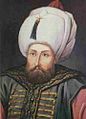
Şehzade Selim, son of Hürrem and future sultan Selim II


Legacy
Hürrem Haseki Sultan, or Roxelana (as she was called in the West), also called the 'Great Sultana', is well known in modern Turkey and the world, as well as being the subject of many works artistic. In 1561, three years after Hürrem's death, French author Gabriel Bounin wrote a tragedy titled La Soltane about Hürrem Sultan's role in Mustafa's death. This tragedy marks the first time that the Ottomans were introduced into European (France) literature. It has inspired paintings, musical works such as the second movement of Haydn's Symphony No. 63, an opera by Denys Sichynsky, a ballet, plays and several novels written in English, French, German and mainly Ukrainian.

In early modern Spain, it appears or is alluded to in works by Quevedo and other writers, as well as in a number of creations by Lope de Vega. In a work titled The Sacred League, Titian appears on the stage of the Venetian Senate, declaring that he has just visited the Sultana, showing a painting of her, calling her Sultana Rossa or Roxelana.
In 2007, Muslims in Mariupol, a port city in Ukraine, opened a mosque in honor of Hürrem.
Death

Haseki Hürrem sultan, was buried in a dome-shaped mausoleum (türbe) decorated in exquisite Iznik tiles representing the gardens of paradise, perhaps a tribute showing a joyful nature just like the It was she. Her mausoleum is adjacent to Suleiman's, a separate and more sombre domed structure, in the courtyard of the Süleymaniye Mosque. Although his son, Selim II, was the heir, he did not hold the title of Valide Sultan, since he died before Suleiman, however, after the death of Sultana Ayşe Hafsa, she became the most powerful and influential sultana. of the time without the need to carry such a title. This position was held by his only daughter, Mihrimah Sultan, who was officially granted this title and control of the imperial harem by her brother, Sultan Selim II and also during the reign of her nephew Murad III, sharing power. with his mother Nurbanu Sultan.
His death in the spring of 1558 was due to a chronic illness, some sources suggest that it was malaria. The Venetian ambassador Antonio Barbarigo reported in 1558:
"She is the owner of this man. "She always keeps him close to her, she doubts her own life because of an illness."
The new French ambassador, Jean de la Vigne, sent a letter announcing:
n#34;The Haseki died. The pain is so great that the sultan grew very old.
Another ambassador, mentioned as Kutbeddin, an envoy from Mecca to Istanbul composed a kind of epitaph for Hürrem:
n#34;The sultan married her. She was part of him and many matters were in her hands. The sultan loved her to the point of madness and her heart has been broken by her death.
Hürrem was an empress who successfully carried the title of "The wife of the sultan of the world", and in this way the life of one of the most important sultanas of the world would end. Ottoman Empire, recognized both for its influence and for its love connection with Suleiman the Magnificent.
Gallery

Interior of Hamam Haseki Hürrem Sultan
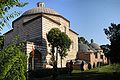
Abroad of Hamam

Painting: Rossa Solymanni uxor, Roxelana painting

European representation of Roxelana by Johann Theodor de Bry (1596)
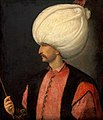
Hürrem Sultan, Kanūnî Sultan Süleyman

The Koran of the sultana

Mausoleo o türbe de Hürrem Sultan

Interior of the mausoleum

Little portrait inspired by the sultana

Illustration of Hürrem Sultan

Ukrainian Post Seal issued in 1997 in honour of Roxelana
El Hamam from Sultanahmet Square


