
National university of Colombia
The National University of Colombia (UNAL) is a national Colombian public university, founded under the government of Santos Acosta on September 22, 1867. It is the most important and representative university in Colombia for its tradition, prestige, quality and selectivity. It is linked to the history and academic production of Latin America. Its flagship campus, the Ciudad Universitaria de Bogotá, is the largest in the country and has 17 buildings declared national monuments. It has offices in Medellín, Manizales, Palmira, Arauca, Leticia, Tumaco, San Andrés and La Paz (Cesar).
Its student population is 57,106 students, of which 49,789 are undergraduate and 7,317 are postgraduate; which makes it one of the Colombian academies with the largest number of students. It also has a total of 2,939 active faculty, half with doctorates. It has 97 undergraduate programs, 86 specializations, 40 medical and dental specialties, 171 master's degrees, and 70 doctorates distributed in its 9 campuses.
On April 9, 2010, the Ministry of National Education granted it the High Quality Institutional Accreditation for 10 years in all its locations. Numerous classifications have ranked it as the best in the country. It is a member of the Colombian Association of Universities, the Ibero-American Postgraduate University Association (AUIP) and the Ibero-American network of universities Universia.
History
The idea of a public and state university in Colombia began with the promulgation of Law 8 of 1826 “On organization and arrangement of Public Instruction”, promoted by the vice president of Greater Colombia, Francisco de Paula Santander. At that time, the universities of Cauca, Cartagena and Central de la República were founded with offices in Bogotá, Caracas and Quito. The Central University of the Republic is the predecessor of the National University and was founded on December 25, 1826 in the Jesuit block of Bogotá. This grouped the National Library, the National College of San Bartolomé (today Colegio Mayor de San Bartolomé) and the university itself.
With the argument that the universities were teaching and work monopolies that threatened individual freedom, the federalist and radical governments closed the Central University of the Republic. In 1864, José María Samper, a former radical, nevertheless presented a bill to Congress for what he called the National University of the United States of Colombia. In 1867 the National Institute of Sciences and Arts was created. The great definitive step in the foundation was taken on September 22, 1867 when Congress issued Law 66 that created the Universidad Nacional de los Estados Unidos de Colombia, in the administration of Santos Acosta.
In 1868 the Organic Statute was issued, the first schools were opened and the first rector was elected, Ezequiel Rojas, who did not accept the position for health reasons. He was named in his replacement Manuel Ancízar. In its first year of activity, the University began work with the faculties of Arts and Crafts, Engineering, Medicine, Law and Natural Sciences, it had 335 students and 45 professors, including personalities such as Miguel Antonio Caro and Indalecio Liévano.
The environment darkened due to the multiple political and social conflicts that occurred in the second half of the 19th century. During the Regeneration, the university was blamed for the political instability and social unrest that surrounded the process of the new Constitution of 1886. For this reason, it returned to the direct control of the State and lost its limited autonomy and academic unity.
The reform of 1935 centralized the faculties in a single campus (before they were a collection of schools distributed throughout the city). For its application and implementation, Manuel Antonio Arboleda from Payana was appointed General Secretary, but he died a year later in the Fúquene tragedy. The University Reform was issued through Law 68 of that same year, led to the promulgation of the Organic Law to modernize it, open it up and place it in the reality of the country. During this period the Government bought the land where the Ciudad Universitaria would function.
The pedagogue Fritz Karsen, an expert in university affairs, and the architect Leopoldo Rother arrived from Germany, invited by the national government. Karsen helped to define a comprehensive academic structure, synthesized in a general scheme in the form of an ellipse from which each of the five great academic divisions and their respective dependencies radiated. The scheme was translated almost literally by Rother in the spatial distribution proposed for the selected property, then on the western limit of the city of Bogotá.
The University established academic freedom, professors accessed by competition, and generally in those fundamental subjects or that had a particular aspect in terms of concepts, there were two professors per chair. The University expanded, became more technical and enlarged, it was really located in modernity. He started working towards the development of the country.
In 1946, there was a political change in the country. When the government of Mariano Ospina Pérez came, the advent of conservatism with presidents like Laureano Gómez and then the dictatorship of Rojas Pinilla, academic freedom was suppressed at the University, the democratic participation of faculty and students was ignored.
Reforms
Among the reforms introduced in 1964 by the rector José Félix Patiño, the creation of the Superior Council as the highest government body stands out. The Academic Council once again constituted itself as a consultative body. In that year, the appearance of departments, institutes, units, academic research and teaching sections and the development of postgraduate programs stand out. At the end of the 1960s, the master's programs were given impetus at the National University and in the country. The first programs, at the master's level, were created between 1967 and 1973 and in 1986 the first doctoral programs in the country opened their doors in areas such as Physics and Mathematics. In the same year, a statutory reform was carried out through Agreement 44 and its regulation 58 of the Higher University Council. Through this reform, the division of labor of the rectory was produced by creating the vice-rectory. On the other hand, the academic organization was made more flexible and the degree of participation of professors and students increased, who were incorporated as members of the advisory committees.
During the last 20 years there has been talk of reforms in different statutes, reforms that have been brought to reality in the last 5 years and that are still currently in the process of construction and implementation. Among the most important are the reform of the general statute and the student statute, among many others; This process was traumatic for the university due to the resistance of various sectors who believe that the reform proposals are disadvantageous in one way or another, to the failure in the participation processes and communication channels, leading to de facto actions such as the blocking of activities on several campuses. During 2009, the academic reform began to be implemented, without problems as in previous years.
Although in 2005, 2007, 2008, 2011, 2012, 2013, 2015 and 2018 there were days of strikes in which most of the academic activity ceased, in each of the corresponding semesters it was possible to recover the lost weeks, minimizing the effects on academic life.
Institutional image
Throughout its history, the university has used various symbols to identify itself and distinguish itself from other institutions nationally and internationally and as a tool to convey its values and those of the nation. The last update was made in 2016, under the rectory of Ignacio Mantilla Prada, in order to unify the hallmarks of the university. Its shield was designed in 1937 and was updated in 2016. The student anthem Gaudeamus igitur , is the musical poetic composition that is sung most frequently in the protocol acts of the University, to such an extent that it has been mistakenly taken as the anthem of the National University of Colombia.
In addition to the coat of arms and the anthem, in 1967, the emblem designed with the initials UN was adopted as an alternative image, which presents an inverse symmetry, with its axis of symmetry on the vertical central line, forming an ambigram. Its use is mainly promotional.
Academic Ranking
In Colombia and the rest of the world there are different lists that classify universities according to bibliometric criteria. Taking into account only Colombian universities and national indicators, the National University of Colombia ranks first in the Sapiens Research list. Taking international indicators as a reference, it ranks first in the Academic Ranking list of World Universities, first in the SCImago Institutions Rankings (SIR) list, second in the QS Latin American University Ranking list, second in the list U.S. NEWS & WORLD REPORT Best Global University Rankings and second in the THE Latin America University Rankings list.
Offices
| |
| Location of headquarters. |


The University is made up of Andean Campuses and National Presence Campuses, whose classification is determined by the institution's directives, taking into account regional particularities, priorities institutional and tending towards the solution of national, regional and local needs.
The Headquarters of National Presence are located in geographical areas far from urban centers but with a high need for professional training whose areas of influence have scientific and cultural interest.
The Andean Headquarters are those in Bogotá, Medellín, Manizales, Palmira and La Paz. The Headquarters of National Presence are those of the Caribbean, Pacific, Amazonia, Orinoquia and Tumaco.
Bogota Headquarters

This campus offers about 54% of the places for new students nationwide. It has 1,963 full-time faculty, of whom 35% are Doctors, 39% are Masters, and 11% are Health Science Specialists, 6.5% are Specialists and 7.4% are professionals. This headquarters offers 49 undergraduate and 214 postgraduate programs, of which there are: 31 Doctorates, 95 Masters, 50 Specializations and 38 Medical Specialties.
Includes the University City and other properties located inside and outside the urban perimeter of the country's capital. It is located in the town of Teusaquillo, northwest of the historic center. The general layout of the campus was designed by the German architect Leopoldo Rother with the guidance of the German educator Fritz Kartzen. The campus is flanked by two of the main avenues of the city, El Dorado Avenue or 26th Street and NQS Avenue or Carrera 30, so its location has a great impact on the different activities of the city.
It has an area of 1,213,500 square meters (121.4 ha) and approximately 308,541 m² of built-up area; It has pedestrian zones, green areas and open spaces. Inside it has a set of architectural blocks, of which 17 have been declared a National Monument and together with other buildings represent the last 70 years of Colombian architecture. Nearly 40,000 people circulate daily through the university city.
In addition, it is in charge of the National Astronomical Observatory (in disuse), the Jorge Eliécer Gaitán House Museum, the Cloister of San Agustín, the Paleontological Museum of Villa de Leyva and the Roberto Franco Tropical Biology Station, in Villavicencio
Medellin Headquarters
The Medellín Headquarters has two campuses: Núcleo Robledo and Núcleo El Volador, the latter also includes the Núcleo Del Río. Some 12,437 students study at the headquarters. This headquarters offers approximately 30% of the places for new students nationwide.
In all its campuses there are 370 Ha, thus being the headquarters of the UN with the largest extension. Likewise, this campus has 555 full-time teachers, of whom 38% are Doctors, 44% are Masters, 8% are Specialists and 10% are Professionals.[citation required ] This Headquarters offers 26 undergraduate and 73 postgraduate programs categorized as follows: 15 Doctorates, 28 Masters and 29 Specializations.
The origins of the headquarters go back to the National School of Mines. Its history gives it a peculiar character, since it was not formed like most universities from the classic careers of Law, Medicine, Letters and Sciences. The headquarters was born from engineering careers; that is why today the headquarters has the largest number of engineering (17) of the University and of the country in general; Thus, since earlier times, a leader in the development, teaching and application of engineering in Colombia.
Manizales Headquarters
In 1991, the Electronic Engineering career was created at the headquarters, in 1996 the Specializations in Socioeconomic Evaluation of Projects and Environmental Engineering with Emphasis in Sanitary began, later, in 1997, the Specialization in Finance began with Emphasis in Project Preparation and Evaluation. In addition, the Information Systems Administration career was created by agreement No. 6 of that year, being one of the only institutions to offer this program in Colombia.
In 1998, the first master's degree, Plasma Physics, and a specialization in Semiotics and Hermeneutics of Art were created. The Mathematics career and the Physics Engineering career are created at the headquarters. In 2001, the Cultural and Communication Management career was created. The latter is unique in the world.
This campus is made up of three university campuses: Palogrande, El Cable, and La Nubia, which add up to an area of 130,172 m² and some 46,770 m² of built area, where some 4,447 undergraduate students and some 195 graduate students study.
The University of Manizales has three faculties which offer 12 academic programs, 7 postgraduate degrees, 6 master's degrees and a doctoral program. This campus offers approximately 11% of the places for new students nationwide.
Palmyra Headquarters
The Palmira Campus of the National University of Colombia has two faculties. The Faculty of Engineering and Administration and the Faculty of Agricultural Sciences. Precisely this headquarters was born as the Superior School of Tropical Agriculture in 1934. The university campus is located to the south of the municipality of Palmira, Valle del Cauca, in the neighborhood Chapinero on both sides of the road that leads to the towns of Candelaria and the corregimiento El Bolo. On the main campus is the Ciro Molina Garcés building, designed by Leopoldo Rother. The Faculty of Agricultural Sciences functioned in this building for many years; the Headquarters Library, which works in the old cafeteria and was recently remodeled; the building and the administrative tower, where the government of the faculties and the headquarters work; the classroom building; a series of laboratories and the Hernando Patiño Cruz Auditorium. On the other side of the road is the University Wellness complex. It currently has two buildings and by March 2021 the construction of a third building began. The first building is the university gymnasium, the second is for student health, and the third will be for the welfare office, the culture area, and multipurpose rooms. Additionally, the Headquarters has the Bosque de Yotoco Natural Forest Reserve, in Yotoco, Valle del Cauca; the National University of Colombia Experimental Center – Palmira Campus (Ceunp), in Candelaria, Valle and the Mario González Aranda Agricultural Laboratory located one kilometer from the main campus.
Currently, this campus has 3 doctoral programs, 7 master's degrees, and 7 undergraduate degrees. It also has two museums and a herbarium.
La Paz Headquarters
The La Paz Headquarters of the National University of Colombia, which is located in the municipality of La Paz, Cesar, one of the municipalities of the Valledupar Metropolitan Area.
The Higher University Council (CSU) regulated through Agreement 250 of 2017 of October 24, the creation of the La Paz Headquarters of the National University of Colombia. The architectural design was in charge of the architect and professor of the Manizales campus, Edison Henao Carvajal. The infrastructure was completed on August 10, 2018 and delivered to the institution, it is expected to serve an academic offer of 2,200 students.
National Presence Headquarters
- Amazon Headquarters. It is located in the km two via Leticia Tarapacá, 500 metres from Vásquez Cobo Airport. Its campus collects local and indigenous elements in its design, merits that were highlighted at the XVI Colombian Architecture Biennial. Headquarters has the Amazon Research Institute (IMANI).
- Orinoquia Headquarters. Located in the Hacienda Cairo, km. 9 via the municipality of Tame, located in the eastern plains, borders with Venezuela and has a wide range of action.
- Caribbean Headquarters. It has the Caribbean Studies Institute, which aims to carry out research, teaching and outreach activities to strengthen the development of the Caribbean Region. The headquarters of San Andrés has the Botanical Garden, conceived as a project aimed at knowledge, conservation, valuation and use of the plant diversity of the archipelago, through the promotion of research.
- Tumaco Headquarters.
Administration
At the national level, the University has the following hierarchically distributed bodies: the Higher University Council, the Rector's Office, the Academic Council, the Vice-Rector's Offices, the National Financial and Administrative Management, the General Secretariat and the Committee of Vice-Rectors. The Higher University Council is the highest governing and management authority.
It is made up as follows:
- María Victoria Angulo González - Minister of National Education (Council Chair)
- José Maximiliano Gómez Torres - Deputy Minister of Higher Education
- Julio César Castellanos Ramírez - Designated by the President of the Republic
- Carlos Costa Posada - Designated by the President of the Republic
- Humberto Rafael Rosanía Ortega - Representative of the CESU
- Ronald Felipe Vargas Sánchez - Student Representative
- Fernando Sánchez Torres - Representative of the Ex-Rores
- Veronica Catalina Botero Fernández - Dean appointed by the Academic Council
- Beatriz Martínez de Vargas - Professor Representative
- Dolly Montoya Castaño - Rector
- María Fernanda Lara Díaz - Secretary General
The Academic Council is the highest academic authority. The current rector is Dolly Montoya Castaño. Her main function is to coordinate and direct academic, scientific, technological, and cultural management, as well as programs. The mission of The general vice-rector's office is to integrate the campuses and their respective dependencies to form a whole in the construction of a quality national project that responds to social demands. The main function of the academic vice-rector's office is to define policies, programs, and academic-type projects for the entire institution. The National Financial and Administrative Management is the agency in charge of defining policies and establishing procedures for financial and administrative management that facilitate the work of the missionary processes of research, training and extension. The General Secretariat It is the unit in charge of assuming, among others, all those functions that guarantee the proper functioning of the Higher University Council and the Academic Council. Responsibility that goes from the preparation of the work sessions of each council, the implementation of the measures approved in each meeting and the dissemination of the determinations of these collegiate bodies.
Admission process
Admission to the University is divided into two different processes according to educational levels, one for undergraduates and another for postgraduates. Both processes are based mainly on the presentation of knowledge exams. The rigorous and selective admission exam, since only 15% of the applicants manage to pass on average, this depending on the period to which it is applied. Taking data from the admissions of 2008-1 to 2021-2, of an average per admission period of 58,000 undergraduate applicants, the university only offers 8,500 places.
Curricular programs
The university has 97 undergraduate programs, 86 specializations, 40 medical and dental specialties, 170 master's degrees and 70 doctorates distributed among its 9 campuses. 61% of the programs are from the Bogotá Headquarters, 24% from the Medellín Headquarters, 8.6% belong to the Manizales Headquarters, 4% to the Palmira Headquarters, 1.1% to the Amazon Headquarters and the 1.3% to the Caribbean Headquarters.
Undergraduates
Of the 97 undergraduate programs, 52 are from the Bogotá campus, 26 from the Medellín campus, 12 from the Manizales campus, and 7 from the Palmira campus.
Exchanges
The Directorate of Foreign Relations, DRE, is an advisory body of the Rectory that promotes internationalization and the formal opening of national and international cooperation scenarios. It is in charge of facilitating national and international relations and articulates its international dynamics with the strategic policy initiatives proposed by the institution.
Agreements
The DRE has more than 670 current agreements with universities around the world, to carry out undergraduate, postgraduate and language learning academic exchanges.
Laboratories
The University is distinguished by its high concentration on research, which is why it has a large number of laboratories used in the academy and for scientific purposes. Different faculties and departments have available laboratories presented below.
The University City of Bogotá has more than 430 laboratories distributed in the different faculties and academic units, used for academic and research purposes.
Honorary doctors
This is one of the highest academic distinctions conferred by the university together with the Gerardo Molina Order. Among the personalities to which it has been conferred are:
- Alberto Lleras Camargo, politician, President of Colombia, 1946.
- Jesús Antonio Bejarano Ávila, economist, teacher, researcher and profound scholar of the reality and of Colombian society, 1999.
- Daniel Pécaut, sociologist, teacher and researcher, 2000.
- Juan Ramón de la Fuente Ramírez, doctor, teacher and researcher, 2002.
- Avram Noam Chomsky, linguist, 2002.
- Alain Touraine, consecrated to the study of the sociology of the working consciousness, 2006.
- Antanas Mockus Sivickas, philosopher, pedagogue and politician, 2006.
- Orlando Fals Borda, sociologist, 2006.
- Jon Elster, politician, academic and scholar of the history of constitutions and wars, 2009.
- Darío Valencia, founder and leader of the postgraduate research group on Water Resources from the Faculty of Mines in Medellín, 2009.
- Fernando Vallejo, writer, biologist and filmmaker, 2009.
- Jorge Hernández Camacho, naturalist, 1997.
- Jorge Velosa, musician and composer, 2012.
- Julio Carrizosa, civil engineer, 2012.
- Dicken Castro, architect and graphic designer, 2012.
- Emilio Yunis, geneticist, 2012.
- Pedro Julio Romero Garzón, doctor and scientist.
- José Antonio Ocampo, economist and sociologist, former minister.
- José Fernando Isaza, electrical engineer and entrepreneur.
Notable Graduates
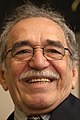
Gabriel García Márquez, writer, screenwriter, editor, and journalist. In 1982 he received the Nobel Prize in Literature.
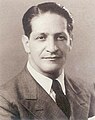
Jorge Eliécer Gaitán, jurist and nationalist politician. Mayor of Bogotá (1936-1937), official party candidate for the 1950 presidential elections prior to his murder.

Julio Garavito Armero, astronomer, mathematician, economist, poet and engineer. His research contributed to the development of the sciences in Colombia during the nineteenth century.

Jaime Garzón lawyer, pedagogue, humorist, activist, actor, announcer, journalist and peace mediator.

Antanas Mockus, mathematician, political and philosopher. Mayor of Bogotá (1995-1997/2001-2003), senator of the Republic of Colombia.

Fernando Botero Angulo, painter, sculptor and sketch artist.

Luis Fernando Vallejo Rendón, writer and filmmaker.
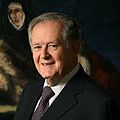
Luis Carlos Sarmiento Angulo, entrepreneur, banker and Colombian builder. He is the president of the Board of Directors of the Aval Group holding.
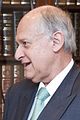
Manuel Elkin Patarroyo Murillo, immunologist.

Sonia Bazanta Vides, best known as Totó la Momposina, folk music singer of the Caribbean Coast of Colombia.
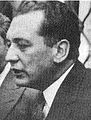
Laureano Gómez, journalist, engineer president of the Republic of Colombia between 1950 and 1951.

Jorge Velosa, a singer who acquired recognition for being the co-initiator of the musical genre known as carranga.
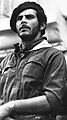
Carlos Pizarro, politician and maximum commander of the guerrilla group Movement 19 April between 1986 and 1990.

Aída Avella, a politician and psychologist who serves as president of the Patriotic Union. It was a constituent of the National Assembly of 1991.

Margalida Castro, a leading actress for her participation in numerous soap operas, films and plays. In 2015 she was awarded the Victor Nieto award for a lifetime.

Virgilio Barco, a politician and civil engineer member of the Liberal Party and President of the Republic of Colombia in the period 1986-1990.
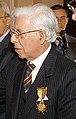
Carlos Galindo Pinilla, jurist, lawyer and teacher. He was Representative to the House and State Councilor between 1973-1980.

Rodolfo Hernández Suárez, civil engineer, businessman, politician and presidential candidate in 2022.
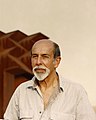
Eduardo Ramírez Villamizar, painter and sculptor.

.jpg)


_(cropped).jpg)
.jpg)
.jpg)

.jpg)

.jpg)


.jpg)


A Newspaper

The UN Periódico is the free distribution newspaper managed by the university news agency, with a monthly circulation of 213,000 copies that reach 305 municipalities in Colombia, nine cities in the United States, a city in France and one in China; It is one of the main mechanisms through which the University publishes its research advances, political, social, environmental, technological and cultural articles from Colombia and the world. By June 2016, 200 copies had been printed.
The newspaper has received various awards, including the ACAC National Award for Scientific Merit in 2015, in 2011 it won the Álvaro Gómez Hurtado journalism award; from Red Salud, winner of the Biodiversity Reporting award from Conservation International, National Environmental Journalism award in graphic reporting, Fernando Quiñónez National Conflict and Peace Journalism award, Medtronic Technology applied to health journalism award.