
Karolinska Institute
The Karolinska Institutet (KI; in Swedish, Karolinska Institutet; a sometimes referred to as the (Royal) Caroline Institute in Spanish) is a medical university institution located in Solna, near Stockholm, in Sweden, and is one of the world's leading university educational centers in the field of medicine, being a reference mainly in the fields of gynecology, genetics and neuroscience.
The Nobel Assembly of the Karolinska Institute awards the Nobel Prizes in Physiology and Medicine. The assembly consists of fifty professors of various medical disciplines of the university. The current Chancellor of the Karolinska Institute is Ole Petter Ottersen, who took office in August 2017. The Karolinska Institute is consistently listed among the best medical schools in the world, reaching sixth place worldwide in 2021.
History
The Karolinska Institute was founded between 1810 and 1811, after the Finnish War, as a training center for army surgeons. The original name was originally "Medico-Chirurgiska Institutet". In 1817 the prefix “Karolinska” was added as a reference to the Swedish King Charles XIII of Sweden (Karl, in Swedish), becoming the "Kongliga Carolinska Medico Chirurgiska Institutet". In 1968 it was renamed "Karolinska Institutet".
Among its founders stands out Jöns Jacob Berzelius, professor of chemistry and pharmacy, and one of the founders of modern chemistry. In 1861, thanks to its growing recognition, this institute received the status of a university. It is currently the only Swedish university for medicine and related sciences such as dentistry, toxicology and physiotherapy.
The Nobel Assembly of the Karolinska Institutet is responsible for nominating each year the winner of the Nobel Prize in Physiology or Medicine.
Famous Graduates
- Hugo Theorell, laureated with the Nobel Prize in Physiology or Medicine in 1955
- Torsten Wiesel, laureate with the Nobel Prize in Physiology or Medicine in 1981
Areas of study
- Department of Biosciences and Nutrition
- Department of Cell and Molecular Biology
- Department of Public Health
- Department of Physiology and Pharmacology
- Department of Clinical Sciences and Education, Södersjukhuset
- Department of Clinical Neuroscience
- Department of Clinical Sciences of Intervention and Technology
- Department of Clinical Sciences, Danderyd Hospital
- Department of Health for Women and Children
- Laboratory Medicine Department
- Department of Learning, Computers, Management and Ethics
- Department of Medicine, Huddinge
- Department of Medicine, Solna
- Department of Medical and Biophysics Biochemistry
- Department of Medical Services of Epidemiology and Biostatistics
- Department of Microbiology and Tumor Cell Biology
- Institute of Environmental Medicine
- Department of Molecular Medicine and Surgery
- Department of Neurobiology, Care Sciences and Society
- Department of Neurosciences
- Dentistry Department
- Oncology Department, Pathological Anatomy
Gallery
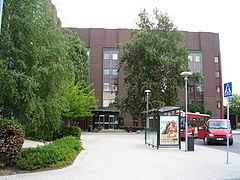
Berzelius Laboratory, on the Solna Campus


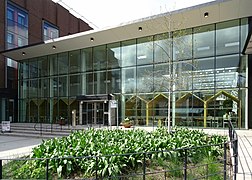

Maximum classroom
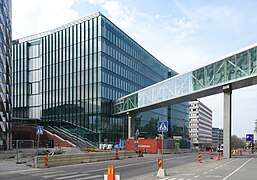
Biomedicum
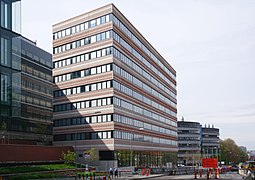


Contenido relacionado
Portal:Venezuela/Categories
Peter Paul Rosso
Diogenes
Statistics
Humanities