
Group 4 elements
The group 4 of the periodic table includes the chemical elements titanium (Ti), zirconium (Zr) and hafnium (Hf), as well as the element rutherfordium (Rf), although it is not usually taken into account when referring to group 4 as it is a synthetic and radioactive element. "Group 4" is the name recommended by IUPAC; the old European name is "group IVA" while the old American name is "group IVB". The IUPAC name should not be confused with the old ones, given with Roman numerals.
These metals are quite reactive (especially when they are in the form of a porous sponge, with a large specific surface area, they are pyrophoric; that is, when exposed to the action of air they turn red and ignite spontaneously). Being compact they are passive, almost unattackable by any atmospheric agent.
All group 4 elements are refractory hard metals. Their inherent reactivity is completely masked due to the formation of a dense oxide layer that protects them from corrosion, as well as from attack by many acids and alkalis. The first three occur naturally. Rutherfordium is strongly radioactive: it does not occur naturally and must be produced by artificial synthesis, but its observed and theoretically predicted properties are consistent with it being a heavier homologue of hafnium. None of them have any biological role.
- Elements of group 4

Titanium Crystal Bar, 99.995%
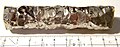
Circonium Crystal Bar, 99.97%

Hafnio Crystal Bar, 99.9%


History
Zircon had been known as a gemstone since ancient times, but it was not known to contain a new element until the work of German chemist Martin Heinrich Klaproth in 1789. He analyzed the mineral containing zircon and found a new ground (oxide), but was unable to isolate the element from its oxide. The Cornish chemist Humphry Davy also tried to isolate this new element in 1808 by electrolysis, but failed: he gave it the name zirconium. In 1824, the Swedish chemist Jöns Jakob Berzelius isolated an impure form of zirconium, obtained by heating a mixture of potassium and potassium zirconium fluoride in an iron tube.
Cornish mineralogist William Gregor first identified titanium in ilmenite sand beside a stream in Cornwall, Great Britain in 1791. After analyzing the sand, he determined that the weakly magnetic sand contained iron oxide and a metallic oxide that he could not identify. During the same year, mineralogist Franz Joseph Muller produced the same metallic oxide and was unable to identify it. In 1795, chemist Martin Heinrich Klaproth independently rediscovered the metal oxide in rutile from the Hungarian village of Boinik. He identified the oxide as containing a new element and named it after the Titans of Greek mythology. Berzelius was also the first to prepare metallic titanium (albeit impure), and did so in 1825.
X-ray spectroscopy performed by Henry Moseley in 1914 showed a direct dependence between the spectral line and the effective nuclear charge. This led to the nuclear charge, or atomic number of an element, being used to determine its place on the periodic table. Using this method, Moseley determined the number of lanthanides and showed that an element with atomic number 72 was missing. This prompted chemists to look for it. Georges Urbain claimed that he found element 72 in the rare earth elements in 1907 and published his results on celtium in 1911. Neither the spectra nor the chemical behavior he claimed matched the element found later, and therefore his claim was rejected after a long-standing controversy.
In early 1923, several physicists and chemists such as Niels Bohr and Charles R. Bury suggested that element 72 should resemble zirconium and therefore was not part of the rare earth group of elements. These suggestions were based on Bohr's theories of the atom, Moseley's X-ray spectroscopy, and Friedrich Paneth's chemical arguments. Encouraged by this, and by the reappearance in 1922 of Urbain's claims that element 72 was a rare earth element discovered in 1911, Dirk Coster and Georg von Hevesy were motivated to look for the new element in zirconium ores. Hafnium was discovered by the two in 1923 in Copenhagen, Denmark. made the discovery led to the element being named by the Latin name of "Copenhagen", Hafnia, the hometown of Niels Bohr.
Hafnium was separated from zirconium by repeated recrystallization of ammonium or potassium double fluorides by Valdemar Thal Jantzen and von Hevesy. Anton Eduard van Arkel and Jan Hendrik de Boer were the first to prepare metallic hafnium by passing tetraiodide vapor of hafnium on a heated tungsten filament in 1924. The long delay between the discovery of the two lightest group 4 elements and that of hafnium was partly due to the rarity of hafnium, and partly to the extreme similarity of hafnium. zirconium and hafnium, so all previous zirconium samples were actually contaminated with hafnium without anyone knowing.
The last element in the group, rutherfordium, does not occur naturally and had to be made by synthesis. The first reported detection was by a team from the Joint Institute for Nuclear Research (JINR), which in 1964 claimed to have produced the new element by bombarding a plutonium-242 target with neon-22 ions, although this was later disputed. [23] More conclusive evidence was obtained by researchers at the University of California at Berkeley, who synthesized element 104 in 1969 by bombarding a californium-249 target with carbon-12 ions. Controversy arose over who had discovered the element, and each The group suggested their own name: the Dubna group named the element kurchatovium after Igor Kurchatov, while the Berkeley group named it rutherfordium after Ernest Rutherford. Eventually, a joint IUPAC/IUPAP working group, the Transfermium Working Group, decided that the credit for the discovery should be shared. After various compromises were attempted, in 1997 IUPAC officially named the element rutherfordium following the American proposal.
Features
Chemicals
| Electronic configurations of group 4 elements | |||
|---|---|---|---|
| Z | Element | Electronic configuration | |
| 22 | Ti, titanium | 2, 8, 10, 2 | [Ar] 3d2 42 |
| 40 | Zr, zirconium | 2, 8, 18, 10, 2 | [Kr] 4d2 52 |
| 72 | Hf, hafnio | 2, 8, 18, 32, 10, 2 | [Xe] 4f14 5d2 62 |
| 104 | Rf, rutherfordio | 2, 8, 18, 32, 32, 10, 2 | [Rn] 5f14 6d2 7s2 |
Like other groups, members of this family show patterns in their electronic configurations, especially the outermost shells, resulting in trends in chemical behavior. Most of the chemistry has been observed only in the first three members of the group; The chemical properties of rutherfordium are not well characterized, but what is known and predicted agrees with its position as a heavier homologue of hafnium.
Titanium, zirconium, and hafnium are reactive metals, but they are masked in bulk because they form a dense layer of oxide that adheres to the metal and reforms even if removed. As such, bulk metals are highly resistant to chemical attack; most aqueous acids have no effect unless heated, and aqueous alkalis have no effect even when hot. Oxidizing acids such as nitric acid tend to reduce reactivity by inducing the formation of this oxide layer. The exception is hydrofluoric acid since it forms soluble fluorinated complexes of metals. When finely divided, their reactivity is displayed as they become pyrophoric, reacting directly with oxygen and hydrogen and even nitrogen in the case of titanium. All three are quite electropositive, although less so than their predecessors in group 3. The oxides TiO2 ZrO2 and HfO2 are white solids with high melting points and do not react against most acids..
The chemistry of group 4 elements is dominated by the oxidation state of the group. Zirconium and hafnium in particular are very similar, the most prominent differences being physical rather than chemical (melting and boiling points of the compounds and their solubility in solvents). This is an effect of lanthanide contraction.: the expected increase in atomic radius from elements 4d to 5d is erased by the insertion of elements 4f earlier. Titanium, being smaller, is different from these two: its oxide is less basic than zirconium and hafnium, and its aqueous chemistry is more hydrolyzed. Rutherfordium should have an even more basic oxide than zirconium and hafnium. hafnium.
The chemistry of all three is dominated by the +4 oxidation state, although this is too high to be properly described as fully ionic. The low oxidation states are not well represented for zirconium and hafnium (and should be even less well represented for rutherfordium); the +3 oxidation state of zirconium and hafnium reduces water. For titanium, this oxidation state simply oxidizes easily, forming a water violet Ti 3+ cation in solution. The elements have significant coordination chemistry: zirconium and hafnium are large enough to easily support the coordination number of 8. All three metals, however, form weak sigma bonds with carbon and, because they have few electrons d, the pi back link is also not very effective.
Physics
The trends in group 4 follow those of the other early d-block groups and reflect the addition of a filled f-shell in the core passing from the fifth to sixth periods. All stable members of the group are silvery refractory metals although impurities of carbon, nitrogen and oxygen make them brittle. They all crystallize in the close-packed hexagonal structure at room temperature, and rutherfordium is expected to do the same. At high temperatures, titanium, zirconium, and hafnium are transformed into a body-centered cubic cube. structure. While they are better conductors of heat and electricity than their group 3 predecessors, they are still poor compared to most metals. This, along with the higher melting and boiling points and the enthalpies of melting, vaporization, and atomization, reflects the additional d-electron available for metallic bonding.
The following table is a summary of the key physical properties of the group 4 elements. The four values marked with question marks are extrapolated.
| Name | Ti, titanium | Zr, zirconium | Hf, hafnio | Rf, rutherfordio |
|---|---|---|---|---|
| Fusion point | 1941 K (1668 °C) | 2130 K (1857 °C) | 2506 K (2233 °C) | 2400 K (2100 °C)? |
| Evaporation point | 3560 K (3287 °C) | 4682 K (4409 °C) | 4876 K (4603 °C) | 5800 K (5500 °C)? |
| Density | 4.507 g·cm−3 | 6.511 g·cm−3 | 13.31 g·cm−3 | 23.2 g·cm−3? |
| Aspect | Metallic silver | Silver white | Silver | ? |
| Atomic radio | 140 pm | 155 pm | 155 pm | 150 pm? |
Contenido relacionado
Science
Renewable energy
Pound (unit of mass)
History of artificial intelligence
Ig Nobel Prize