
Erich vonManstein
Fritz Erich Georg Eduard von Manstein, born Fritz Erich Georg Eduard von Lewinski (Berlin, November 24, 1887-Irschenhausen, June 10, 1973), was a German soldier who fought during the First and Second World Wars; in this last conflict he reached the military rank of field marshal ( Generalfeldmarschall ).
Born into an aristocratic Prussian family with a long military tradition, he joined the army at an early age and saw service on both the Western and Eastern Fronts during World War I (1914-1918). He rose to the rank of captain at the end of the war and remained active between the wars helping Germany rebuild its armed forces. In September 1939, during the invasion of Poland at the start of World War II, he served as chief of staff of Gerd von Rundstedt's Army Group South.
With an eye toward the invasion of France, which would begin in May 1940, Adolf Hitler chose the strategy designed and proposed by Manstein, a plan later perfected by Franz Halder and other members of the Army High Command (Oberkommando des Heeres). Anticipating staunch Allied resistance should the main offensive of the invasion take place through the Netherlands, Manstein devised an innovative operation, later known as the Sichelschnitt ('sickle strike')., which required an attack through the wooded area of the Ardennes and a rapid advance to the English Channel, thus taking over the French and allied armies in Belgium and Flanders. After the success in France, Manstein was promoted to the rank of general, he took an active part in the invasion of the Soviet Union in June 1941. He led the Axis forces in the siege of Sevastopol (1941-1942) and the battle of the peninsula from Kerch; he was promoted to field marshal on July 1, 1942, after which he participated in the siege of Leningrad.
By December 1941, Germany's fortunes in the war had taken a turn for the worse, and the following year, during the Battle of Stalingrad, Hitler put him in command of Operation Winter Storm, an attempt to save the 6.º Friedrich Paulus's army, which had been surrounded in the city of Stalingrad by the Soviet offensive; Although at first the relief troops achieved some successes, Manstein was forced to order the withdrawal of the troops from him after the Soviets launched Operation Saturn, which threatened to encircle all German troops located in the Caucasus. Later, he led a new counteroffensive during the Third Battle of Kharkiv (February-March 1943), an offensive that would later be known as Manstein's Mobile Defense, which allowed the recovery of substantial territory and caused heavy losses to three Soviet armies., and forced the withdrawal of three others.
Four months later he took part in the Battle of Kursk (July-August 1943) as one of its main commanders. Faced with the significant losses suffered by the Panzer units, he was forced to order his men to withdraw to the western bank of the Dnieper, but not before destroying everything that could be of value to the enemy, implementing a scorched earth policy. In addition, he forced thousands of Soviet civilians to evacuate the eastern bank of the river to the west, bringing their livestock and belongings. The withdrawal did not prevent his troops from being defeated by the Soviets in the course of the Dnieper-Carpathian offensive (December 14, 1943-April 17, 1944), which also dislodged the German forces and their Romanian and Hungarian allies from most of the territories of Ukraine and Moldova. The continuing setbacks suffered by the Germans in the southern Soviet Union and his frequent disagreements with Hitler over the conduct of the war led Hitler to relieve him of his post in March 1944; after his dismissal he never obtained another command.
In August 1945, several months after the defeat of Germany, it surrendered to the British. He testified as a witness at the so-called Nuremberg Trials, in August 1946, where he tried twenty-four high-ranking Nazi officers. He also prepared a document that, along with his later memoirs, helped cultivate the myth of the innocent Wehrmacht, the myth that the German armed forces were not guilty of atrocities committed during World War II, such as the Holocaust.. In 1949 the Allies tried him in Hamburg for war crimes and found him guilty of nine of the seventeen charges, including mistreatment of prisoners of war and failure to protect civilian lives in his area of operations. His eighteen-year prison sentence was later reduced to just twelve, of which he only served four years before being released in 1953.
In the mid-1950s he worked as a military adviser to the West German government, where he helped create the Bundeswehr (the new armed forces of the Federal Republic of Germany). In 1955 he published his memoirs, Verlorene Siege (translated into Spanish as Frustrated Victories ), focused on the purely military analysis of the operations led by him. Beyond showing his disagreement with some of Hitler's decisions, he refrains in his memories from any reflection on the political and ethical derivatives of his actions.
Erich von Manstein died on June 9, 1973 in the town of Irschenhausen, in the Bavarian district of Bad Tölz-Wolfratshausen and was buried with full military honors. Hundreds of soldiers of all ranks attended his funeral.
He is considered the greatest operational genius of mobile warfare and one of the most daring strategists of World War II.
Early Years
.svg)

He was born in Berlin on November 24, 1887 as the tenth child of a Prussian noble family, that formed by Eduard von Lewinski and Helene von Sperling. By an agreement established in advance —and not infrequent among the aristocratic families of the time—, the child was given up for adoption as soon as he was born to another high-ranking couple, that of Georg von Manstein and his wife, Hedwig von Sperling —sister Helene's minor—that they couldn't have children, but wanted to keep their father's name. Thus, the child was baptized, already under the guardianship of the adoptive parents, with the surname von Manstein and the compound given name Fritz Erich Georg Eduard, in honor of illustrious ancestors of both families.
Given his origins, Erich was practically predestined to pursue a military career. His biological father, Eduard (of Kashubian descent and entitled to wear variant III of the Brochwicz coat of arms), was an artillery general. As for the adopted family, his father, Georg, became a lieutenant general; his paternal grandfather, Gustav, general of infantry; his maternal grandfather, Oskar, Major General; and his uncle Kurt, general of infantry. In addition, he was the nephew-in-law of Paul von Hindenburg, who had married Gertrud, his mother's younger sister, in 1879. It is estimated that up to sixteen relatives from each branch were officers in the army.
In January 1894 the family moved to Strasbourg, where Georg von Manstein had been posted as head of the garrison to defend the Alsatian city, conquered after the Franco-Prussian War. He completed his primary studies at the Catholic institute Kaiserliches Lyzeum , or German Lycée Impérial (lycee Fustel-de-Coulanges).
At the age of 13 he entered the cadet corps of Plön and Groß-Lichterfelde, and in March 1906 he was commissioned into the Third Guards Infantry Regiment (Garde zu Fuß) as ensign. He was promoted to the rank of lieutenant in January 1907, and in October 1913 he enrolled in the three-year officer training program at the Prussian Military Academy; however, he was only able to complete the first year, since in August 1914, at the outbreak of World War I, all students were ordered to report for active service. Thus, he was forced to prematurely interrupt his academic training. and put it into practice on the battlefield itself, and it is precisely this circumstance that would explain the audacity, originality and non-conformity of his later strategic approaches.
Early military career
World War I
During World War I he served on the Western and Eastern Fronts. At the start of the war, he was promoted to lieutenant and participated in the invasion of Belgium with the 2nd Guards Reserve Infantry Regiment. In August 1914, he participated in the capture of Namur. In September Manstein's unit was one of two transferred to East Prussia and attached to the Eighth Army, commanded by Hindenburg. After seeing combat in the first battle of the Masurian Lakes, his unit was soon redeployed to the Ninth Army, which, at the time, was advancing from Upper Silesia to Warsaw. Overburdened the Ninth Army was forced to withdraw before a Russian counter-attack, and on 16 November he was wounded during the withdrawal when he was among a detachment that broke into a Russian entrenchment. He was shot in the left shoulder and left knee; a bullet hit his sciatic nerve causing his leg to go numb. The recovery lasted six months in the hospital first in Beuthen and then in Wiesbaden.
On June 17, 1915, after a period of rest, he was reassigned, as assistant to the Operations General Staff, to the Tenth Army, commanded by Max von Gallwitz. He soon rose to captain, a position from which he learned firsthand how to plan and carry out offensive operations as the Tenth Army launched successful attacks against Poland, Lithuania, Montenegro, and Albania. During the offensive operations at Verdun, early in 1916, he was stationed with Gallwitz and his staff at a new headquarters close to the action. He later served as a staff supply officer under General Fritz von Below and Chief of Staff Fritz von Lossberg at a command post near the River Somme. British and French operations from July to November 1916 forced a German winter withdrawal to the Hindenburg Line, a series of defensive positions between Verdun and Lens. He continued to serve under von Below until October 1917, when he was posted as chief of staff to the 4th Cavalry Division, which was stationed in Riga, during the German occupation of the area. As a result of the signing of the Treaty of Brest-Litovsk in March 1918, his unit was no longer needed on the Eastern Front; so he was reassigned to the 213th Infantry Division near Reims. The Imperial German Army saw some minor successes in the area, but was beginning to lose the war. Finally, on November 11, 1918, the German surrender armistice was signed.
Interwar Period
After five months of dating, Erich von Manstein married Jutta-Sibylle von Loesch. Jutta was the only child of Arthur von Loesch, a Silesian landowner and reserve cavalry captain, and Amaly von Schack. The ceremony was held on 10 June 1920 in the town of Lorzendorf in Namslau (now Woskowice Małe). The couple would have three children: Gisela, who was born in 1921; Gero Erich Silverster, in 1922; and Rüdiger in 1929.
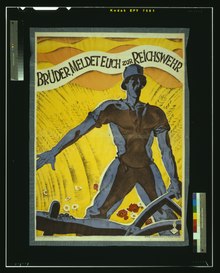
After the war, he remained in the military. In 1918 he volunteered for a staff position in the Border Defense Force in Breslau and served there until 1919. As part of Gruppenkommando II, he participated in the restructuring of the Imperial German Army of 500 000 men in the Reichswehr, the army of the Weimar Republic (restricted to 100 000 men by the Treaty of Versailles). Renowned from an early age as an intelligent and talented commander, Manstein was one of the 4,000 officers allowed under the treaty. In 1921 he assumed command of the 6th company of the 5th Prussian Infantry Regiment and later served as a staff officer for the Wehrkreiskommando II and IV, teaching military history and tactics until 1927. That This year he was promoted to major and served on the German General Staff of the Reichswehr Ministry in Berlin, visiting other countries to see their military installations and helping draft mobilization plans for the army. Again promoted to lieutenant colonel, he assumed command of the battalion light infantryman of the 4th Infantry Regiment, where he served until 1934. In 1933, the Nazi Party seized power in Germany, ending the Weimar Republic. In clear violation of the provisions of the Versailles treaty, the Reichswehr had been secretly rearming since the 1920s; the new government formally renounced the Treaty and proceeded with large-scale German rearmament and expansion of the army.
In February 1934 he moved as a full colonel to Berlin, where he served as Chief of Staff of the Wehrkreiskommando III. On July 1, 1935, he accepted the appointment of Chief of the Branch of Operations of the Army General Staff (Generalstab des Heeres), part of the Army High Command (Oberkommando des Heeres or OKH). From this position he actively participated in the development of Fall Rot (Red Plan), a defensive operation aimed at protecting German forces from a possible attack by France.

During this period he came into contact with Heinz Guderian and Oswald Lutz, who, like him, were committed to reinforcing the role of the Panzers on the battlefield. Faced with the conservative attitude of the high command, which was reticent in the face of too drastic changes, the German general insisted on the need to develop weapons more in line with the demands of mobile warfare, weapons that were more effective and, above all, faster. to be able to keep up with the infantry when assaulting bunkers and other fortifications. Manstein himself worked on a prototype sketch of a tracked vehicle which, based on the Panzer III chassis and initially equipped with a 75mm StuK 37 L/24 gun, was capable of providing direct fire cover for troops in assault. Colonel General (Generaloberst) Ludwig Beck gave the go-ahead to the project and thus the StuG III was born (StuG is short for Sturmgeschütz, or 'assault gun'), which would become the most tracked armored fighting vehicle manufactured by Germany during World War II. In October 1936 Beck promoted him to major general (Generalmajor ) and appointed him Deputy Chief of Staff (Oberquartiermeister I).
On 4 February 1938 he was given command of the 18th Infantry Division at Legnica with the rank of lieutenant general (Generalleutnant). This meant that Manstein did not take over Beck's post as Army Chief of Staff in August (Beck had resigned, despite Manstein's urgings not to, as he thought Hitler's plans to invade Czechoslovakia that October were premature). The post was entrusted to General Franz Halder, who had taken over Manstein's previous post as Deputy Chief of Staff. This incident triggered a feeling of mutual animosity between the two men.Halder was a typical Prussian officer, royalist, and devout Christian, and, like so many other German generals, he had no particular appreciation for the Nazis. For this reason, upon learning of his appointment, he considered rejecting it, since he believed that this position should be filled by someone more sympathetic to the Nazis such as Erich von Manstein, but Walther von Brauchitsch —the commander-in-chief of the Army (Oberkommando des Heeres or OKH)—who had had problems in the past with the Berlin general, convinced him to accept.
On April 20, 1939, during the celebration of Hitler's 50th birthday, he gave a speech in which, after praising Hitler as the leader "sent by God to save Germany," he warned the "hostile world" of that if he continued to erect "walls around Germany to block the path of the German people to their future", he would be very happy to see the world plunged into another world war. For his part, historian and professor Omer Bartov noted that the rise of officers like Manstein was part of a marked trend for a number of usually ardent National Socialist technocratic officers to come to the fore, and that the Wehrmacht, far from being a separate and independent apolitical organization from the Nazi regime, was fully integrated into the Third Reich.
World War II
Invasion of Poland
On August 18, 1939, during the preparations for operation Fall Weiss (White Plan) —the invasion of Poland—, he assumed the command of the General Staff of Army Group South from General Gerd von Rundstedt. In this position he worked together with Rundstedt's chief of operations, Colonel Günther Blumentritt, to develop the operational plan. Rundstedt accepted Manstein's plan, which called for the concentration of most of the armored units of the army group in Walther von Reichenau's 10th Army, with the aim of making a decisive advance that would lead to the encirclement of the Polish forces at west of the Vistula river. In that plan, the other two armies comprising Army Group South, Wilhelm List's 14th and Johannes Blaskowitz's 8th, were to provide flank support for Reichenau's armored advance towards Warsaw. Privately, he was lukewarm about the Polish campaign, as he thought it would be better to keep Poland as a buffer state between Germany and the Soviet Union; he also worried about an Allied attack from the west once the Polish campaign was underway, which would lead Germany into a war on two fronts, as had already occurred in World War I.
On August 22, 1939, he participated in a conference in which Hitler stressed to his commanders the need for the physical destruction of Poland as a nation. After the war, he would declare in his memoirs that he did not realize, at the time of that meeting, that Hitler was proposing to carry out a policy of extermination against the Poles. Only some time later would he become aware of this drift: it was when he and other generals of the Wehrmacht received reports about the activities of the Einsatzgruppen, the death squads of the Schutzstaffel (SS), tasked with following the army into Poland to kill intellectuals and other civilians. These paramilitary groups were also tasked with arresting Jews and others for relocation to Nazi ghettos and concentration camps. After the war, he faced three counts of war crimes related to the killing of Jews and civilians in sectors under his control, as well as the torture and murder of numerous prisoners of war.
Started on September 1, 1939, the invasion began successfully. In the area of responsibility of Army Group South, under the command of Rundstedt, the 8th, 10th and 14th Armies pursued the retreating Poles: the initial plan was for the 8th, the northernmost of the three, would advance towards Lodz, while the 10th, with its motorized divisions, would quickly advance towards the Vistula and the 14th would try to encircle the Polish troops in the Kraków area. These actions led to the encirclement and subsequent destruction of the Polish forces located in the Radom area from 8 to 14 September by six German army corps. Meanwhile, the German 8th Army was coming under attack from the north, so elements of the German 4th, 8th and 10th Armies quickly redeployed with air support in an impromptu attempt to cut off any escape from the German 8th Army. surviving Polish troops towards Warsaw. The flexibility and agility of the German forces led to the defeat of nine Polish infantry divisions and other units in the resulting Battle of Bzura (8–19 September), the largest engagement of the war up to that time. The conquest of Poland it ended quickly and the last Polish military units surrendered on 6 October.
Invasion of France, Belgium and the Netherlands

Operation Fall Gelb (Plan Yellow), the initial plan for the invasion of France, was prepared by the Commander-in-Chief of the German Army, Colonel General (Generaloberst) Walther von Brauchitsch, along with Franz Halder and other OKH members, in early October 1939. Like the Schlieffen Plan of World War I, it called for an encirclement attack through the Netherlands and Belgium. Hitler he was not satisfied with the proposed plan, so he subjected it to continual revisions throughout that month. Manstein was also dissatisfied as he was heavily focused on the northern wing and this time they would not have the element of surprise, so the German forces would be exposed to counter-attacks from the south. Also, the terrain in Belgium was not suitable as a base of operations for new attacks against France, so he believed that the operation would not kill the enemy quickly, as was the case in World War I. Finally, the result only offered, in the best of cases, a partial operational success, not a strategic outcome" which, moreover, would lead to trench warfare.
By the end of October he had prepared the outline of a different plan and submitted it to OKH through his superior, Rundstedt, for whom he now worked as Army Group A chief of staff. Manstein, developed with the informal cooperation of Heinz Guderian, called for panzer divisions to attack through the wooded hills of the Ardennes where no one would expect them, then establish bridgeheads on the Meuse and then rapidly advance to the English Channel.. The Wehrmacht would thus isolate the French and English allied armies in Belgium and Flanders. This part of the plan later became known as the Sichelschnitt ('sickle strike'). Manstein's proposal also included a second attack that would flank the Maginot Line, allowing the Wehrmacht to force through any future defensive lines the French might mount further south.
The OKH initially rejected the proposal. However, on November 11, Hitler ordered the redeployment of the forces necessary to carry out a surprise attack in the Sedan area, thus pushing the offensive in the direction Manstein had suggested. When the documents describing the details of the Fall Gelb fell into the hands of the Belgians on January 10, 1940, the Führer became even more receptive to the change. But his superiors, Generals Halder and Brauchitsch, were suspicious of his repeated insistence on making his proposals prevail. For this reason, Halder had Manstein expelled from Rundstedt headquarters and sent to Stettin to command XXXVIII Army Corps on 27 January. Hitler, still looking for a more aggressive plan, therefore approved a modified version of Manstein's ideas, now known as Fall Gelb (Yellow Plan), after meeting with him on February 17. Manstein and his army corps played a minor role during operations in France, where served as part of Günther von Kluge's 4th Army. His corps helped achieve the first advance east of Amiens during Fall Rot (or Red Plan, the second phase of the invasion plan) and was the first to reach and cross the River Seine. On June 1, 1940, he was promoted to general of the infantry (General der Infanterie) and awarded the Knight's Cross of the Iron Cross. On June 10, 1940, he crossed the Seine north of Paris, continued his advance with forced marches in the direction of Le Mans, where his army corps arrived on the 18th and his vanguard crossed the Loire on the night of June 19. June. On June 22, 1940, the surrender of France to Germany was signed in the Compiègne forest, at which time Hitler reached the height of his power in Europe.
Manstein was one of the proponents of the possible German invasion of Great Britain, dubbed Operation Sea Lion. He considered the operation risky, but necessary. Early studies by various staff officers determined that air superiority was a prerequisite for the invasion of England. His corps was to be sent across the English Channel from Boulogne-sur-Mer to Bexhill as one of four units assigned to the first wave. But since the Luftwaffe failed to defeat the Royal Air Force during the Battle of Britain, Operation Sea Lion was indefinitely postponed on October 12. For the rest of the year with little to do, he spent time in Paris and later at his house.
Invasion of the Soviet Union

In July 1940 the German High Command began planning Operation Barbarossa, the invasion of the Soviet Union. On March 15, 1941, he was appointed commander of the LVI Panzer Corps; he was one of 250 commanders told about the upcoming major offensive, first seeing detailed plans for the offensive in May. His corps was part of the 4th Panzer Group under the command of General Erich Hoepner integrated into Wilhelm Ritter von Leeb's Army Group North.The Army Group was tasked with moving through the Baltic States and then advancing on Leningrad. Manstein arrived at the front only six days before the start of the offensive. Operation Barbarossa began on June 22, 1941 with a massive German attack along the entire front line. Manstein's corps was to advance with Georg-Hans Reinhardt's XLI Panzer Corps to the Dvina River to secure the bridges near the city of Daugavpils. Soviet forces launched a series of counterattacks, but these were directed against the corps. of Reinhardt, which led to the Battle of Raseiniai. His army corps advanced rapidly, reaching the Dvina River, 315 kilometers away, in just one hundred hours. Outnumbered and well ahead of the rest of the army group, it fended off a series of strong Soviet counter-attacks.

After penetrating deep into Soviet lines again with its flanks unprotected, his corps was the target of a heavy Soviet counteroffensive on July 15 at Soltsy launched by the Soviet 11th Army, commanded by General Nikolai Vatutin. Manstein's 8th Panzer Division was encircled. Although he was able to fight his way to the German lines, after suffering heavy casualties and the Red Army managed to stop the German advance at Luga. The corps regrouped at Dno. The 8th Panzer Division had suffered heavy casualties, forcing it to be sent to the rear on anti-partisan duties and was reassigned to the 4th SS Polizei Division, for this reason the attack on Luga was repeatedly delayed.
The assault on Luga was still in progress when, on August 10, he received new orders that his next task would be to start the advance on Leningrad. As soon as he moved into his new headquarters at Lake Samro, he was told to send his men towards Staraya Rusa to relieve X Corps, which was in danger of being surrounded. On August 12, the Red Army had launched an offensive with the 11th and 34th armies against Army Group North, encircling three divisions. Frustrated with the loss of the 8th Panzer Division and the missed opportunity to advance on Leningrad, Manstein returned to Dno. His counteroffensive led to a major Soviet defeat as his unit surrounded five Soviet divisions, receiving air support for the first time on that front. They captured 12 000 prisoners and 141 tanks. His opponent, Soviet Major General Kuzma Kachanov of the 34th Army, was later court-martialled and executed for the defeat.
Manstein tried to obtain several days off for his men, who had been constantly fighting in difficult terrain and increasingly unfavorable weather since the start of the campaign, but to no avail. They were ordered to move east in the direction of Demyansk. When he was near the city, he was told that Colonel General Eugen Ritter von Schobert had died in a plane crash and that he was to immediately assume command of Army Group South's 11th Army in the Ukraine.
Crimean Campaign
So, on October 12, 1941, Manstein took charge of Schobert's army, which was tasked with invading the Crimean peninsula, capturing Sevastopol, and pursuing enemy forces on the flank of Army Group South during their advance towards the Soviet Union. Hitler's priority objectives were to prevent the Red Army from using its air bases in the Crimea (to bomb the Ploiești oil wells in Romania) and to cut off the Soviet supply of oil from the Caucasus.

Manstein's forces, mostly infantry formations, made a rapid advance during the first days of the offensive against strong Soviet resistance. After taking most of the entrance to the Perekop isthmus, his forces were reduced substantially, leaving six German divisions and the Romanian Third Army. The remainder of the isthmus was captured slowly and with some difficulty, due, according to Manstein, to a lack of air support to counter Soviet air superiority in the region. On October 31, he formed a mobile reconnaissance unit to press Soviet troops on the peninsula, cutting the road between Simferopol and Sevastopol. The Axis forces captured Simferopol the next day. By November 16, the 11th Army had captured all of the Crimean peninsula, except for Sevastopol. Meanwhile, the Red Army had evacuated 300 000 troops from the city by sea.
.jpg)
The city was heavily fortified: three defense lines protected the port with minefields, anti-tank traps and bunkers, as well as two huge coastal fortresses (Gorki I and II), which housed 305mm batteries. Thus, the The first attack by the German 11th Army, carried out in November, failed, and Manstein then ordered the siege of the city. On December 17 he launched another offensive, which would also prove unsuccessful. Nine days later, Soviet troops landed in the Kerch Strait to retake the city and its peninsula (see Battle of the Kerch Peninsula) and on the 30th they landed near Feodosia. Only a hasty withdrawal from the peninsula, contrary to Manstein's orders, by the 46th Infantry Division, under General Hans Graf von Sponeck, prevented a complete Axis collapse in the eastern Crimea; even so, the division lost most of its heavy equipment. Manstein was forced to cancel a planned resumption of the attack and sent most of his forces east to destroy the enemy bridgehead. The Soviet forces were in a better position, at least in terms of men and materiel, since they could be resupplied by sea; consequently, Stalin pressured his military commanders to carry out more offensives. However, the Soviets were unable to capture critical rail and road access points that would have cut German supply lines.
For the final German counteroffensive against Soviet troops from the Kerch Peninsula bridgehead, launched on May 8, 1942, Hitler finally assigned Manstein powerful air support. The 11th Army was clearly outnumbered, so he had them fake an attack from the north while most of his troops attacked from the south. Soviet troops soon fled. Manstein recorded in his memoirs the capture of "170,000 prisoners, 1,133 guns and 258 tanks." Kerch was captured on May 16. The Wehrmacht only lost eight thousand men.
After a month's delay he turned his attention once again to the capture of Sevastopol, using some of the largest guns ever built to do so. Thus, along with a large number of regular artillery pieces, super-heavy 600 mm mortars, the 800 mm Mörser Gerät 040 or the gigantic 47 m long Dora railway gun. A fierce bombardment began on the morning of June 2, 1942. The entire resources of the 4th Air Fleet (Luftflotte 4), under the command of Wolfram von Richthofen, joined the siege, with a non-stop bombardment that lasted five days, before the ground assault began.
.jpg)
The 11th Army gained ground in mid-June, focusing its attention on the northern approaches to the city. The huge siege guns, supported by Richthofen's regular field artillery and air force, slowly and methodically destroyed the main Soviet fortresses defending the approaches to the port, however the German-Romanian infantry suffered heavy losses as the battle progressed. month and fighting dragged on. Finally, mindful of the need to act before the German summer offensive of 1942 reduced the availability of reinforcements and supplies, in the early hours of June 28/29, Manstein ordered elements of the 50th Infantry Division carried out a surprise amphibious attack with assault boats through the Severnaya Bay, these troops penetrated the center of the city and flanked the first line of defense. The operation was a success, causing the Soviet resistance to collapse. On July 1, German forces entered the city. Finally backed into the sea, Soviet troops who had been unable to flee by boat or submarine were forced to surrender on July 4. That same day, Hitler awarded Manstein for his victory by promoting him to Field Marshal (Generalfeldmarschall ).The Soviet government awarded the city the Order of Lenin for its heroic defense.
During the Crimean campaign he was indirectly involved in atrocities committed against the Soviet civilian population, especially those perpetrated by Einsatzgruppe D, one of several groups of the Schutzstaffel (SS) who had been entrusted with the elimination of Europe's Jews and other civilians considered by the Nazis to be "undesirables". Einsatzgruppe D was in the rear of the 11th Army and Manstein's command provided them with vehicles, fuel and drivers. The military police cordoned off the areas where the Einsatzgruppe planned to kill the Jews to prevent them from escaping. Captain Ulrich Gunzert, shocked after witnessing the slaughter of a group of Jewish women and children by Einsatzgruppe D, went to Manstein to ask him to do something to stop the killings. Gunzert later claimed that he told him to forget what he had seen and concentrate on fighting the Red Army. Eleven of the seventeen charges against him at his subsequent war crimes trial related to the mistreatment and murder of Jews and prisoners of war by the Nazis in Crimea.
Siege of Leningrad
After eleven months of intense campaigning at the command of the 11th Army, Manstein was on the verge of physical and mental exhaustion, which is why he decided to accept the invitation of the Romanian Conducător Ion Antonescu to spend a few days off in the carpathians. On July 5, he traveled to his residence in Legnica to pick up his wife and his eldest son, Gero, who was recovering from a high fever, there and travel together to Romania, where they would spend the rest of the day. month. On August 12, 1942, he returned to the Crimea, where he hoped to lead his troops in an amphibious attack across the Kerch Strait in support of Army Group A. However, Hitler had other plans. In his directive of July 23, 1942, he concluded that the operations on the southern flank of the Eastern Front had achieved their objectives and that the troops placed at the disposal of Army Groups A and B were more than sufficient to carry out the operation. Fall Blau (Blue Box), which proposed the conquest of the Caucasus and Stalingrad.
After the long siege of Sevastopol, Hitler considered Manstein a master of siege warfare and therefore the right man to lead the German forces around Leningrad, besieged by the Germans since September 1941. However, only some elements of the 11th Army moved with him to the Leningrad front, leaving him with only the headquarters of the LIV Army Corps and XXX Corps, a total of four infantry divisions and heavy artillery. of siege that had given such good results in Sevastopol, the rest were sent to other units that would participate in the attack on the Caucasus. On August 27, 1942, he moved his headquarters north to the outskirts of Leningrad. Again he lacked adequate forces to assault the city, so he planned Operation Nordlicht (Aurora Borealis), a daring plan designed to cut the lines. supply lines from the besieged city that ran across Lake Ladoga.

However, the same day they arrived in the area, the Red Army launched the Siniávino offensive. Originally conceived as an encirclement attack against 18th Army in the narrow German salient to the east of the city and south of the great lake, the offensive seemed capable of breaking through the German lines and lifting the siege. On September 4, Hitler personally telephoned Manstein and ordered him to take charge of all German forces in the sector in order to restore the situation by means of an offensive; to do this, he placed him under the direct command of the OKH and ordered him to to report immediately any failed action by any commander. "Instead of the planned offensive against Leningrad," a frustrated Manstein noted in his diary, "we now face a battle south of Lake Ladoga." However, the initial German counterattack on 10 September failed: the infantry The Germans were hit hard by intense artillery and mortar fire, while the armored vehicles ran into dense minefields that caused heavy casualties. Given this scenario, he decided to concentrate his forces for an attack on two fronts, one from the north and the other from the south. Meanwhile, local German counterattacks slowed down the weakening Soviet attempts to advance.
The main German counteroffensive began on September 21. Six divisions participated in the attack: the 121st Infantry Division entered from the north; the 24th, 132nd and 170th Infantry Divisions of the XXX Army Corps attacked from the south; and the 3rd Mountain Division and 28th Jäger Division organizing various holding attacks. The German counterattack faced the same problems that the Soviet forces had faced the previous month. The advance on difficult terrain, overcoming defensive positions, was very slow and caused heavy casualties. On 25 September, after five days of heavy fighting, German forces united near Gaitolovo, and part of the Soviet 8th Army (6th Guards Rifle Corps) and 2nd Shock Army The Soviets were surrounded. After repulsing Soviet attempts to relieve or circumvent the encirclement, the trapped troops were bombarded by heavy artillery and air strikes.
Fighting continued until October 15, when German forces either destroyed the last pockets of Soviet resistance or withdrew to break German encirclement and recaptured all previously lost strongpoints except for a small bridgehead held by the forces of the Leningrad Front near Moskovkaya Dubrovka on the eastern bank of the Neva River. Although the Soviet offensive was repulsed, it inflicted heavy losses on the German troops deployed for Operation Nordlicht, so this it had to be postponed Sine die. In November, German reinforcements and other units of Army Group North were withdrawn by the German High Command to face Operation Urano around Stalingrad, forcing the operation to be canceled permanently. Soviet forces finally lifted the long siege in January 1944.
Early on the 30th, as usual, Erich von Manstein received his Chief of Staff, Infantry General Friedrich Schulz, to hear the latest situation report. But this time — as he recalls in his memoirs — , in addition to the numerical data, Schulz had to convey personal news to his superior: the eldest son of he had died in combat. The night before, 2nd Lieutenant Gero von Manstein, fighting with the 51st Panzer Grenadier Regiment of the 18th Panzer Grenadier Division, was advancing between positions to carry out an order (deliver a message to a platoon commander) when he was fatally struck by a Russian bomb. It so happens that, given the geographical proximity between the detachments of both men, Gero had visited his father twice. The second of them, on the 18th, would be the last one that saw his son alive.
Battle of Stalingrad
In an attempt to resolve its persistent oil shortage, the Wehrmacht had launched Operation Fall Blau (Case Blue), a massive offensive directed against the oil fields of the Caucasus in 1942. After Following a series of devastating German air raids, Friedrich Paulus' 6th Army was tasked with capturing Stalingrad, a key city on the Volga River. His troops, supported by the 4th Panzer Army under Hermann Hoth, entered the city on 12 September. Heavy hand-to-hand combat and street fighting followed. The Red Army launched a massive counter-offensive on 19 November codenamed Operation Uranus, designed to encircle the German armies and trap them in the city; this objective was achieved on November 23, when the tanks of the 4th Mechanized Corps, commanded by Vasili Volski, linked up with the vanguard units of the 4th Tank Corps, led by General Andrej Kravčenko, in the vicinity of Kalach. Hitler, aware that if Stalingrad were lost, he would probably never get it back, appointed Manstein commander of the newly created Army Group Don (Heeresgruppe Don), charged with mounting a relief plan., called Operation Winter Storm (Unternehmen Wintergewitter), to reinforce the Germans and open a corridor to the city. Manstein's initial assessment on 24 November was that the 6th Army, with adequate air support, could hold its positions in the city.

The operation began on December 12 and initially met with some success. On the 20th, his three Panzer Divisions (comprising the 23rd, 6th, and 17th Panzer Divisions) and supporting units of LVII Panzer Corps of 4th Panzer Army came within 30 miles of Stalingrad on the Myshkova River, where they were slowed down by constant counterattacks by Soviet tanks in very harsh weather conditions, with continuous blizzards and very low visibility. On December 18, he requested Hitler that the 6th Army attempt to break out of the encirclement to break out and join his troops. Hitler flatly refused, and both Manstein and Paulus were reluctant to openly disobey his orders. Conditions deteriorated inside. from the city; the men were infested with lice, and the cold and inadequate supply of supplies and food took a toll on their health and morale. The Reichsminister of the air forces (Lufwaffe), Hermann Göring, had assured Hitler that the encircled 6th Army could be adequately supplied from the air; but, due to bad weather, lack of aircraft, and mechanical difficulties, this proved unfeasible.
On 24 January, the commander of Army Group Don urged Hitler to allow Paulus to surrender, but he refused: 6th Army had to hold out to the end. Despite the Führer, on January 31, 1943 Paulus finally surrendered with his remaining 91 000 soldiers, although the survivors they did not return to Germany until the mid-1950s. In his memoirs, the Berlin general maintained that he had done everything possible for the 6th Army. But many frontline men saw it differently; thus, according to the testimony of the then lieutenant Philipp von Boeselager: «he could have cost him his head. But after all, he was a quarterback. More than 300,000 soldiers went to Stalingrad [and only] 6,000 of them returned, having been taken prisoner. He had to be aware, he had to have seen it ».
For the American historians Williamson Murray and Allan Millett, the message that Manstein had addressed to Hitler two months earlier, on November 24, warning him that the 6th Army should not try to break out of the encirclement, together with Göring's declarations that the Luftwaffe could supply Stalingrad, "sealed the fate of the Sixth Army". For his part, the German-American Gerhard Weinberg has pointed out that Manstein's version in his memoirs of such events are biased, and that several of the events described in them were probably fabricated. "Because of the enormous sensitivity of the Stalingrad question in postwar Germany, Manstein worked hard to distort the record on this matter as well as his massive participation in the murder of Jews," Weinberg wrote.
Meanwhile, the Red Army launched its own offensive, Operation Saturn, which aimed to capture Rostov-on-Don and thus isolate German Army Group A in the Caucasus. However, due to the Winter Storm operation, the Soviets had to reassign part of their forces to avoid the success of the German plans, so the Soviet operation was modified and its objectives were changed to more modest ones, which is why which the operation was renamed Little Saturn. The offensive forced Manstein to divert a substantial part of the forces from him in order to prevent the collapse of the entire front. The attack also disabled the XLVIII Panzer Corps (comprising the 336th Infantry Division, the 3rd Luftwaffe Field Division and the 11th Panzer Division), under the command of General Otto von Knobelsdorff, joining LVII Panzer Corps as originally planned to help the relief effort. Instead, the XLVIII Panzer Corps, which was forced to maintain a defensive line along the Chir River, did manage to stop the successive Soviet attacks. General Hermann Black used the 11th Panzer Division to attack the Soviet salients. On the verge of collapse, the German units were able to hold the line, but the Italian 8th Army on the flanks was heavily outnumbered and subsequently destroyed.
Encouraged by this success, the Red Army planned a series of follow-up offensives in January and February 1943 with the intention of decisively defeating German forces in southern Russia; after the destruction of the remaining Hungarian and Italian forces during the Ostrogozhsk-Rossosh Offensive, Operation Star and Operation Gallop, he set out to recapture Kharkiv and Kursk and encircle all German forces east of Donetsk. Those operations succeeded in breaking through the German lines and threatened the entire southern part of the German front. To deal with this serious threat, in early February 1943 Army Group Don, Army Group B, and parts of Army Group A joined to form the new Army Group South (Heeresgruppe Süd), under the command of Manstein.
Kharkov Counteroffensive

During the offensives in February 1943, the Red Army broke through the German defensive lines and retook Kursk on the 9th. As Army Groups B and Don were in danger of being surrounded, Manstein urged reinforcements. Despite the fact that Hitler had demanded on the 13th that Kharkov be retained "at all costs", the truth is that the next day SS-Oberst-Gruppenführer Paul Hausser, commander of the II SS Panzer Corps, ordered the evacuation of the city. That same day, the heavily punished 1.er Army Panzer also withdrew from their positions on the Donets and Mius rivers. As punishment, the German dictator relieved of command not Hausser, but his superior, General of Mountain Troops ( General der Gerbirgstruppe ) Huber Lanz. By the middle of the month, Manstein was so frustrated that he asked Hitler to make him commander of the entire Eastern Front.
This request by Manstein and the plight of his troops caused Hitler to fly to the front lines in person on the afternoon of February 17, and over the course of three days of grueling meetings, Manstein convinced him that offensive action was needed. in the area to regain the initiative and avoid encirclement. The troops were reorganized and important reinforcements were introduced into the area from the neighboring armies. He immediately began planning a counteroffensive, launched on February 20, which would later be known as "Manstein's Mobile Defense"; Nikolai Vatutin and the Soviet forces had assumed that since German troops had abandoned Kharkov with little fighting, they would They were in clear retreat, which is why they were taken completely by surprise. By March 2, the Wehrmacht had captured 615 tanks and killed an estimated 23 000 Soviet soldiers.
To reinforce the point that the recapture of Kharkiv was politically important, Hitler again traveled to the front lines in the Ukraine on March 10, 1943, where he met again with Manstein to review the situation and make plans for how they should be carried out. carried out the operations. He carefully assembled his available forces along a wide front to avoid their encirclement and the Germans recaptured Kharkov on 14 March, after bloody street fighting in the Third Battle of Kharkov. For this great victory, he received the Oak Leaves for the Knight's Cross. Hausser's II SS Panzer Corps captured Belgorod on 18 March. The Berlin general's counteroffensive not only prevented the disintegration of the entire front, but recaptured substantial territory, as well as destroying three Soviet armies and forcing the withdrawal of three others. Soviet casualties over the previous month in that sector had been 46 000 killed and 14 000 prisoners; likewise, 600 tanks and 1,200 artillery pieces were captured or destroyed. The onset of the thawing season ended operations in the area on 23 March.
Battle of Kursk

Manstein favored an immediate pincer movement in the Kursk salient after the battle at Kharkov, but Hitler worried that such a plan would draw forces away from the industrial Donets Basin region. In any case, the ground was still too muddy to move the tanks into position. Instead of an immediate attack, OKH prepared Operation Citadel, the execution of which would be delayed while more troops were assembled in the area and the mud solidified. Meanwhile, the Red Army, well aware of the danger of encirclement, also sent large numbers of reinforcements, and their intelligence reports revealed the expected location and exact timing of the German attacks.
Operation Citadel, the last major German offensive operation in the east, was an attempt by the German army to regain the initiative in order to prevent desertions among its satellite countries and increase the morale of the German troops and civilian population When finding any limited targets, the Germans focused on the Kursk salient. Salient that had formed after the Soviet offensive in February and March 1943. If the Germans removed this salient they could destroy large numbers of Soviet troops, shorten the front and free up troops for future operations. Heinz Guderian was opposed to the offensive, he wished to stay on the defensive for the rest of 1943 to rebuild the panzer gun, badly decimated after the last fighting. On May 3, 1943, Hitler attended a meeting in Munich to discuss the details of the offensive. At that meeting Walter Model, commander of the 9th Army, advised against attacking because of the elaborate defenses the Soviets had built at the main German attack points, which clearly showed that the Soviets were aware of the upcoming German offensive.. Erich von Manstein, commander of Army Group South agreed with Model and also advised against attacking, but Günther von Kluge, commander of Army Group Center and Kurt Zeitzler, chief of the OKH General Staff, advised to continue with the operation. Zeitzler argued that the new tank models would give the Germans a clear technological advantage, but Guderian and Albert Speer objected that severe technical problems, especially those associated with the Panthers, would limit this supposed technological superiority. However, Hitler was unable to make an immediate decision, so the decision on whether or not to continue with the projected operation was postponed. A week after the Munich meeting, in a private conversation with Hitler before the offensive, Guderian said: "Mein Führer, why do you want to attack precisely in the East this year?" Hitler replied: "You are right every time I think about this attack my stomach turns." Guderian concluded: “Then you have the right attitude towards this situation. Leave him alone."

On July 1, just as Manstein was preparing to fly to Bucharest, where he was scheduled to decorate Marshal Ion Antonescu, he received a message from Hitler's headquartersː "The Führer awaits you for a conference top secret in the Wolfsschanze (Wolf's Lair). We have informed Bucharest that his trip has been postponed because of bad weather ». Arriving at Rastenburg, he met with Hitler and "a formidable number of high-ranking generals." During the meeting, Hitler informed him that "I have decided to set the start date of the Citadel operation for July 5." He then added a warningː "This time we must make absolutely sure that our intentions are not betrayed through carelessness or negligence." Through defectors and intelligence reports the Stavka learned that same night from the date of the projected offensive.
The planning of the 1943 German offensive, codenamed Operation Citadel, was the work of Colonel General (Generaloberst) Kurt Zeitzler. The final plan approved by Hitler was obvious to both sidesː two armored strikes directed against the northern and southern hinges of the salient, then moving towards the small central town of Kursk to encircle and subsequently destroy the Soviet troops deployed on it. area. At the northern pincer of the German advance was General Walter Model's 9th Army, integrated into Army Group Center under Field Marshal Günther von Kluge; To carry out his mission, Model had 335 000 soldiers, 920 tanks and assault guns, 4,570 artillery pieces and 730 aircraft. In the southern pincer was Colonel General Hermann Hoth's 4th Panzer Army, and on its right flank was Army Detachment Kempf, named after its commander Lieutenant General (Generalleutnant) Werner. Kempf; both armies integrated into Army Group South under the command of Manstein, this group of armies was the most powerful of those that were going to participate in the offensive and had 331 907 soldiers, 1,508 tanks and assault guns, 3,600 artillery pieces and 1,100 aircraft.
The advance of both armies was slowed by dense minefields and by being caught in bloody hand-to-hand combat in a series of carefully prepared Soviet defensive lines. After five days of heavy fighting, the advance de Model in the north stopped; by then 9th Army had suffered 25 000 casualties. On July 13, Model's forces were forced to withdraw towards Orel, where the Soviet Army had launched Operation Kutúzov. On the southern flank, Manstein's forces were more successful. The troops of the 4th Panzerarmee, used their few Panthers and Tigers as spearheads, penetrated the three Soviet defensive belts and advanced some 35 kilometers into the Soviet lines, but were stopped by the tanks of the 1. er Lieutenant General Mikhail Katukov's Tank Army. To stop the German offensive, Vatutin buried his tanks in strong defensive positions, thus reducing the exposure of Soviet armor, and launched relentless counterattacks against the unprotected German flanks. These tactics succeeded in stopping the German advance. The battle reached its height between 11 and 13 July, when the Germans broke through to the important Prokhorovka railway junction, inflicting heavy casualties on the Soviet troops in the ensuing Battle of Prokhorovka, but the timely arrival of the 5th Pavel Rotmistrov's Guards Tank Army halted the German advance, inflicting heavy losses on it.
On July 13, 1943, as the battle for Projoroska was raging, Field Marshals Günther von Kluge and Erich von Manstein were summoned to the Wolfsschanze, where Hitler informed them that on July 10 the allies had landed in Sicily, for which reason he considered that the Citadel operation in Kursk should be cancelled. Manstein protested; he believed that the Soviet forces had exhausted all their reserves in the area and did not wish to stop until all his own reserves had been committed to combat. Hitler, however, insisted on canceling the operation; furthermore, he gave orders to withdraw various units from the two participating army groups, to send them to Italy. Manstein ordered the withdrawal to the starting positions on July 17, 1943 and the initiative definitively passed into Soviet hands, an initiative that the Germans would not recover during the remainder of the war.
Retreat to the Dnieper

Manstein considered the Battle of Kursk a German victory in the sense that it had destroyed much of the Red Army's offensive capability for the remainder of 1943. This assessment turned out to be incorrect, as the Red Army was able to recover much faster than he expected. Manstein ordered his armored reserves moved to the Mius River and the lower Dnieper without realizing that the Soviet activities had been a mere diversionary maneuver. The Soviet offensive, which began on August 3, put Army Group South under heavy pressure, resulting in, after only two days of heavy fighting, Soviet troops breaking through the German defensive lines and retaking Belgorod (August 5); In this way they managed to open a gap fifty-six kilometers wide between the 4th Panzer Army and the Kempf Army detachment, charged with protecting the disputed enclave of Kharkiv. In response to Manstein's demands for reinforcements, Hitler sent the Großdeutschland division, as well as the 7th Panzer Division, the 2nd SS Das Reich Division, and the 3rd SS Totenkopf Division from the Orel and Donbas regions. However, he refused the calls for withdrawal and insisted that Kharkov be retained.
On the verge of receiving reinforcements, between August 13 and 17 Manstein fought a series of counter-attacks and armored battles northwest of the city, near Bogodujov and Okhtirka, causing heavy casualties when they clashed with the previously prepared powerful Soviet positions. Finally, on the 16th and 17th, III Panzer Corps managed to stabilize the situation and drove the 6th Guards Army and the remnants of the 1st Army back to the Merchick River.er Tank Army. On the 20th he informed OKH that his forces in the Donets River area had to cover too wide a front with insufficient numbers of troops, and that he would have to cross the Dnieper if he did not receive reinforcements. Continued pressure from Soviet forces had separated Army Group Center from Army Group South and seriously threatened Manstein's northern flank. When the Red Army launched its main reserves in a powerful offensive to retake Kharkiv (21-22 August), the marshal took the opportunity to close the gap between the 4th Panzer Army and the 8th Army and re-establish a continuous defensive line..
With the northern flank still dangerously exposed, Manstein asked Hitler for more reinforcements or, if that was not possible, to be allowed to maneuver towards more favorable sectors. Hitler's response was a further visit to Manstein's headquarters in Zaporizhia on September 8, the third meeting between the two men in just two weeks. After explaining the dire situation of his troops, Manstein stated: "Whether we like it or not, we must fall back," and then gave his view of what should be done: "I propose that Army Group Center return immediately to the Dnieper. In this way, with the forces safe, the line of the Dnieper, including the area near the Crimea, can be reinforced and held." But Hitler again refused to withdraw, although he promised some reinforcements. The next day he telephoned the Chief of the General Staff (Oberkommando des Heeres, OKH), General Kurt Zeitzlerː «Please inform the Führer that we expect a hard Soviet advance towards the Dnieper at any time".
On September 14, Marshal Nikolai Vatutin's Voronezh Front attacked Manstein's northern flank, breaking through the German lines and advancing west toward Okopy, just 125 kilometers from Cherkasy. At the same time, a little further north, Marshal Konstantin Rokossovsky's Center Front advanced rapidly to just 46 kilometers from Kiev, threatening to encircle most of the German troops west of the Dnieper. Given the seriousness of the situation, Manstein informed Hitlerː "Tomorrow morning, I will order the 4th Panzer Army to withdraw to the Dnieper on both sides of Kiev to prevent it from being isolated in small groups and annihilated in front of the river." Finally, in a new meeting at the Wolfsschanze, Hitler agreed to the Berlin general withdrawing to the other side of the river on September 15.
During that month, the contending armies launched into a frantic race to reach the Dnieper before their rivals. Manstein, applying a radical scorched earth policy, ordered the destruction of everything that could be useful to the enemy. Due to this decision, he not only had to face criminal charges in his war crimes trial after the war, but also exacerbated the indiscipline in the ranks of the German army, since this enormous destruction clearly demonstrated that the side invader no longer harbored any chance of victory; In addition, this policy consumed an inordinate amount of resources and served as an incentive for the Soviet troops to fight more fiercely. Vatutin, faced with the devastating devastation that he was finding in his path, harangued his troops with rhetoric such as: "They are burning the bread, we must attack."
The Germans thought the Soviet troops were huge, but the reality was that they had been badly decimated by previous bloody battles; Furthermore, due to the destruction caused, provisioning was very difficult, but the Soviet armored units continued the pursuit. Soviet General Pavel Rotmistrov concentrated his few tanks in several forward detachments and managed to fool the Germans into thinking that his troops were far superior to the real ones. Between 19 and 23 September 1943, Vatutin's vanguard armored forces reached the Dnieper north and south of Kiev, and quickly established a series of bridgeheads across the river.
The Red Army finally achieved its objective, but the losses were enormous for both sides. In the final balance, in July and August accounted for, the Soviet side recorded more than 1.6 million casualties, 10 000 tanks and artillery pieces self-propelled, and 4,200 aircraft. German losses, while in absolute terms only one-tenth of Soviet losses, were far more costly, as no further reserves of men and materiel were available on short notice.
In a series of four meetings in September, Manstein tried in vain to convince Hitler to reorganize the high command for the Eastern Front and allow his generals to make major military decisions. He himself was running indirectly for top commander military of that future single command. However, for the Führer , Manstein was no longer his “miracle marshal”; in fact, every time a general spoke to him about "manoeuvring" he suspected that he was trying to convince him to cede ground, which for his military mentality meant giving up definitively ground that had cost a lot to conquer and it was essential to the Reich's war effort.
The disagreements between the two men were notorious even beyond the war scene itself. An illustration based on a portrait of Manstein was on the cover of the January 10, 1944 issue of the US magazine Time; At the bottom was a striking aphorism questioning his doctrine: "Retreat may be masterly, but victory is in the opposite direction."
Operations in Ukraine

Throughout September 1943 he withdrew to the west bank of the Dnieper River in an operation that was for the most part well-planned, but sometimes degenerated into a disorganized rout as his exhausted soldiers became "unstuck". Hundreds of thousands of Soviet civilians were forced to evacuate the eastern bank of the Dnieper to the west bringing their livestock and personal property. Manstein correctly deduced that the next Soviet attack would be on Kiev, but as had happened earlier in the campaign, the Red Army extensively used maskirovka (combination of deception and operational security) to disguise the exact timing and location of its next offensive. Historians Williamson Murray and Allan Reed Millett wrote that the "belief "fanatical" many German generals in Nazi racial theories [...] made the idea that the Slavs could manipulate German intelligence with such consistency absolutely inconceivable." The First Ukrainian Front, under Nikolai Vatutin, attacked the 4. 1st Panzer Army outnumbered near Kiev. Vatutin first deployed an attack near Liutezh, just north of kyiv, and then attacked near Bukrin to the south on 1 November. German troops, thinking that Bukrin would be the site of the main attack, were surprised when Vatutin captured the bridgehead at Liutezh and gained a foothold on the west bank of the Dnieper. kyiv was liberated on November 6. On October 28, the 17th Army was cut off in the Crimea by Army General Fyodor Tolbukhin's Fourth Ukrainian Front.
Under the leadership of General Hermann Balck, the cities of Zhytomyr and Kórosten were retaken in mid-November, but after receiving ample reinforcements Vatutin resumed the offensive on December 24, 1943, and the Red Army continued its successful Advance. Manstein's repeated requests to Hitler for more reinforcements were refused. On 4 January 1944, he met with Hitler to tell him that the Dnieper line was untenable and that he needed to withdraw to save his forces. Hitler refused, and Manstein again he requested changes at the highest levels of the military leadership, but his proposals were again rejected, as Hitler believed that he alone was capable of managing the broader strategy.

In January he was forced to withdraw further west by the Soviet offensive. On January 24, after a massive shelling, the 4th Guards Army and the 53rd Army of the Second Ukrainian Front under Marshal Ivan Konev attacked south of the Korsun salient and the next day reunited with the 5th. º Pavel Rotmistrov's Guards Tank Army. They broke through and easily repulsed weak German counterattacks. On 26 January, Nikolai Vatutin's 1st Ukrainian Front dispatched the 6th Guards Tank Army from the north, which met the advancing Soviet forces from the south on 28 January, encircling about 60 000 Germans of the XI and XXXXII Army Corps of the German 8th Army of General Otto Wöhler in a pocket of 3100 km2 near the city of Cherkasy. From a series of captured German maps Zhukov estimated the encircled enemy force at eleven divisions and about 85 000 men.
.jpg)
In all, twenty-seven divisions were assigned to destroy the pocket. Soviet efforts, however, were hampered by the onset of an early thaw, which muddyed the ground. General Hans-Valentin Hube commander of the 1.er Panzer Army requested authorization to evacuate the troops besieged before the Soviets completed the encirclement, however, Hitler refused. On 4 February Manstein sent a relief force under General Hube, in charge of the 1st.er Panzer Army, including XLVII and III Panzer Corps, these corps consisted of the 1st, 16th and 17th Panzer Divisions.ª, the 1st Leibstandarte SS Adolf Hitler Division and the Heavy Panzer Regiment «Báke» equipped with forty-seven Panzer V Panthers and thirty-four Panzer VI Tigers under the command of Lieutenant Colonel Franz Bäke, to try to help the troops besieged Germans. XLVII Panzer Corps attacked on February 4, from the southeast, while III Panzer Corps attacked from the west, but both were bogged down by mud, logistical difficulties, and stiff Soviet resistance. Due to General Hube's inability to contact the encircled troops, Manstein ordered General Wilhelm Stemmermann—who commanded the six encircled German divisions—to break out of the encirclement and link up with the German troops at Lysyanka. February Stemmermann ordered his surviving troops to destroy their heavy equipment and infiltrate between the Soviet lines and escape, at dawn the next day the German troops were massacred by tanks and Cossack horsemen, only a handful were able to escape.
In early March Soviet forces had pushed the Wehrmacht beyond the western bank of the Dnieper River. Due to the Führer directive no. on March 25, when Hitler did not give permission to escape in time. Manstein flew to Hitler's alpine refuge in Berchtesgaden to try to convince him to change his mind, which he initially refused. He complained bitterly that he had wasted all the reinforcements he had given him, and accused him of always wanting to retreat and being unable to hold his defensive positions.
At midnight, when Hitler used to chair the day's situation conference, he met Manstein again and inexplicably authorized the removal of fence 1.er Panzer Army. He also gave it substantial reinforcements including a light infantry division, an infantry division, and two SS panzer divisions. Thanks to these reinforcements and a well-timed counterattack launched by II SS Panzer Corps, the remnants of 1.er Panzerarmee escaped to the west in early April. Despite this small German success, on April 17, the vanguard armored units of the 1.er General Mikhail Katukov's Tank Army reached the Romanian border in the Carpathian Mountains, in the process isolating Army Group South (later renamed Army Group Ukraine North) from German troops further south.
Dismissal and transfer to the reserve
On March 30, 1944, in reaction to the German defeat in the Dnieper-Carpathian offensive, Hitler summoned Manstein to a meeting at his mountain retreat, the Berghof. The host, after giving him the Swords of the Knight's Cross of the Iron Cross, ordered the Berlin general that he should hand over command of Army Group South to Walter Model on April 2; to justify the decision, he told him that, While he agreed with the decisions Manstein had made in recent months, on the Eastern Front "the days of great tacticians were over" and that henceforth he "would need generals who could get the most out of their troops." ». A similar fate would befall the commander of Army Group A, Ewald von Kleist, who was replaced by Ferdinand Schörner. The Führer also took other drastic measures; numerous corps, division, and "fortress" commanders were also dismissed and, in addition, put on trial; finally, thousands of intermediate and junior officers were directly sentenced by military courts.
While on medical leave after cataract surgery on his right eye, he recuperated at home in Legnica and at a medical center in Dresden. She suffered from an infection and for a time was in danger of losing her sight. On the day of the failed July 20 plot, the attempt to assassinate Hitler, Manstein was at a Baltic spa. Although he had met on several occasions with three of the main conspirators—Claus von Stauffenberg, Henning von Tresckow, and Rudolf Christoph Freiherr von Gersdorff—he was not involved in the conspiracy; he later he said: " Preussische Feldmarschälle meutern nicht " ('Prussian field marshals do not riot.') Even so, the Gestapo put his house under close surveillance.
In October 1944, when it became clear that Hitler no longer intended to call him to a new position, he moved to a farm granted to him by the Nazi authorities in Eastern Pomerania, but soon had to leave due to advancing warfare. Soviet troops. As he, in turn, had to evacuate his home from Legnica on January 22, 1945, the family was forced to temporarily stay with friends in Berlin. While he was there, a few days later he appeared at the Führerbunker to beg the Führer for a new assignment. Hitler did not even want to receive it. He and his family moved to western Germany until the war in Europe ended in May 1945. On August 26, on one of his visits to Heiligenhafen hospital to correct his eye problems, the British arrested him and transferred him to a prisoner of war camp in the vicinity of Lüneburg.
Postwar
Judgment
In October, the allies transferred him back to Nuremberg and confined him in a prison attached to the Palace of Justice, the place where the trials of the main Nazi organizations and war criminals would be held. While there, Manstein, along with General of the Cavalry Siegfried Westphal, helped prepare a 132-page document for the defense of the General Staff and the OKW. With this document, the myth of the innocent Wehrmacht began to take shape (that is, allegedly not guilty of the events of the Holocaust and other war crimes). He also testified about the Einsatzgruppen , the treatment of prisoners of war and the concept of "military obedience". In particular, the court questioned the Berlin general about his attitude towards the Order of Commissars, which had been issued by Hitler in 1941 and which called for the shooting of all Soviet political commissars without the need for a prior trial; although he admitted that he received the order, he assured that he did not comply with it.
.jpg)
Documents dated 1941 presented at Nuremberg and at his subsequent trial contradict this claim: he actually received regular reports during that period of the execution of hundreds of political commissars. He denied any knowledge of the activities of the Einsatzgruppen and testified that the soldiers under his command were not involved in the murder of Jewish civilians. Otto Ohlendorf, commander of the Einsatzgruppen D, contradicted this during his testimony, saying that not only Manstein was 11th Army was directly involved in these murders. In September 1946 the General Staff and the OKW were declared not to be a criminal organization. Their judgment explained that a collection of military officers was not a group or organization as defined in article 9 of its statute.
Following his testimony at Nuremberg, he was interned as a prisoner of war by the British at Island Farm (also known as Special Camp 11) in Bridgend, Wales, where he was held in awaiting the court's decision as to whether or not he faced trial for war crimes. In most of it he kept apart from the other prisoners, taking solitary walks, tending a small garden, and began working on the drafts of two books. British author Liddell Hart corresponded extensively with himself and other high-ranking German prisoners at Island Farm and visited inmates in various camps around Britain while preparing his 1947 book On the other side of the hill. Liddell Hart was an ardent admirer of the German generals; he described Manstein as an operational genius. The two remained in contact, and Liddell Hart later helped arrange the publication of the English edition of his memoir, Verlorene Siege (Frustrated Victories ) in 1958..
In June 1948 the British cabinet finally decided, under strong pressure from the Soviet Union, to indict Manstein for war crimes. He and three other senior officers (Walther von Brauchitsch, Gerd von Rundstedt, and Adolf Strauß) were transferred to Munsterlager to await trial. Brauchitsch died in October, and Rundstedt and Strauss were released for health reasons in March 1949. Manstein's trial was held in Hamburg from August 23 to December 19, 1949.
At trial he faced seventeen charges, three of which concerned events in Poland and fourteen in the Soviet Union. The charges included mistreatment of prisoners of war, cooperation with the Einsatzgruppe D to murder Jewish residents of Crimea, and ignoring the welfare of civilians by using "scorched earth" tactics while withdrawing from the Soviet Union. The prosecution, led by lead counsel Arthur Comyns Carr, used an order Manstein had signed on November 20, 1941, based on the Severity Order that had been issued by Field Marshal Walther von Reichenau, to build its case. according to which Manstein had known and was complicit in the genocide. The order called for the elimination of the "Bolshevik Jewish system" and the "harsh punishment of the Jews".
He stated that he remembered asking for a draft of such an order, but did not remember signing it. American historians Ronald Smelser and Edward J. Davies wrote in 2008 that Manstein agreed with Hitler's idea that the war against Soviet Union was in a war to exterminate Judeo-Bolshevism and that he perjured himself when he claimed not to remember signing his own version of the Order of Severity.

His defense, led by prominent lawyer Reginald Thomas Paget, argued that the order was justified because many of the partisans were Jews, and therefore Manstein's order calling for the execution of all Jews was justified by his desire to protect his men from partisan attacks. He argued that Manstein was not required to disobey orders given by his sovereign government, even if those orders were illegal. Speaking in his defense, he stated that he found Nazi racial policy repugnant. Sixteen other witnesses testified that he had no knowledge of or involvement in the genocide. Paget called the Soviets "savages", arguing that he showed restraint like a "decent German soldier" in upholding the laws of war when fighting against the Soviets, who displayed "appalling savagery".
Whether or not he was responsible for the activities of Einsatzgruppe D, a unit not under his direct control but operating in his zone of command, became one of the key points in the trial.. The prosecution claimed that it was their duty to know about the activities of this unit and also to put an end to its genocidal operations. Recent scholars, including Ronald Smelser and Benoît Lemay, are of the opinion that he almost certainly perjured himself at his trial and at Nuremberg.
The judges found him guilty on nine of the counts and sentenced him to eighteen years in prison. The charges for which he was found guilty included shooting Soviet prisoners of war; carry out the Order of the Commissioners; and allowing his subordinates to murder civilians.Manstein's supporters in Britain and Germany protested. Liddell Hart lobbied in the British press and in Germany the sentence was seen as a political decision so it was reduced to twelve years in February 1950. Paget published a best-selling book in 1951 on Manstein's career and trial, to which he portrayed himself as an honorable soldier who fought heroically despite the overwhelming odds on the Eastern Front and who had been convicted of crimes he did not commit. The book helped contribute to the growing cult surrounding his name. His release on May 7, 1953 was partly the result of a recurrence of his eye problems, but also the result of pressure from Winston Churchill, Konrad Adenauer, Liddell Hart, Paget, and others. In addition, the British wanted Germany to participate in the defense of Western Europe, and Adenauer made Germany's rearmament conditional on the release of German officers convicted of war crimes.
Anti-Semitism
Manstein believed that Bolshevism and the Jews were inextricably linked, that there was a worldwide Jewish-led conspiracy, and that to stop the spread of communism it was necessary to eliminate Jews from European society. His order of November 20 of 1941, based in part on the Reichenau Severity Order, read in part:
The Bolshevik system must be eliminated once and for all and must never again be allowed to invade our European vital space; [...] It is the same Jewish class of beings who have done so much damage to our own homeland by virtue of their activities against the nation and civilization, and that promote anti-German tendencies throughout the world, and that they will be the precursors of revenge. His extermination is a dictate of our own survival.
He did nothing to prevent the killing of Jews and other civilians in the areas where his units operated and in which his 11th Army actively participated. That he was well aware of the massacres perpetrated by the Einsatzgruppen is demonstrated in a letter dated 1941 that he sent to Otto Ohlendorf, in which he demanded that Ohlendorf hand over the wristwatches of the murdered Jews. Manstein believed that his men deserved the watches, since they were doing so much to help Ohlendorf's men in their work. Smelser and Davies note that this letter was the only time he ever complained about the activities of the Einsatzgruppen. He later stated that he believed the number of Jews killed in the Holocaust was exaggerated.
Anti-Semitism was common in Germany and throughout Europe during this period, and Manstein's attitude towards Jews was rooted in his exposure and assimilation of these views. His actions were a clear reflection of his loyalty to Hitler and the Nazi regime and their entrenchment in a sense of duty based on traditional Prussian military values.
His criticism of Hitler was based solely on his disagreements over the conduct of the war, not on the regime's racial policies. Some historians, including Antony Beevor and Benoît Lemay, believe that he was of Jewish ancestry. the only Reichswehr officer who opposed the introduction of the Aryan paragraph in 1934, sent a protest letter to General Beck, commenting that anyone who had volunteered to serve in the armed forces had already he had proven himself. Lemay speculated that he may have been interested in protecting his two "mongrel" (mischlinge) great-nephews, who were already serving in the Reichswehr. He may also have been concerned about the possibility that he had distant Jewish ancestry.The SS conducted an investigation into Manstein's ancestry, but the report was not completed and the results remain unknown.
Activities after release
In 1955 the Amt Blank (Federal Ministry of Defence) called on Manstein and ten other former senior officers to formulate plans for the refounding of the German army. On June 20, 1953 he spoke at the Bundestag , where he laid out his analysis of the country's defense and strategic power considerations, and spoke about whether Germany should have a professional army or an army of conscripts. His opinion was that the length of military service for the Bundeswehr should be at least 18 months, or preferably 24 months. His idea of forming a reserve force was later implemented.
His war memoirs, titled in German Verlorene Siege (Frustrated Victories), were published in West Germany in 1955, and were translated into several languages. The book, which met with widespread commercial acclaim, was especially critical of Hitler and his leadership style. Historians such as Liddell Hart saw Manstein's emphasis on the purely military aspects of warfare and his omission of the political and moral aspects of warfare. his actions as a way of absolving himself of any responsibility for the events of the Holocaust. This self-congratulatory portrayal influenced popular opinion, elevating him to the top of Germany's best generals and military leaders, not to mention among the best. history. Some scholars, such as Benoît Lemay, however, consider Manstein's approach to be ethically reprehensible.
In the concluding section of his aforementioned memoirs, he complained of "a dictator who believed in the power of his will not only to pin his armies wherever they should be, but to keep even the enemy at bay, [and that] he lacked real military training.” Without the interference of this "amateur bungler," he insisted, the officer corps could have at least achieved a negotiated peace with the Soviet Union. These simplistic and incomplete, if not false, explanations of the reasons for the Soviet victory, that is, their enormous superiority in numbers and Hitler's incompetence, have been used almost obsessively by virtually every senior post-war German officer to justify so much his performance during World War II as the reasons for his defeat.
After his time in prison, he moved several times with his family, successively residing in Essen and Bonn, before settling in the area around Munich in 1958. That same year he published the second volume of his memoirs, Aus einem Soldatenleben (& # 39; Life of a Soldier & # 39;). This, although published after Lost Victories, reflects the earlier stage of his life, that is, from 1887 to 1939, and went more inconspicuous. In 1966 he was widowed by Jutta Sibylle.
Death
He lived in the town of Irschenhausen, in the Bavarian district of Bad Tölz-Wolfratshausen, when, on the night of June 9, 1973, he suffered a fatal stroke. He was buried with full military honors, and his funeral was attended by hundreds of servicemen of all ranks. In his obituary, Der Spiegel magazine wrote: "He helped march to catastrophe tricked by a blind man." sense of duty".
Works
- 1955 - frustrated victories. BOOKS4POCKET ISBN 9788496829497.
- 1958 - Aus einem Soldatenleben 1887-1939. Athenäum-Verlag.
Awards
- Iron Cross 1914, 1.♪ and grade 2.
- Knight Cross of the Royal Order of the House of Hohenzollern with swords
- Knight Cross, first class, of the Order of Friedrich with swords
- Hanseatic Cross (French of Hamburg)
- Cross of Honor of the World War 1914/1918
- Closure to the Iron Cross (1939) of 2nd grade (16 September 1939) and 1.♪ (21 September 1939)
- Cross of Iron Cross with Roble and Swords
- Cross of Knight on 19 July 1940 as General of Infantry and General Commander of the XXXVIII Army Corps
- Roble leaves on 14 March 1943 as quartermaster and commander-in-chief of the South Army Group
- Swords on March 30, 1944 as field marshal and commander-in-chief of the South Army Group