
Engelbert Dollfuss
Engelbert Dollfuss or Dollfuß (Texing, October 4, 1892-Vienna, July 25, 1934) was an Austrian politician of Social Christian ideology, an expert on agrarian issues, Minister of Agriculture in various governments in the early 1930s and Chancellor between 1932 and 1934. He dissolved the democratic Parliament and ruled by decree. He was assassinated by members of the Austrian Nazi party.
He was born the illegitimate son of a day laborer in 1892. Raised in a traditional Catholic peasant environment, he later received secondary education at a religious school that reinforced his deeply held Catholic beliefs. He studied at the University of Vienna, where he joined a Catholic organization. He fought in World War I, on the Italian front, and received various decorations. During the interwar period, he completed his university studies and was greatly influenced by the conservative thought of Othmar Spann. He then spent a year in Germany, studying the operation of agricultural cooperatives; he subsequently applied this knowledge beginning in 1922, when he worked in the Lower Austrian Land Chamber, and subsequently headed the state railway company, his first national office.
A Social Christian, he had few ties to the party: more than a traditional politician, Dollfuss was a distinguished expert on agrarian issues, very industrious and with an open character that made it easier for him to deal with politicians from other formations. His lack of experience Previous experience in national politics was considered an advantage: it could allow him to forge an alliance of parties to support the Government.
He assumed the presidency of the Government in May 1932, at the head of an unstable coalition of Social Christians, agrarians and fascists of the Heimwehr, which barely had a seat ahead of the opposition in Parliament. Until 1933 considered one of the most moderate leaders and willing to agree with the socialist opposition, ended up being the politician who ended the democratic parliamentary system that emerged during the postwar period. In March 1933, he dissolved the Lower House and began to govern by decree. A highly controversial figure even among specialists, he presided over a shaky league of fascists, authoritarian and other democratic elements. His continued attempts to reach an agreement with the National Socialists, a goal in which he competed with his governing partners in the Heimwehr, proved ultimately unsuccessful.
He had to face the worst moment of the Great Depression in Austria and managed to improve the economic situation considerably.
In May 1934, he promulgated a new constitution that marked the official beginning of an authoritarian regime known as "austrofascism". He was assassinated on July 25, 1934, during the failed National Socialist coup attempt; he was succeeded at the head of the Government by his Minister of Justice, Kurt von Schuschnigg.
Origins and studies
He was born in Texing (Lower Austria), on a farm owned by his maternal family, on October 4, 1892. His diminutive mother —from whom he inherited his short stature—, twenty-five-year-old Josepha Dollfuss, was single; Engelbert was a bastard, probably the son of a laborer, Joseph Wenninger, whom his mother's conservative family refused to accept as Josepha's husband because of his humble status. Baptizing him two days after his birth, he was given his mother's surname. The family was peasant, settled in the region for at least three centuries. When Engelbert was one year old, a nearby farmer, Leopold Schmutz, married Josepha and became a foster father. of the child. The family moved to the husband's farm in Kirnberg, about five kilometers from Texing. The couple had four other children: three boys and a girl. Their childhood was happy, despite the hard work on the farm. Schmutz—unlike his mother—was an authoritarian type, cold and distant with his entire family, but especially with Dollfuss. Life on the farm imbued him with a deep Catholicism and traditionalism.

After spending his childhood on the family farm, in 1904 Dollfuss left for secondary education at a boarding school in Hollabrunn. This was possible thanks to the help of various residents of the town, since the family, scarce of resources, he could not afford them. In the autumn of 1904 and thanks to the intervention of the parish priest who obtained for him a place in the Hollabrunn seminary interceding with the bishop, he left the family home and went to boarding school. The seminary was similar to that of the father's farm: Spartan and governed by a rigorous discipline. An industrious student who was not brilliant —his grades were generally mediocre—, he had certain difficulties at the beginning, which he soon overcame thanks to the effort. Then, due to social issues and convinced that the necessary reforms should be based on Christianity, the young Dollfuss began to show during his boarding school years some characteristics of his later political career: oratory skills, responsibility, a certain personal ambition and a tendency to to paternalism. In the nine years of training in the seminary, he received an excellent education in the humanities. In 1913, he passed the final exams with flying colors and moved to Vienna to continue his studies at the Faculty of Theology.
After a few months, he decided to abandon the studies he had begun and not to be ordained a priest. Nevertheless, he maintained his deep Christian beliefs throughout his life. Obtained parental permission and the understanding of his rector at the beginning of In 1914, he enrolled in Law upon returning to the Austrian capital after visiting family. This career was to enable him to obtain a civil servant position. In November 1921, he also joined an Austro-German student association, the Franco-Bavarian Union, related to a Catholic brotherhood, the Cartellverband, from which he later gained notable political support. Membership of the Cartellverband was also crucial to gaining a place in organizations dominated by the Catholic Church and by the Social Christian Party, which chose the employees from among the members of the association. He also began to collaborate in social assistance activities, spending many afternoons teaching shorthand in a workers' shelter, a sign of his interest, which he kept throughout his life, for social reform.
World War

The assassination of Sarajevo and the consequent outbreak of World War I a month later, on July 28, 1914, interrupted Dollfuss's studies. He tried to enlist in the capital, but was turned down because of his small stature. He got it then, thanks to his persistence, in his native province. the instruction to the Bozen garrison.
During his service at the front, in which he participated as a first lieutenant, he forged a close friendship with his unit mates and proved to be a great officer. He earned a total of eight decorations for valor. He graduated from the Brixen Officers School at Christmas 1914 and at the beginning of the following year he left with his unit for the Italian front, in command of a machine gun platoon. He distinguished himself in the defense of his sector in October 1916, when he had to face a determined Italian attack, which the Austro-Hungarians finally managed to repulse. Resourceful in the face of adversity and affable, concerned about his soldiers, he earned a good reputation among his subordinates. Experiences at the front influenced later in his political career: in the war he learned to demand loyalty and dedication from his subordinates, but also to be very demanding of himself.
Eager to enter politics and leave the Army when hostilities ended, the armistice surprised him during a leave in Innsbruck, which prevented him from being captured by the Italians as was his regiment. About to return to his unit who was then in Rovereto, the end of the conflict caused him to return to Vienna instead.
Beginnings in politics: agrarian reformer
Ideological and character development
In the first years after the war, he became close to those who favored the union of the new republic with Germany, due to what he considered racial affinity between the two nations. In this sense, he reorganized the Catholic student group to the one he had joined on the eve of the world war, of which he was elected president. Dollfuss applied his remarkable organizational skills to improve the structure of the organization, improve the situation of its members and reinforce his Catholic ideology; he enjoyed the fraternity and camaraderie of the group and maintained contact with his peers throughout his life. "stained with Jewish blood". A convinced Pan-German, he was heavily involved in the founding of a new Austrian student organization, the German Student Union, and maintained contacts with the Pan-German extremist grouping around Field Marshal Carl von Bardolff. His Austrian patriotism, intense during the World War, resurfaced throughout the 1920s due to the abandonment of the idea of union with republican Germany. Later, once an initial attempt to agree with Hitler in exchange for help failed economy at the beginning of 1933 and before the continuous harassment of the National Socialists to his Government, the defense of Austrian nationalism became one of the hallmarks of his political ideology.
Dollfuss's main values were traditional: faith in God, obedience to the State, respect for the family and rural customs. The peasantry was for him the source of the country's regeneration, an example of moral virtues and, in Consequently, the group whose interests had to be favored. The national economy depended fundamentally, according to him, on the peasant economy. To guarantee its viability, Dolfuss ended up trying to eliminate the liberal economy and replace it with a controlled one, directed by the peasant organizations, supported by the State.
During the postwar period, he was greatly influenced by the corporatists of the philosopher Othmar Spann, whose lectures he attended on several occasions, and the social aspects of the encyclical Rerum novarum of 1891. Spann rejected both socialism as liberalism and advocated the recovery of medieval social relations, which he considered less individualistic and conflictive. He argued that society was not based on individuals, but on professional groups, the estates, which should protect their members at the same time that they demanded of these subordination to their leaders, who reserved all political functions for themselves. The State was then formed by the cooperation of the leaders of the estates, in an authoritarian and anti-democratic but collaborative system. Private property should be used for the common good, which was decided by the State: Spann's system thus favored state intervention in the economy, a model that Dollfuss adopted throughout his political career. Criticism of the capitalist exploitation of the 1891 papal encyclical and the Catholic reformism of the late 19th century and early xx also influenced Dollfuss, who later promoted market controls to ensure the subsistence of the peasantry.
His studies on cooperatives in Germany also marked his idea of democracy: Dollfuss approved of the collaboration that took place in them, but he understood them as a pyramidal system, in which the members owed obedience to the direction, chosen and expert, but that it could act at will, without the control of subordinates. For Dollfuss, the combination of coordination and individual freedom made cooperatives the ideal human organization model, which he defended throughout his political career. He saw in the cooperatives a system that corrected the abuse of capitalism and allowed those harmed by it to recover their economic and political freedom through union. It allowed peasants to achieve economic independence that allowed them to enjoy political freedom. Influenced again by Spann, he argued that its value was not only economic, but also moral and cultural. For Dollfuss, as for Spann, the purpose of the economy was the well-being of the population, not the obtaining of maximum profit. The objective of cooperatives was profit among all its members, not the mere obtaining of income: for him, the foundations of the cooperative system were not financial, but humanistic. From the time of the study of cooperatives, his technocratic elitism also dates, his conviction that a group of skilful administrators it had to direct the destinies of the community. The members of this had to submit to the discretion of the leadership: it was the leadership that should control the community, and not the other way around. This desire to submit to authority was reflected in all its political career.
Another important influence on Dollfuss's attitude towards power and governance was the authoritarian tradition of the wealthier layers of the peasantry, into which Dollfuss entered. Peasant leaders tended to limit the decisions they could make farmers directly and to use their power in a despotic manner. At the beginning of the century, the Austrian towns chose their representatives, but through a rigged system to favor the richest, who controlled them in practice. the social model of pyramidal paternalism that dominated the countryside, in which the wealthiest peasants combined control of the poorest with attitudes of pseudo-feudal protection. Once elected by their grateful dependents to government posts, the authority of these members of the peasant elite had few constraints. It was this hierarchical system that characterized the Lower Austrian Agrarian Chamber in which Dollfuss worked for much of the 1920s: a technocracy that tried to apply whatever measures it believed would benefit the peasantry., but without consulting him. The authority of the peasant leaders, once elected, had to be obeyed, not questioned. The limitation of the responsibility of the leaders towards their constituents, which he enjoyed during his period in the chamber land law in the 1920s, was later embodied in the Austrian Constitution of 1934.
Very ambitious and with an authoritarian streak that became more acute over time, he was, however, jovial and very humane, qualities that sometimes tempered the first mentioned characteristics. He was impatient and liked to apply the measures that he considered appropriate quickly, but at the same time this sometimes made him err on the side of haste and prevented him from applying actions by consensus. This preference for the rapid imposition of measures was accentuated with the passage of time.
First Charges
Lifted as a temporarily insolvent tenant in the house of a Viennese aristocrat, he found employment first with the commission in charge of payments to war invalids and then, from August 1919, with the Lower Austrian Peasant Association —founded in 1906, part of the Social Christian Party and with great influence in state agrarian policy—, in which its president offered him a position during the celebration of a religious festival, impressed by a speech by Dollfuss. Secretary to the president of the association, Thanks to his intelligence and industry, he was soon considered the ideal type of person —both for these qualities and for his peasant origin— to communicate new agricultural techniques to the Austrian peasantry. Thus, after a few months in Vienna, the association sent him to train with an eminent Berlin professor. He was also awarded a one-year scholarship to study the system of Prussian agricultural cooperatives, which at that time were considered exemplary. To cover his maintenance in the German capital, he was provided with a temporary employment in a bank in the city. The association wanted him to broaden his training in economics, politics and agriculture and, in particular, to study the operation of German cooperatives. The knowledge acquired in these, for which he worked temporarily, he later applied it in Austria. The cooperative became for him not only an economic model that should allow Austrian farmers to survive in a capitalist system, but also a political model: collaboration, but also submission to management. In this same sense, the structure of the Peasant Association of Lower Austria itself influenced, very pyramidal and authoritarian.
During his stay in Berlin, Dollfuss met his wife, Alwine Glienke, of Pomeranian origin, daughter of a landowner from this region, whom he married shortly after returning to Austria, on New Year's Eve 1921., in the church of his hometown, Kirnberg. A happy marriage, they produced three children—two girls and one boy—one of whom died early.
Work at the Lower Austrian Land Chamber

Back in Vienna and having finished his law studies —he received his doctorate in 1922—, he devoted himself with great energy to the reform of Austrian agriculture, which he engaged in for the following ten years. As part of the With plans to increase agricultural production once the traditional supply areas—Moravia and Hungary—was lost, Austria founded agrarian chambers. Dollfuss participated in the creation of the Lower Austrian Chamber and became its secretary in July 1922. At the beginning with a staff of twenty people, the main members of the Cartellverband, Dollfuss devoted himself with ardor and industry to the work of the new body. He favored the implementation of numerous reforms in various aspects of agriculture of the region, and he especially defended the creation of cooperatives, which lasted. For Dollfuss, the cooperative system should allow peasants to stop depending so much on intermediaries. With the same objective of increasing the independence of those, created a voluntary arbitration system dependent on the agrarian chamber that allowed them to avoid costly lawsuits.
He participated in the drafting of a large part of the main laws that were approved to improve the situation of the peasantry during the First Republic. One of his most outstanding achievements was the creation of a unified social security for peasants., which began to include only illness, was later extended to cover accidents, unemployment and pensions for farmers. The system benefited the rural proletariat above all, but included all peasants, rich or poor, around half a million in the regions of Vienna, Lower Austria and Burgenland. The project was approved despite strong opposition, both from the Social Democrats, who did not want to establish a separate system for the peasantry, and from the provinces, which had they controlled at will—and from some peasants—who did not want to pay the contributions that the system entailed. Unlike the draft originally presented by Dollfuss in 1922, the federal system approved in 1928 was voluntary and not mandatory, and the situation improved little, except in Lower Austria, Vienna and Burgenland, where it did adhere to the project and was introduced in 1929. Dollfuss believed that the system would improve the economic and social situation of peasants, despite their widespread opposition to the law and imposed it, a sign of the provincial political model, benevolent but authoritarian. The difficulty of approving in the provincial Parliament the measures they considered necessary worsened their opinion of the parliamentary system, and increased their tendency to impose them by force. The method used to draft this law, in which it was not the peasantry as a whole but its leaders who decided the convenience of the measure and designed it without consulting those affected, and the important role granted in it to the more affluent peasants they reflected the usual way of working of the peasant organizations.
Another challenge that Dollfuss faced was the need to increase Austrian agricultural production to try to replace the food that before the war came from areas that had then become part of other countries. In particular and thanks to the investment of part of the financial stabilization credit obtained from the League of Nations in 1922 encouraged the creation of dairy cooperatives. Production increased considerably during the years that Dollfuss worked in the provincial agrarian chamber.
Became director of the agrarian chamber in July 1927, he established a reputation as a great expert on these issues and a leading adviser to the Government in this regard. He began to participate in different international agrarian congresses as an Austrian representative: in Rome in 1928 and in Bucharest in 1929. The League of Nations named him an expert in agriculture and, as such, he had to organize numerous conferences in various European countries. as Minister of Agriculture—from members of the Cartellverband. He had great skill in managing his subordinates, making them work hard and imbuing them with a spirit of cooperation and dedication.
At this time he began to disclose his preference for bilateral agreements with reduced tariffs between nations whose economies were considered complementary, which he later applied during his period as Minister of Agriculture and later as Foreign Minister. The arrival of the agricultural crisis in the country in the late 1920s led Dollfuss to advocate more and more vigorously for control of the economy to ensure the survival of peasants. As early as 1926, he recommended to no avail the adoption of the monopoly system of the grain trade that he had studied in Switzerland. He also tried to reconstitute the economic unity destroyed when the empire disappeared. He also signed agreements that considerably increased the export of timber to Switzerland and Italy and protected cereal and dairy producers from Hungarian and Yugoslav competition This economic method was embodied in the Rome Protocols, signed by Austria, Italy and Hungary in 1934. He also tried to reach a European agreement to protect the continent's agricultural production from external competition.
Head of the national railways and minister

After serving as vice president of the state railway company —an eminently political appointment to end the socialist influence in the national railways—, which was in crisis due to the internal corruption of some of its directors and the excess of sinecures, on October 1, 1930, he was appointed its president, with the aim of reforming them. In a few weeks he managed to put the state company in order, although at the cost of naming a controversial general director; However, the friendliness of the staff.
On March 18, 1931, he left the presidency of the railways to join the Council of Ministers as head of Agriculture and Forestry in the new cabinet chaired by Otto Ender. In June 1931, when he resigned, he remained as minister in the new Government of Karl Buresch, at the head of the Ministry of Agriculture and Commerce. Paradoxically given his later authoritarian evolution, during the time as minister the socialist opposition considered him one of the most moderate social Christian leaders and willing to agree with it.
He had to face the world agricultural crisis, which had begun to affect the country in 1927 and was due to excess production, which had caused the drop in agricultural prices. Dollfuss approved the implementation of a series of measures protectionists, already common in the continent at that time, and concentrated on increasing national agricultural production. He created a subsidy for the export of butter and centralized markets for cattle, with guaranteed minimum prices. He stabilized the prices of agricultural products thanks to state intervention, although at levels much lower than those prior to the crisis. As minister and later as chancellor, he tried to extend to the entire country the corporatist model focused on the protection of the peasantry that had previously put into practice in Lower Austria during the time when he worked in the provincial agrarian chamber. His goal of preserving the economic viability of the peasantry was to be achieved through market regulation, a method intermediate between Soviet authoritarianism and liberalism that led to the disappearance of the traditional peasant, who could not compete in the market. In order to implement this regulation, he did not rule out state intervention to apply the measures he believed necessary and ignored all opposition. He tried, with little support from the Sociedad de Nations, to advocate the implementation of a regulated European agricultural market, to avoid falling prices. When this was not created, he proposed as a substitute the signing of special bilateral treaties between neighboring countries with advantageous commercial conditions compared to third parties. He also wanted to establish a European grain storage system to regulate its price, saving it at times of excessive supply to avoid falling prices. In June 1931 he signed the first special bilateral trade treaty with Hungary, and in July it did the same with Yugoslavia and Czechoslovakia. The treaties lowered tariffs for these countries, but also limited their exports to Austria. These treaties changed the structure of Austrian foreign trade, increasing trade with the Danubian countries—mainly Hungary and Yugoslavia—and decreasing those that the country made with other nations. This trend was accentuated later, during Dollfuss's period as Prime Minister, due to the agreements with Italy and Hungary that culminated in the Rome Protocols of 1934. During his time at the head of the ministry, he transformed agricultural markets, which became dominated by a group of state technocrats and the leaders of peasant associations, who imposed a benevolent authoritarianism in order to guarantee the survival of the sector.
Formation of the new Council of Ministers
| The weak Government of Dollfuss: 83 deputies versus 82 |
|---|
After the series of governments presided over by different Social Christian leaders and the pan-German Schober, on May 10, 1932, Dollfuss received the presidential order to form a new Council of Ministers. His government was expected to be transitional, until that some of the main Austrian political leaders form a more durable cabinet; he was elected to the position for his ability to conciliate politicians of various formations, a capacity that was considered essential to sustain the Government. The country was then in the worst moment of the economic crisis. The defeat of the Social Christians in the local elections in April led to the request for new elections from almost all the parties (the National Socialists, who benefited greatly in the votes, the Socialists, who refused to support the government of their rivals, the Pan-Germans and the Heimwehr); of support for the chancellor made Buresch resign on May 6 but, when the Social Christians refused to call new elections for fear of a great defeat, the president of the republic preferred instead to entrust the formation of a new cabinet to Dollfuss. Despite Given that the Austrian right had a majority in the Cortes, the task of forging a new coalition cabinet was not easy, and Dollfuss did not achieve it until the 20th of the month. The Socialists, wanting new elections to be held, refused to enter in government; the same happened with the pan-Germans. They, who had lost a large number of votes in the April municipal elections to the National Socialists, feared they would lose even more popular support if they remained in government, especially when he was considering the possibility of requesting an international credit of three hundred million shillings in exchange for which France and the United Kingdom demanded that the union with Germany be postponed another ten years - in addition to the twenty stipulated by the economic agreements of 1922 —. They presented a long list of conditions to Dollfuss, but ended up rejecting his offer to join the cabinet the same day it was made; Dollfuss's pleas to German Chancellor Franz von Papen to intercede on his behalf with the Pan-Germans were unsuccessful. Dollfuss reluctantly had to enlist the support of the Heimwehr to build a parliamentary majority to approve his government's measures; even with the latter's contest, the chancellor barely had a vote ahead of the opposition —eighty-three deputies from the tripartite coalition against eighty-two from socialists and pan-Germans.
Government
Weakness in the Courts
Government of Engelbert Dollfuss
|
| Council of Ministers of Engebert Dollfuss, according to Rath, pp. 166-167. |
Dollfuss was sworn in as Chancellor on May 20, 1932, as head of a right-wing coalition government designed to address the problems caused by the Great Depression. He had no parliamentary experience at all, having never been elected to any seat: he had experience as an administrator, not as an elected politician.
Important ministries were handed over to government partners: the vice chancellor was the leader of the Landbund and the Heimwehr and his sympathizers obtained the portfolios of Interior, Education and Commerce. Dollfuss, as well as chancellor, was minister of Agriculture and Forestry and Foreign Affairs. Despite the tripartite alliance, Dollfuss's majority in Parliament was almost non-existent; the new chancellor barely had the sixty-six votes of his own party, nine from the Agrarian League (Landbund) and the eight of the Heimwehr: these were barely one more than those of the opposition. The latter obtained disproportionate power in the cabinet, far superior to its parliamentary strength or the popular support it enjoyed at that time. Dollfuss also had the strong support of his co-religionists in the Cartellverband, very conservative, few in number, but very influential on the Austrian right. He founded his government clique, made up of faithful companions of the group, in the organization, very cohesive.
The opposition grouped the Socialists —with seventy-two deputies— and the Pan-Germans —with ten. In addition, this distribution of forces no longer reflected popular preferences: in the partial municipal elections from the end of April, the Social Democrats had clearly been in first position and the National Socialists had received a large number of votes that in previous votes had received Social Christians, pan-Germans, and agrarians. While the Socialists demanded immediate general elections to take advantage of their advantage, the Social Christians, fearful of the National Socialists, who had obtained good results in the April municipal elections, managed to postpone them; they never took place, since Dollfuss and his successor von Schuschnigg prevented it. In October 1932, the Social Christians approved delaying the national vote until the spring of the following year, against the wishes of the Socialists. On 11 May 1933, Dollfuss postponed the voting until November, justifying himself by stating that it affected seasonal tourism, but it never actually took place. The decree it was passed a few days after the Nazis had won the Innsbruck City Council by-election, albeit without an absolute majority. large number of voters from almost all sectors of the population, the Nazis never achieved the majority support of the Austrian population.
Dollfuss' meager parliamentary majority was already evident in the debates over the loan he obtained in Lausanne in July 1932: on August 2, he overcame a pan-German vote of no confidence only by a tie vote (eighty-one in favour). and many other opposites) thanks to a combination of circumstances that favored it. In the subsequent vote on the loan, the Government obtained victory by a single vote. Rejected by the Upper House, the motion in favor of international credit he had to return to the Baja, in which the Government again approved it with difficulty, by two votes of advantage (eighty-two to eighty) and again due to a series of circumstances that determined this slim majority. Maintaining the cohesion of the group The Heimwehr parliamentarian, crucial to winning the votes, was proving extremely difficult for Starhemberg, due to the opposition from the deputies to the government measures. The lack of the parliamentary majority and the German example in which first Heinrich Brüning and After Franz von Papen ruled by decree without enjoying a majority in the Cortes, it was used by the chancellor's legal adviser to propose imitating the German model and legislating thanks to the powers of the president, who already in September began to consider such a possibility. Dollfuss, upset with the functioning of the Parliament and with the opposition of the socialists, he suspected the viability of Austrian democracy.
The budgetary debates of 1933 created difficulties for the Chancellor, again due to his meager majority in the Cortes. To increase his majority, he began to secretly negotiate with some pan-German deputies, worried about losing their seats in possible elections, for whom he created new state secretariats.
His initial reformism gradually gave way, as had happened with his predecessor both in the party and in the Presidency of the Government, Ignaz Seipel, to a defense of authoritarianism and the establishment of a corporatist State. Dollfuss, who visited the Seipel died shortly after taking office as chancellor and informed him both of his success in the financial negotiations to obtain the new stabilization credit from the great powers and of his governmental plans, he obtained the support of the ailing former chancellor, who died shortly after. This support increased the prestige of the prime minister among those who had followed the priest.
Financial management
Deflationary policies were met with great hostility, inside Parliament and outside. Dollfuss, despite the measures he put in place, could not end the Great Depression, the second great economic crisis that had afflicted the country during the interwar period and which was at its peak when he reached the Presidency of the Government. Despite this, the economic crisis was the first priority that Dollfuss set for himself upon taking office, as reflected in the government program presented on May 27. In the summer of 1932, GDP had fallen to the level of that of In 1924, foreign trade was half that of 1928 and industrial production had fallen by a third. The country had 545,000 people unemployed —27% of the active population— and only 57% of them had a small unemployment benefit. The increase in unemployment also affected the national budget, which needed many more funds to alleviate the plight of the unemployed; In 1932, the minister of the branch calculated that the Government would have to increase the allocation for the unemployed by about one hundred million.
In July 1932, the cabinet proposed setting up a system of voluntary work for the unemployed, who would receive one shilling a day in exchange for participating in public works. The project copied one already existing in Germany. It also proposed the handing out subsistence plots to the unemployed so they could grow their own food. Despite opposition from the Socialists—mainly to work in public works, which they considered forced labor—the bill was passed by Parliament on 18 August. Attempts to balance the fund for payments to the unemployed failed: in July the Government made a new extraordinary contribution and raised certain taxes to cover it, but in the autumn it had to contribute another one hundred and fifty million more. The extraordinary government contributions became permanent and increased in amount. Although in April 1933 the Government proposed a new public employment plan to increase the activity of the unemployed in public works, the Socialists criticized it as clearly insufficient. They also condemned the increase in indirect taxes that the Executive made to cover the new expenses, since these affected above all the poorest.
|
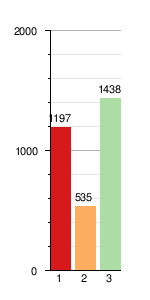
The financial situation was also dire: despite the fact that the two major international loans that had sustained the country since the Creditanstalt bankruptcy in May 1931 continued to be renewed, the government was in a precarious situation. In 1932 he had to decree the payment of the salaries of the railway workers in two parts and reduce their amount. Before resigning, Buresch had made an urgent request for help to the League of Nations, which, however, was not attended to. Despite Due to spending cuts and tax increases made by Buresch at the request of the Society, the expected stabilization credit had not yet been delivered in the spring. With the National Bank's reserves dangerously low and in order to urge the Society to finally approve the delivery of the money, the chancellor announced on 20 June that Austria was likely to be unable to continue paying the interest on its loans. Almost immediately, the United Kingdom and Italy expressed their willingness to participate in a loan of three hundred million shillings.
After three more weeks of waiting, Dollfuss decided to go to Lausanne (June 20) and, in three weeks of negotiations with the powers, obtained the long-awaited international stabilization loan of three hundred million shillings for twenty years on June 15. July. The agreement contained several conditions for Austria: the obligation to continue paying the interest on its loans, the balance of the state budget and that of the national railways, and the acceptance of foreign supervisors in the economic reforms and in the credit spending. Both National Socialists and Pan-Germans, Socialists and part of the Landbund rejected the Lausanne Pact. Starhemberg also opposed the terms of the loan and again considered eliminating Dollfuss and forming a government headed by Rintelen and supported by the Heimwehr, but Italy, which had a share in the credit, vetoed the plan. After some difficulties, the Heimwehr deputies undertook to approve the Lausanne protocol. In return, however, the formation demanded that one of his trusted men —finally Emil Fey— was left in charge of the security forces, an appointment that actually took place on October 17. After some reluctance from the powers due to the authoritarian evolution of the chancellor —increasingly dependent on of the Heimwehr—, they delivered the loan amount at the beginning of August 1933, without imposing political conditions or requiring Dollfuss to restore Parliament or the power of the Constitutional Court.
In any case, in this important aspect, the economic one, the chancellor made notable achievements in the two years in office: he stabilized the budget, which when he came to power had a deficit of three hundred million shillings; he got bank deposits to recover the amount prior to the crisis —during this, 20% of the total had been withdrawn—; it reduced the number of unemployed—377,000 people at the worst moment of his government—by 54,000; It considerably reduced money in circulation and the deficit in the trade balance decreased —from 25% to 19%. The conservative measures applied to try to deal with the deep economic crisis made him at odds, however, with the Socialists.
The measures to maintain agricultural prices, effective in some cases, earned him the enmity of consumers, also affected by the Great Depression, and accentuated the differences between socialists and social Christians. In general, he favored the interests of the country at the expense of those in the city. He applied controls on the production and marketing of agricultural products in addition to signing trade treaties with clauses that protected certain articles from foreign competition. He managed to increase the percentage of agricultural products of national origin, but only thanks to the enormous reduction in imports and consumption. Government measures benefited peasants who produced for export and those who sold milk, but not so much those with small plots; the situation of those who resided in the most mountainous areas of the country, on the contrary, worsened. He carried out a protectionist policy and public aid for Austrian agriculture - the farmers in the east of the country were the base of his power -, which the League of Nations allowed to assist in the maintenance of his government. Although he claimed to want to help the population as a whole, his measures were mainly focused on Austrian agriculture, which he considered the fundamental part of the national economy.
In a process that had already begun during his time as Minister of Agriculture, he modified the structure of Austrian foreign trade and concentrated it in a series of nearby countries. This change was accentuated with the signing of the Rome Protocols, initialed actually more for political than economic reasons. Dollfuss' desire to forge a European or at least a Central European economic union —shared by other politicians in the region such as the Czechoslovakian Edvard Beneš— was not satisfied, both because of the opposition of Mussolini and the tense political relations of the countries in the area. Gradually, Dollfus expanded state control of foreign trade and tried to reduce imports.
Poor relations with the opposition
Unsuccessful attempts at conciliation
In his first months in office, Dollfuss did not maintain bad relations with socialist opponents —whom he said he wanted to include in the future in the Council of Ministers— nor did he raise the end of the democratic parliamentary system. For five months He governed democratically, and it was not expected that he would end the parliamentary system. The Socialists, who until his inauguration had considered him a democrat willing to win the cooperation of urban workers and peasants, believed his promises of collaboration. with the opposition. They hoped that at some point, Dollfuss would form a government that would include them.
The successive attempts of the moderate socialist leadership to reach an agreement with the Government failed, due to Dollfuss's continuous refusal to agree with the opposition. He repudiated each new concession as insufficient. The Socialists, for their part, they were opposed to the new international credit that the previous government had requested in a general way —making a request for help from the great powers— and that Dollfuss obtained after negotiating in Switzerland. On July 15, 1932, the powers finally granted a new credit of three hundred million shillings, which was to be used to increase Austria's meager foreign exchange reserves. The credit, which was to be repaid in twenty years, entailed extending the political conditions — which prevented union with Germany — from the previous economic stabilization agreement of 1922. Socialists and pan-Germans rejected the agreement, and tried to disrupt it in the Cortes, possibly to precipitate Dollfuss's resignation at the same time. In the votes that followed, Dollfuss managed to approve the credit, but with enormous difficulties that showed government weakness in Parliament: in the first vote, the opposition and the government tied eighty-one votes; in the second, there was a governmental majority of one vote —eighty-one to eighty, due to the absence of an opposition deputy—; in the third, caused by the socialist veto of the second in the Federal Council, which returned the motion to the Lower House, Dollfuss achieved a minimal victory —eighty-two votes in favor against eighty against the government proposal. Due to the evident parliamentary weakness of the Executive and the determined opposition of the parties that did not support it, Dollfuss did not dare to call new elections.
In the autumn, Dollfuss tried to win the support of the pan-Germans so that he could get rid of the Heimwehr who were threatening to leave the Council of Ministers if he did not obtain the post of Secretary of State for Security for Emil Fey. Dollfuss He went so far as to request the help of the German chancellor, Von Papen, so that he would urge the pan-Germans on the convenience of entering the Council of Ministers; his envoy to the German prime minister hinted at the need to strengthen the government's parliamentary majority to prevent the country from having to strengthen relations with Italy and Hungary and move away from Germany. The pan-Germans, convinced that any direct support for the chancellor would mean the loss of the sympathetic to their dwindling electoral base, they refused to support Dollfuss, who had to give in to the demands of his partner in government to stay at the helm. On October 17, the day after the chancellor first participated in a large Heimwehr demonstration in the capital together with the Italian ambassador, Fey obtained the coveted position. The chancellor remained minister of the branch. serious confrontation with deaths that occurred in the capital on the eve of his appointment—and the use for the first time of the 1917 decree later so used by Dollfuss intensely worsened relations between him and the socialist opposition. Opposed to calling elections that probably would have been a serious setback for his party and would have made the National Socialists the key partner for any government league that excluded the Socialists, unable to forge an alliance with them, both because of Socialist rejection and that of his own formation, the chancellor it became more and more dependent on the Heimwehr. If until Fey's appointment the Socialists had tacitly tolerated his rule, the relationship between the two parties deteriorated rapidly from then on; the Heimwehr, for its part, demanded a break in relations with the socialist opposition.
The growing tension was evident in the parliamentary session that took place a few days after Fey's appointment, on October 20 and 21, in which government associates managed to defeat a socialist motion of no confidence and postpone the elections until at least the spring of the following year, but in which Dollfuss's inability to work in the harsh parliamentary environment and his discomfort defending the handing over of security tasks to Fey was also made clear.
Hirtenberg scandal and dissolution of Parliament

A further source of contention between Dollfuss and the Socialists was the Hirtenberg scandal, which erupted when Socialist railwaymen found weapons being smuggled from Italy to Hungary, with the cooperation of the Heimwehr. The news, published in January 1933, unleashed an international scandal, damaging the country's reputation. The commotion complicated the reception of the loan approved in Lausanne in the summer of 1932, as the French Socialists refused to vote in favor of granting it in the Cortes until it was clarified (Dollfuss tried in vain to get Hitler to agree to replace France in the credit, since he demanded the entry of National Socialists into the Council of Ministers and the resignation of Dollfuss).
The dissolution of Parliament, an important milestone in the fascist evolution of the Government, resulted from a labor conflict with the railway workers. The Minister of Transport had already warned in September 1932 of the difficulty of paying salaries to employees for the large debts of the national railways. In February 1933, the Executive announced, without consulting the unions, that the following month's salary would be paid in three installments, if the necessary funds were found. The unions reacted by calling a protest. On February 25, the meeting between the minister of the branch and the union representatives to call off the strike failed due to the intransigence of the pan-German union; the minister decided, with the acquiescence of his cabinet colleagues, to threaten the application of an imperial decree of 1914 that punished strikers with prison terms.The strike took place on March 1 and several strikers were arrested; The Socialists then demanded a session of the Cortes for March 4 to debate the situation and demand the payment of the railway workers and the release of those arrested.
After the approval on March 4, 1933, by one vote, of a motion by the pan-German opposition —very similar to another socialist one presented in the same session— contrary to the position of the Government, which sought to penalize some workers who had participated in a railway strike, Dollfuss decided to dissolve Parliament and after gaining the support of President Wilhelm Miklas, he began to rule by decree. resigned during the tense session and Dollfuss, instead of bringing it back together, decided to get rid of the institution and with it both the Socialist opposition and the threat of a National Socialist-controlled Parliament. Dollfuss initially doubted the expediency of to abolish Parliament, but the main Social Christian leaders, meeting on March 5, were determined to do so and obtained the passive approval of the President of the Republic. The fear of a National Socialist electoral victory, which also contributed to the elimination of the Cortes, grew the same day when the news of the triumph of Hitler and his DNVP allies in the voting that day was released, in which they obtained 52% of the votes —288 of the 647 deputies, 168 more than the Social Democrats, the second party. The chancellor's rejection of the parliamentary process was added to the fear that, if the Cortes met again, they would approve an electoral call that would favor the Nazis. The measure also counted with the strong support of the Heimwehr and the Italian and Hungarian governments. Miklas, who was asked by Renner to convene Parliament, refused except with the agreement of all parties, something impossible given the determination of the Christian Socials to govern without him. The president of the republic also wanted to impose new constitutional changes that would increase his powers and reduce those of Parliament.
The regime he established and which would last until 1938 was often called austrofascism. The form of state he established was called Ständestaat ("Estate State"). On March 7, 1933, the Government proclaimed itself, together with the President of the Republic, the main institution of the State in the face of the parliamentary crisis, prohibited public meetings —in practice those of the Social Christians and the Heimwehr continued— and demonstrations and instituted press censorship. According to the government announcement, the Executive did not refuse Parliament to meet again, but this did not happen: when its last president tried to resume the March 4 session, the Government sent the police to prevent it. The possibility of governing by decree without counting on the Cortes was justified in a measure approved by the former Austro-Hungarian Imperial Government during World War I, in July 1917. Miklas agreed Dollfuss remained at the head of the Executive and governed by decree. Once this system of government by decree was established, Dollfuss never abandoned it nor did he seriously seek the resurrection of democratic Cortes.
Repression of the opposition and dependence on the Heimwehr
Despite being part of the Government, the Heimwehr did not stop scheming to seize power by force, in cahoots with Mussolini, some related politicians such as Anton Rintelen, and soldiers such as General Gustav Geng. In the summer of 1932, plotted to carry out a coup with the help of related ministers in case Dollfuss did not obtain the long-awaited loan from the League of Nations and decided to dissolve the right-wing alliance and forge one with the Social Democrats to achieve it. Credit, the conspirators, with the help of Geng and Ach who would provide weapons, planned to deploy the Heimwehr units throughout the country and establish the dictatorship after declaring a state of siege with the excuse of having to crush imaginary riots. of the Heimwehr feared that a Dollfuss pact with the Socialists would deprive them of all political influence.
Dollfuss's situation in 1933 was similar to that of Franz von Papen the previous year in Germany: trying to establish an authoritarian government, he himself lacked the necessary support to maintain it. Dollfuss needed to have good support from the nationalist militias of the Heimwehr -it lacked its own armed group-, supported by Italy, or with the national socialists backed by the new German government. Thus, in April he began his negotiations with Mussolini, trying to obtain Italian support and, with him, that of the Heimwehr.

Throughout the spring of 1933, he applied various measures that unleashed the wrath of the socialists who, however, limited themselves to criticizing them vehemently. The negotiations between the chancellor and the socialists so that they would approve the Constitutional and parliamentary reforms that Dollfuss wanted to implement —corporatist, which limited the role of the Cortes— failed. On March 9, at a meeting of the main leaders of the Social Christian party, it had been shortened not to restore Parliament or call new elections, using the Nazi threat as justification. The Socialists, except for demanding the calling of new elections and protesting government measures, maintained a moderate opposition, not wanting to facilitate the seizure of power by the National Socialists, without abandoning the demand to restore the parliamentary government. Although the rank and file and the unions were willing to carry out a general strike, the party leadership decided not to risk unleashing a civil war. intervention of the police and that it did not have the approval of the government parties, the Socialists, after intense debates, decided not to intervene with weapons. Dollfuss, although still without a clear idea of the corporate system that he wanted to establish, was clear, like the rest of the party leadership, his desire to eliminate Austrian democracy. The authoritarian transformation was supported by the Heimwehr and Italian Fascism.
The dissolution of Parliament was followed by a ban on the traditional May Day demonstration—while authorizing a Heimwehr "patriotic celebration" shortly after—and, on March 31, the League's of Republican Defense. The socialist mayor of the capital, Karl Seitz, tried to ban the Viennese Heimwehr in turn, but Dollfuss overturned the ban; again, the Socialists did not take up arms against the government measure. Although the League went underground and continued to arm itself, the lack of reaction to the harassment by the Executive branch gradually undermined the Socialists. The extraordinary party conference held in April, while Dollfuss was in Italy, he decided not to order an uprising, despite the desire on the part of the organization to confront the chancellor militarily. The day after the ban on May Day celebrations, April 12, a new The decree prohibited strikes in state companies and all those that did not have the objective of improving the economic conditions of the strikers. The bulk of the government repression at this time was directed against the socialists, not against the Nazis, with the that the government was essentially competing for popular favor. These measures were also intended to garner popular support for the government formations in the impending municipal elections in Innsbruck, which ultimately proved a major setback for them. The National Socialists obtained good results and redoubled the demands of national elections: Dollfuss's reaction was to ban all voting for six months.
Justifying the action by German pressure—Hitler had introduced an expensive visa for German tourists wishing to travel to Austria to undermine this important source of revenue—he abolished existing political parties and founded a new one, the Patriotic Front, supposedly national movement. In reality, the organization was a failure: it managed to somewhat revitalize the union of the various political formations of the Austrian right, but it did not win the sympathy of the left. Austrian patriots in the face of the German threat. More than a large organization that enjoyed popular sympathies, it was a state grouping of bourgeois parties, created to counteract the great support enjoyed by the socialists. In part, the failure from the front it was the fault of the chancellor, who did not put the necessary means to organize the new party. The first president of the party turned out to be a bad organizer and a crypto-nazi, who had to be replaced; in Vienna, the organization was left in the hands of the pan-Germans and some Jews, while this section had no coordination with those of the provinces, which were isolated from each other and from the capital. Virtually mandatory for all Austrians, the government weakened the organization, which many National Socialists joined to use as a cover for their activities. Although officially founded on 20 May, a week after a large government demonstration that roused Dollfuss despite ridiculed by the opposition, it was not really organized until many months later. One of the chancellor's goals in creating the front was to regain control of the moderate fraction of his own party—which had managed to prevent him from winning his presidency by choosing to Vaugoin for the post—and subordinate to the Heimwehr, but he was unable to do so.
Problems with Germany and Italian support
Hitler in power, Franco-British indifference and Italian help

Nazi turmoil preceded Hitler's inauguration as German Prime Minister: already in the spring, summer and autumn of 1932 the Austrian National Socialists had tried to grow, to bring down the Dollfuss government and precipitate the annexation of the country to Germany, both through propaganda and the use of violence. Hitler's appointment as German chancellor in January 1933 further weakened Dollfuss's position. Germany, as part of his strategy to seize power in Austria, he began financing the Pan-Germans in the spring of 1933. The Austrian National Socialists also benefited from the rise to power of their leader, who began to send them aid from Germany, both through state institutions and through through the party. In the Heimwehr, the assumption of the Chancellorship aggravated dissensions between the different groups, part of which wanted to reach an agreement with the National Socialists. Dollfuss, eager to find an external counterbalance to German pressure, he went to Mussolini, whom he visited in April 1933. France and Great Britain, for their part, basically limited themselves to waiting for the Italian president to take charge of protecting the republic from German plans and barely intervened in the Austro-German dispute, which quickly worsened diplomatic relations and by late spring had eliminated trade between the two nations. Faced with the ostensible need to respect Austrian independence, the National Socialists turned to agitation and the demand for elections as a method of gaining control. power in the country. They tried to compel the chancellor to organize new national votes, convinced that they would obtain results that would force their inclusion in the future government, in which they would demand control of the police and the judicial system and the exclusion of Dollfuss.
Before Hitler came to power in Germany, Mussolini tried to consolidate his influence in Austria and Hungary. Months before, between October and December 1932, he had advocated with some success together with the president of the Hungarian Government Gyula Gömbös for Dollfuss established an authoritarian government system. Hitler began to threaten Austrian independence from the late spring of 1933. In April 1933, Dollfuss reached an agreement with the Italian dictator promising to reform the Constitution to conform it to the fascist model and his support for the creation of an economic bloc that included Italy, Hungary and Austria, in exchange for the Italian's support in the face of German pressure. From then on Mussolini was the main supporter of Austrian independence and enjoyed the greatest influence on the regime. French and British support for the maintenance of independence was lukewarm and failed to commit Dollfuss to respecting the Constitution or to consult with the socialist party on its policies, despite the fact that the new international credit that was to refloat the Austrian economy after the serious crisis of 1931 depended on the approval of these powers.
National Socialist subversion and government repression
During the spring, Habicht decided to use negotiations with the government to try to weaken it; These failed since neither Habicht was willing to accept the two ministries that Dollfuss offered him nor was Dollfuss willing to call the elections that the National Socialists demanded, hand over the Ministry of Security to them and eliminate the Heimwehr from the Government. Despite the reluctance of Social Christians and the Heimwehr to face the National Socialists, with whom they had hoped to reach an agreement, their intransigence, evidenced in Habicht's negotiating position and in the subversion of his followers, forced them to do so. German pressure increased at the end in the spring of 1933. Hitler had already raised tariffs on various Austrian exports considerably during his first month at the head of the Chancellery and, at the end of April, ended the negotiations that were taking place to establish a treaty of trade between the two countries. To the great pro-government demonstration on May 14, the Nazis opposed the visit of two German hierarchs: the Reich and Bavarian Justice Ministers, who participated in various rallies of their supporters. Shortly after, the latter, Hans Frank, was unceremoniously expelled by the Austrian government for his subversive statements. After the negotiations with Habitch in which he had participated as an intermediary failed, Rintelen, future candidate for chancellor of the coup leaders of July 1934, resigned and in August he went to Rome as ambassador.
On May 27, Germany imposed a 1,000-mark visa on German tourists who wished to visit Austria, thus hurting Austrian tourism, which is very important for the country's western Alpine provinces. The measure, which was accompanied by the boycott of various Austrian exports that put an end to bilateral trade, was aimed at disrupting the Austrian economy and causing the fall of the government. After returning from a further visit to Italy on June 6, Dollfuss banned the daily National Socialist Völkischer Beobachter for a year and approved a new decree increasing press censorship. To the Nazi terrorist agitation that completed the economic harassment, the Government responded with police repression.
A few weeks later, in mid-June 1933, after a week plagued by attacks, Dollfuss banned the activities of the Nazi party and sent more than a thousand of its militants to prison, although most of these went into hiding and the leadership took refuge in Germany. Government repression fell mainly on Emil Fey, as Dollfuss was in London attending the London Economic Conference. The Italian government approved the action, although Dollfuss was advised to avoid confrontation with the Nazis if possible. it affected the Nazi party and related organizations such as the Styrian Heimatschutz. The government deported Habicht and more than a thousand Austrians and some Germans and confiscated their property. They lost their seats in Austrian institutions (Provincial parliaments and town halls). The ban on the Nazi party led to increased German pressure on the Austrian government: a radio propaganda campaign began from Bavaria and the release of leaflets, which led to government protests and nervousness in the German Foreign Office, contrary to these measures. The National Socialist terrorist campaign failed in its objective of damaging the Austrian economy—especially tourism—and of forcing the resignation of the chancellor, although it made him more dependent on the Heimwehr—the Army was too small to crush major disorders. In a way, it backfired: German bullying allowed Dollfuss to present himself as a victim at the London conference, finally obtain the long-awaited funds from the Lausanne loan, attract tourism to compensate for the disappearance of German and to increase exports to Italy. Faced with the evident lack of consequences of the method, Hitler ruled out continuing to use it in August. Marches, demonstrations and publications prohibited, the National Socialists accentuated clandestine agitation, but without result The Government implemented a series of repressive measures against the National Socialists that included the creation of special courts, the dismissal of officials suspected of sympathizing with them or belonging to the prohibited organization, and the restoration of the death penalty for possession of explosives. In October the first of the four Austrian concentration camps was opened —with much less severe conditions than the German ones—, Wöllersdorf, where several thousand National Socialists and a few hundred Socialists ended up. Mussolini, determined to maintain his promise of protection to Dollfuss—which contrasted with the practical indifference of the British and French governments—he openly condemned the actions of the Austrian Nazis and expressed Italy's intention not to allow the country's independence to be threatened. July, he sent Dollfuss a letter outlining the pro-fascist developments he expected him to carry out in Austria, to which the chancellor responded in vague terms days later.
Unsuccessful dealings with the Nazis
The repressive measures did not mean the end of contacts between Dollfuss and the Germans: until his assassination thirteen months later he continued to try unsuccessfully to reach an agreement with Berlin that would put an end to the disagreements between the two countries. Dollfuss believed that an agreement with the National Socialist opposition and its German supporter would allow it to reduce its dependence on the Heimwehr and Italy. Successive attempts at conciliation failed. The management of the conflict was left, in Germany, in the hands of Theo Habicht, deputy of the German Parliament, deported from Austria for his activities in late spring 1933. Habicht raised an Austrian Army of some 15,000 men to put pressure on the Austrian government, though he never invaded the Alpine republic. In early summer, Dollfuss's envoys met with Habicht, who presented conditions impossible for the Austrian chancellor to accept, including the appointment of a National Socialist as Minister of Security or the dismissal of the Heimwehr leaders from the Council of Ministers. The deal fell through in July, when Dollfuss met in vain with the German ambassador in Vienna. On 24 July, to the chagrin of Italy, Dollfuss requested in London that the UK, France and Italy present a joint complaint to Germany over the activity of the National Socialists in Austria, an action that in Rome was understood as an attempt by the chancellor to shake off dependence on Italy. At the end of the month, one of the few Anglo-French interventions in favor of Austria took place: the The United Kingdom, with the support of France and Italy, demanded an end to German subversive activities in the neighboring country. The action had an immediate, if temporary, effect, and the Germans moderated their meddling in Austrian affairs. The June crisis, however, forced Dollfuss to resort to Italian support in the face of the German threat. Soon, however, the Germans resumed their campaign of agitation against Dollfuss on Bavarian radio.
Intensification of Italian pressure and authoritarian evolution
On August 19 and 20, 1933, a new meeting took place between the Austrian chancellor and the Duce, in Riccione. Mussolini suggested several measures to Dollfuss: the inclusion of new ministers of the Heimwehr in the Government —Steidle and Starhemberg—, the elimination of Viennese socialist power through the appointment of a state governor of the capital and the establishment of a new political model based on Italian fascism, which the chancellor could announce in September. The implementation of these proposals would have eliminated any possibility of enlisting British and French support and would have sealed the complete dependence of the chancellor on Italy. Dollfuss avoided the first Italian suggestion and postponed the second until February of the following year, when the he applied after the socialist defeat in the civil war - he appointed a moderate governor, which caused the displeasure of the Heimwehr, which had its own candidate for the position -; it nevertheless accepted the third, although the state model it announced was more Catholic corporatist and authoritarian than strictly fascist on the Italian model. As a result of the meeting, Italy returned to Austria the Austro-Hungarian artillery it had seized during the war. World War; in 1934, he began sending planes and at the same time joint defense plans were beginning to be drawn up. Although no pact was signed between the two nations, Dollfuss obtained Mussolini's firm promise to defend Austrian independence and to reinforce deployed Italian units. on the common border. Italy would support the country internationally and grant it economic advantages. Also in accordance with Italian wishes, the governmental power of the Heimwehr grew at the change of ministers at the end of September.
New negotiations with the National Socialists and rapprochement with Italy
New negotiations with the National Socialists, which began in September and lasted about four months, failed, making Dollfuss extremely dependent on Italy and his Heimwehr agents. The representatives of the National Socialists — two Pan-German politicians, by then allied with the Austrian Nazis, had demanded in vain the entry into the Government of the National Front of Struggle —an organization that brought together the outlawed National Socialists and the Pan-Germans—, with half of the ministries under its control, the appointment of Theo Habicht as vice-chancellor, the abolition of the ban on the Nazi party, the SA and SS, and freedom to agitate politically. Dollfuss, for his part, demanded an end to propaganda against his government, separation from the party Austrian National Socialist from German and the cessation of German meddling in Austrian politics. Out to legalize the Austrian Nazi party, he continued to refuse to call an election. A further attempt by Dollfuss to deal directly with Habicht in Vienna was frustrated at the last moment., on January 7, 1934, when the Heimwehr leaders learned of the project and, fearing that an agreement between the chancellor and the National Socialists would deprive them of their power, they threatened to withdraw their support.
In mid-January 1934, the Italian Under-Secretary of State for Foreign Affairs Fulvio Suvich visited Vienna; the visit reinforced the Heimwehr and accelerated the subsequent clash with the socialists. The undersecretary urged Dollfuss to redouble the repression of the Marxists, complete the drafting of the new Constitution, put an end to the parliamentary system and replace it with a corporatist one. Italy, dissatisfied with the pace of the chancellor's authoritarian reforms, considered depriving him of his protection and replacing him with another politician more sympathetic to his plans. Dollfuss accepted both Fulvich's advice and the determined Italian support against Germany. The relationship between the two nations grew closer thanks to Mussolini's plan to forge agreements between Italy, Hungary and Austria, which was embodied in the Rome Protocols, signed in the Italian capital on March 17. Two of these included measures to improve trade between the three countries, with reduced tariffs. The pact showed Italian support for Vienna, harassed by Germany, which saw the agreement as a hostile act. Dollfuss had accepted dependence on Italy, after the failure of alternative plans: in the previous summer, he had tried unsuccessfully to get Hungary to agree to establish together with Austria an association with their Little Entente rivals; in February, he had come close to requesting the help of the League of Nations—civil war and the disinterest of France, the United Kingdom, and Italy made him scrap the plan. In effect, the treaty made the republic in a satellite state of Fascist Italy.
Failure of the last attempts at a concert with the National Socialists
Since the end of April, when they tried to assassinate Vice Chancellor Emil Fey in Salzburg, the National Socialists unleashed a new and long wave of attacks against public facilities, politicians and officials that lasted until July. At the end of May, Dollfuss tried to to attract the more moderate National Socialists, offering one of them a seat on the Council of Ministers, a maneuver that did not bear fruit either. In June, he negotiated, also in vain, with Hermann Neubacher, who again demanded Habicht's appointment as Chancellor or Vice Chancellor.
Fascist evolution and internal politics
Dollfuss and democracy

The gradual abolition of the democratic system and its replacement by an authoritarian one was partly due to Dollfuss's political priorities: for him, what he considered the well-being of the peasantry —the main social class for the chancellor and custodian of the Catholic faith and the German traditions that he appreciated—was a main issue. When he considered that the democratic system did not guarantee this, he did not hesitate to try to implement another. His particular vision of democracy as a system based on elections but in which those elected had power to administer as they saw fit without restrictions from the electorate also facilitated the transition to the authoritarian system of government. He also lacked parliamentary experience: he had never been elected a deputy nor had he had to dispute electoral campaigns and he was not used to the usual discussions both in these as in the Cortes. Of a superb character in what referred to his person and his position, he was not a good speaker nor was he a prominent intellectual like some opposition figures and his own party, which complicated his performance in Parliament His meager parliamentary minority of one vote and the strength of the opposition did not make it any easier for him to govern in a situation of serious crisis, although this weakness was due in part to Dollfuss's refusal to call elections or include in the Government the socialists.
In his authoritarian evolution, the chancellor had the strong support of the economic representative of the League of Nations, who supported both the removal of the democratic system and the removal of the power of the Austrian socialists. The League abandoned its previous orthodox liberal attitude and allowed the proceeds of the Lausanne loan to be used to finance government projects in order to support Dollfuss politically. International and to buy debt from the Creditanstalt to the National Bank, to be used for projects to increase employment and thus reduce political opposition to his government. it was actually used to hide the state deficit and to finance the security forces that supported Dollfuss.
The authoritarian and reactionary system gradually introduced by Dollfuss had the support of both the Austrian Catholic hierarchy and the Holy See, although this did not prevent dissensions and friction between the Government and these. The authorities used the Church to inculcate the patriotic and civic values of the reǵimen, without thereby reinforcing its power. The evolution was favored by the dependence of the chancellor on the Heimwehr, at first to maintain the front of the Government given its weakness in the Cortes. The formation was, moreover, an instrument of Italian pressure in Austrian politics.
Authoritarianism and Italian support
On April 10, 1933, the Government created an auxiliary police force that was to intervene only in cases of urgency; although the heads of the Heimwehr were unable to get their units en bloc to join the new organization, they did clearly indicate that its recruits would come from the paramilitary formations that supported the government. France, concerned about the situation in Germany, allowed this increase in the official security forces. The measure had been approved after the Heimwehr had rejected the expansion of the Army with recruits because it feared that the reinforcement of the armed forces would deprive it of its political influence by becoming unnecessary. Control of the various armed groups in the state sparked disagreement between the Heimwehr on the one hand and Vaugoin and Heimwehr Vice Chancellor Winkler on the other. Fey was particularly suspected of wanting to seize control of all the country's armed forces, including the Army; Dollfuss not only made sure to prevent this, but encouraged the growth of his own military forces, the Sturmscharen, organized by Kurt Schuschnigg.
The day after the creation of the new auxiliary police, Dollfuss left for Rome to visit Mussolini for the first time: he wanted both to obtain his support and to sign a concordat with the Holy See and he achieved both goals, although the signing of this was delayed by the Vatican's insistence that the agreement be ratified by the Austrian Parliament. Mussolini, satisfied with the chancellor's plans to establish an authoritarian regime, promised to collaborate with him in the suppression of Nazi terrorism, suggested the creation of a "patriotic front" to increase popular sympathy for a government in which the Heimwehr played a central role and warned against eliminating what he considered the greatest threat to Dollfuss: the socialist party. To improve Austria's dire economic situation, the Duce advised Dollfuss that his country strengthen commercial ties with Hungary.
In accordance with promises made to Mussolini, Dollfuss included members of the Heimwehr in the government on May 10, 1933 and created a fascist organization, the Patriotic Front (Vaterländische Front, on May 14) that was to replace the political parties, while announcing that the new Constitution would give no role to the democratic Parliament. Social Christian— at the May conference and pressure from the Heimwehr, which demanded the suppression of political parties, made it easier for him to found the Patriotic Front and collapse the Social Christian organization. In his fascist evolution, Dollfuss had to face opposition from from his own party, which did not approve of his actions or the growing influence of the Heimwehr. This section forced the chancellor to hold talks with the Nazis, which failed due to the latter's refusal to call elections, fearing their increased votes. Also in May, the Government approved a decree that prevented the Constitutional Court, which in 1920 Seipel had defined as one of the two pillars of the State, from reviewing government actions, sometimes clearly unconstitutional. On the 26th of the same month, the The Executive banned the Communist Party. In mid-June, a new auxiliary police force, the Cuerpo de Ayuda, was created, staffed once again by paramilitary organizations close to the government.
The association of the Social Christian Party with the Heimwehr turned the government into a kind of triumvirate made up of Dollfuss, Starhemberg and Fey, in which the two affiliated formations maintained tense relations and were suspicious of each other. This situation continued until the chancellor's assassination in July 1934.
Nazi turmoil and increased repressive measures
At the same time, the German government did not cease its pressure on the Austrian, demanding the calling of elections and waiting for the entry of National Socialist members into the Council of Ministers. At the end of May, a boycott of tourism was established in Austria and tariff negotiations between the two countries were broken off. Germans in the country, and after a grenade attack in Krems with one fatality and thirty injuries, the Dollfuss government banned the NSDAP on June 19, 1933. At the same time that the party was banned, a centralized police system was established in the provinces: "security directors" were appointed who reported directly to Minister Fey and not to the provincial governors. Throughout the summer, press censorship was extended, implanted on March 7 and extended throughout the spring. The power of the socialist unions —majority— in the railway, postal, telegraph and telephone services was also limited and the power of employers grew. For the private sector, measures were put in place that cut pensions and they harmed the workers in negotiations with the employers. On the other hand, a decree was promulgated that complicated the change of religion and apostasy, which were subject to state control. On July 9, again in accordance with the suggestions Made by Mussolini, Dollsfuss received the Hungarian Prime Minister Gyula Gömbös; despite the cordiality of the interview, he refused to cooperate with the chancellor against the National Socialist agitation.
Accentuation of authoritarianism
After a new visit to Mussolini in August, in which he expressed his dissatisfaction with the lack of speed of the changes in Austria, Dollfuss had to speed up the reforms demanded by the Italian president in September. On September 11 of 1933, he announced the reform of the Constitution, a modification that is based on corporatism and on the papal encyclical Quadragesimo Anno. The chancellor's speech included the end of the traditional political parties, the creation of the Patriotic Front and meant discarding the restoration of the democratic parliamentary system. By the end of the month, he had to shed his supporters of the agrarian conservatives of the Landbund to give more power to the Mussolini-backed Heimwehr. Internal differences in the Council of Ministers - the Landbund and the Heimwehr were on bad terms - also helped to precipitate the change. Some of the most prominent Christian Socialists also had to leave the government to give the cabinet a semblance of independence from political parties. To counteract Starhemberg's ambition, he appointed his rival Fey—opposite of the alliance with Italy, on which Starhemberg relied—vice chancellor; he reserved for himself the ministries of Foreign Affairs, Agriculture, Defense and Security, which strengthened his position in the Government. The chancellor had eliminated the political parties from the cabinet as the Heimwehr had demanded and reunited the ministries of the that the Army and the Police depended on, but he had not handed them over, but had kept them for himself. Fey lost his position at the head of the Ministry of Security, remaining only as vice chancellor and was unable to take control of the government as he wished. Army. Days later, on September 22, Fey approved on behalf of Dollfuss a decree that allowed the arrest of anyone suspected of participating in activities against the State or security and their sending to concentration camps; Dollfuss did not sign it, but he did not rescind it on his return from Geneva, where he was that day, either. influenced by the Italians and decided to try again to reach an agreement with the National Socialists to balance their power.
On November 11, the government restored the death penalty, abolished since the founding of the republic. Murder, arson, and damage to private property were punishable by death. That same month, it was introduced martial law in the face of continued terrorist harassment by the National Socialists. A few days earlier, on October 28, Fey had announced the opening of the first Austrian concentration camp, located in Wöllersdorf. Despite growing government repression and tension in their ranks, the Socialists decided to continue tolerating government harassment and not to confront it. While the Republican Defense League continued to arm itself for a possible clash with state security forces, the Government continued to raid Socialist headquarters and arrest of some of its members, an activity that he maintained until February of the following year.
Civil war and crushing of the socialists

After a last attempt to obtain the support of the League of Nations for their government that failed due to the indifference of the Western powers, the Italians demanded the suppression of the redoubts of power of the socialists in Austria, especially the municipal government of Vienna. On January 8, the Government approved the indefinite maintenance of martial law and the seizure of assets held by those suspected of being enemies of the Executive. The auxiliary police created by Fey, the Schutzkorp, were immediately mobilized. Fey himself resumed the security portfolio three days later, which returned control of the gendarmerie and the Police to him. Fey's return to command of the police forces increased tension with the Socialists, despite the fact that their leaders tried to by all means to avoid a confrontation. Dollfuss wanted to deprive them of all political power, but to do so by dividing them, drawing the more moderate ones to the Patriotic Front, as a counterbalance to the Heimwehr. On his visit to Austria, the Italian State Secretary Suvich made clear his country's satisfaction with Fey's performance and the desire that Dollfuss finally crush the Socialists. Italian intervention accelerated the clash: Fey redoubled his harassment of the Socialists and, in early February, the Heimwehr tried to stage a series of provincial coups to eliminate regional governments and provincial parliaments and introduce an authoritarian model. Moderate elements in the provinces—some Social Christians, the Landbund—with the backing of some socialists, tried to to the claims of the Heimwehr and avoid a civil war, trusting that the chancellor would censor his coup maneuvers. Determined to eliminate the democratic system and implement his one-party political model, and fearing the possible reaction of the Heimwehr and Mussolini, Dolfuss approved, however, its demands and the elimination of the socialists from the provincial governments, including that of the capital. This last act implied an armed confrontation with the socialists, who had repeated on numerous occasions that any attack against the government capital would unleash the fight.
The decision of the socialist leaders in Linz to oppose new police searches finally triggered the civil war on February 12, and not the expected assault on the Government in Vienna. Reluctant to use violence, once unleashed the Dollfuss revolt put it down, following the planned government plan drawn up after the July 1927 revolt. police auxiliaries, while the state security forces followed their own command. To crush "Red Vienna" Dollfuss turned to the army. On the morning of February 12, the Council of Ministers approved that the Army quell the revolt; according to Dollfuss, the use of artillery against the socialist houses should soon put an end to the resistance and avoid more victims. After five days of fighting between the government forces and the socialists (from February 12 to 16), in which the Nazis remained neutral, the socialist party (SDAPÖ) was banned the same month, despite the condemnation of public opinion in France and Great Britain. The socialist press was banned, as the communist one had already been in May 1933 and the National Socialist in June. The disruption of socialist political power facilitated the authoritarian reform of the provincial governments: in the capital Dollfuss appointed a commissioner; in the rest, the Cortes granted special powers to the governors and, in most cases, they were dissolved. In all of them the Heimwehr obtained new positions in the revamped regional Executives.
The international impact of the insurrection of the socialist workers in Vienna was enormous, since it was the first time that physical resistance had been offered to the rise of fascism. The slogan "Vienna before Berlin" (that is, better to fight against fascism, even if you are defeated, than to let yourself be crushed by it without defending yourself, as in the case of the German Social Democrats in 1933) spread in many places, for example, in Spain, when the Socialists declared an insurrectionary strike (the October 1934 Revolution) at the time the right-wing Catholic CEDA party came to power, whose leader José María Gil Robles had on many occasions expressed his admiration for Mussolini and for Dollfuss. Thus, the Revolution of Asturias (Asturias was the only Spanish region where the insurrection triumphed, although it would be crushed by the Army) was interpreted by the anti-fascist left as the "second Vienna".
Tension with the Heimwehr and authoritarian evolution
The military victory over the Socialists, due in large part to the intervention of the Heimwehr, strengthened the position of the latter, which threatened that of the Chancellor. Only the disunity of their leaders and the support of their nominal leader, Starhemberg, it allowed Dollfuss to avert the danger. The removal of the Socialists had another important consequence for government policy: it made Dollfuss, already deprived of British and French sympathies, completely dependent on Italian foreign support. the main heads of the Heimwehr with Dollfuss and the head of the Patriotic Front of March 6, Starhemberg promised to include his forces in this, although the process was slow and ended during the presidency of Dollfuss's successor. Although part of the members of the socialist Schutzbund enrolled in a new right-wing and anti-clerical paramilitary unit under the chancellor, efforts to integrate the bulk of the socialists into their state model continued without fruit. The attempt to integrate the socialist unions into a new federation The non-partisan national party, for example, failed. Plans to curry favor with Socialist supporters in the capital by appointing a moderate Social Christian deputy mayor also failed. The crushing of the Socialists also deepened rifts within the Heimwehr. and the Army, which considered itself cornered in favor of the former, especially in the distribution of the meager state budget. Precisely to prevent the Army from being temporarily subservient to Fey during his visit to Mussolini in March, on the eve of the trip Dollfuss appointed a general minister of Defense. Also to please the armed forces, he approved a secret rearmament plan.
Thanks to the renewed support of Mussolini obtained by the signing of the Protocols of Rome, Dollfuss was able to more easily confront his rivals in the Heimwehr, and especially the ambitious Fey, who continued his own exaltation., reduced the size of the second auxiliary police (the Schutzkorps) that he had created. Dollfuss managed to forge an alliance with Starhemberg against Fey with the help of Mussolini—who had promised commercial and military aid to Austria, abandoned all plans to raise Fey to power and limit subsidies to the Heimwehr to make it easier for it to collaborate with the chancellor. On 26 April, the prince replaced Fey as deputy chancellor, who was relegated to the Ministry of Security, and he was also appointed head of the Wehrfront, the armed organization of the Patriotic Front, which brought together all the paramilitary formations.
Final Nazi harassment and establishment of the dictatorial system
Meanwhile, after the failure of new talks with the Nazis, in May a new campaign of pressure was unleashed on the Government, with attacks on the railways, basic service facilities —electricity, water and telephone— and on official buildings, despite the renewed opposition of the German Foreign Ministry, which did not believe in the possibility of reaching power by force in Austria in the face of the contrary international situation. The proclamation of the new Constitution on May 1, of a nationalist nature, it intensified the German harassment of Austria, which spread to all the provinces. Hitler's proposal to Mussolini during his visit to Venice in mid-June for the Italians to accept German control of Austria was not accepted. This reinforced the conviction on the part of the Nazi party in Austria that only a solution of force could bring him to power.
Days before his assassination, on July 10 and 11, Dollfuss carried out a new change in the cabinet that reduced the power of Fey, although the Heimwehr obtained new portfolios in the Executive: the chancellor recovered the ministries for himself of Defense and Security, appointed new Secretaries of State for them —the one for Security close to the dismissed Fey, who was left with a vague position as government commissioner— and handed over Education to another member of the Heimwehr. The main objective was to appease the disagreements every between the Army and the paramilitary formation.
Death
After convincing Hitler of the advisability of attempting a coup, assuring him that they had the support of the Army, the conspirators, led by the Austrian NSDAP leader Theodor Habicht, planned to kidnap President Miklas and the cabinet and, after seize the radio, announce the proclamation of a new government headed by the Austrian ambassador to Italy, Anton Rintelen.
After delaying the coup one day due to the change in the date of the government meeting, on July 25, 1934, one hundred and fifty-four members of the Austrian SS, disguised as policemen and soldiers, managed to take the building of the Federal Chancellery, while fifteen co-religionists occupied the radio and announced the creation of the new Government.
The government, warned of the attempted coup, broke up the meeting and the coup plotters only managed to arrest the chancellor, the vice chancellor and a secretary of state, while police and army troops, loyal to the government, surrounded the chancellery. The rest of the Executive, with Kurt Schuschnigg at the helm and the support of the President of the Republic, had met in the Ministry of Defense, was taking measures to ensure control of the country, and was preparing to quell the coup. One of the coup plotters, Otto Planetta, fatally wounded Chancellor Dollfuss as he tried to escape from the chancellery. Dollfuss was trying to leave the building after the coup plotters managed to get inside safely when Planetta approached him and told him he fired twice, wounding him in the neck and in the armpit. Bleeding to death on a sofa and without medical attention, he died two and a half hours later, after half past three, convinced of the success of the coup. The coup leaders also refused to allow a priest to come so that he could confess.
Meanwhile, Mussolini, who was expecting a visit from Dollfuss two days later, ordered the mobilization of four divisions that headed for the Austrian border, ready to intervene, despite Austrian reluctance (the Austrians did not want the occupation the country by the Italians). The Nazis failed in their attempt to destabilize the government, they were surrounded, captured and executed, and Kurt Schuschnigg assumed power as chancellor. The revolts in the provinces were also controlled and the danger of Italian occupation and Yugoslav intervention disappeared.
| Predecessor: Karl Buresch | .svg) 20 May 1932-25 July 1934 | Successor: Kurt Schuschnigg |
Contenido relacionado
Andorran economy
Theresa Wright
William H Macy