
Cortes Department
Cortés is a department of Honduras. Its departmental capital is San Pedro Sula. It was founded in 1893 and is the most populated department in the country.
History
The first explorers


Historically, the Department of Cortés is one of the most important in Honduras. On August 14, 1502, Christopher Columbus landed at Cape Caxinas, today Trujillo, and took possession of the territory of present-day Honduras on behalf of the kings of Spain. Twenty-two years later, in March 1524, Gil González Dávila arrived in the territory that is today known as the department of Cortés from the island of Hispaniola for purposes of conquest.
Precisely, González Dávila arrived at Puerto Caballos, so called because before disembarking, "his boat was hit by a horrible storm." This resulted in the death of many of his horses, which he ordered to be thrown into the water. Upon his arrival, Gil González founded San Gil de Buena Vista with a short-lived life, and then moved into the region of Olancho. in search of gold. After the arrival of González Dávila, other Spanish explorers such as the great conqueror of Mexico, Hernán Cortés and the advance, Pedro de Alvarado, toured the department of Cortés.
Cortés left Mexico City on October 12, 1524, by land and accompanied by two hundred and fifty Spanish infantry and cavalry soldiers, and a body of three thousand indigenous auxiliaries. On this expedition, Cortés and his army They experienced a long and difficult journey due to the dense jungles and large rivers they had to cross, as well as the shortage of supplies. They came through Petén and Alta Verapaz, and finally found themselves in Nito, two leagues from the mouth of the Dulce River.
From Nito, Cortés headed to Puerto Caballos in search of a place to settle in that port. According to Cortés himself, he chose that place "because it is the best on the entire open coast of this main land, I mean from the Pearls to Florida." In that place he "founded...a villa" says Hernán Cortés "I named the town Nativity of Our Lady.". From that place Hernán Cortés left for Trujillo and then to Mexico.
Later, the conqueror of Guatemala, Pedro de Alvarado, toured this department. After winning a "brutal war" To several chiefdoms that occupied the Sula valley, Pedro de Alvarado founded the town of San Pedro de Puerto Caballos on June 27, 1536.
According to Gerónimo de San Martín, notary of King Charles V, "the very magnificent Lord Don Pedro de Alvarado, Adelantado of the provinces of Guatemala, captain general" and "greater justice" of the governorate of Honduras "founded" and "populated the town of San Pedro de Puerto de Caballos", "made a general distribution of the towns and native Indians of the land to the neighbors... settlers and conquerors" of the town. In addition to the founding of these towns by Spanish explorers, the town of Choloma already existed at that time in the Department of Cortés. "Originally it was located north of the current settlement and had the name Tholomac; a village of pre-Columbian origin from the Xicaques tribe. It was in this place where Cristóbal de Olid's agents captured Gil González Dávila.
The Fortress of San Fernando de Omoa

"Since the 16th century, Spanish possessions and ships were attacked by English, Dutch and French pirates and privateers. In the 17th century, these European powers were concerned with appropriating territories that were poorly defended by the Spanish. England was interested in achieving greater penetration in the Caribbean region."
Given the need to defend the northern coast of Honduras from these attacks, the Spanish government decided to build a castle in the most suitable site. The chosen place was the port of Omoa (founded in May 1752) at the northwestern end of the department of Cortés, and the work was commissioned to the general and President of the Royal Court of Guatemala, José Vázquez Prego.
This fortress was completed in 1775, and from then on Omoa became an important port for commercial transportation between the western part of the country and European markets. On October 20, 1779, the English took possession of the San Fernando de Omoa Fortress and more than three million pesos and the merchandise that was on the ships.

The Governor of Yucatán, Don Roberto Rivas, who was traveling along the coast of Campeche expelling the English, came to the castle's aid, but arrived late. As soon as there was news in Guatemala of the capture of the castle of San Fernando, Captain General Gálvez raised an army in Guatemala itself, which grew larger along the way until reaching Omoa. On November 26 of the same year he attacked the castle and recovered it.
The rise of Omoa as one of the main ports of C.A. gave importance to "San Pedro Sula as a town that could serve as a place of rest and commercial transfer for exports originating in the departments of Santa Bárbara and Comayagua, and also imports from England via Jamaica, Belize and the Bay Islands."
19th century
In the 19th century the municipalities of San Antonio de Cortés (1830), San Manuel (1859), Santa Cruz de Yojoa (1864), Potrerillos (1871), Villanueva (1871), San Francisco de Yojoa (1887). For 68 years all these municipalities that today belong to the department of Cortés were part of the department dependent on Santa Bárbara, when The first head of state, Don Dionisio de Herrera, divided Honduran territory into seven departments. That was until the then president of the republic, Domingo Vásquez, decreed the creation of the department of Cortés on July 4, 1893.
The administration of Domingo Vásquez created this department based on the boom that commerce and agriculture had taken at that time, especially the district of San Pedro Sula. Likewise, the natural wealth of the territory and the number of its inhabitants were taken into consideration. As indicated in the decree, this territory had elements of its own life, even superior to those of other departments of the republic.
With the creation of Cortés and the department of Valle, on July 11 of that same year, by President Vásquez himself, the seventh demarcation of Honduran territory was established, thus reaching a total of 15 departments. The new department was given the name Cortés in honor of the Spanish Hernán Cortés, who was a key man in the conquest of Honduran territory.
In the decree creating this department, it was established that the city of San Pedro Sula would be the departmental head, with the confirmation of its main authorities, who took office on August 4, 1893, highlighting the following characters as its first administrators: Municipal Mayor Don León Martínez, Political Governor: Don Manuel Cubas, Commander of Arms: Don Francisco Aguilar.
One year after the creation of the department of Cortés (1894), Choloma was established as a municipality with the name of El Paraíso; 39 years later it was officially called Choloma. The last municipalities to become part of the department of Cortés are: Pimienta in 1927, and the municipality of La Lima, on November 13, 1981.
Geography
Limits
The department of Cortés has a geographical position of 15˚30'10" north latitude and 88˚0'49" west longitude; with an altitude of 2242 meters. This department borders to the north with the Caribbean Sea or the Antilles. To the northeast with Atlantis; In this department, the closest municipality is Tela, which was once part of Cortés. To the east, Cortés borders the department of Yoro and to the southeast with the department of Comayagua. To the west, Cortés has limits with the department of Santa Bárbara and to the northwest with the republic of Guatemala. To the south, Cortés borders the department of Comayagua; and to the southwest with Lake Yojoa.
Northwest:  Guatemala Guatemala | North: Caribbean Sea | Northeast: Atlantis |
| West: Barbara |  | This: Yoro |
| Southwest: Lake Yojoa | South: Comayagua | Sureste: Comayagua |
Relief

Hills and mountains, as well as the fertile and "extensive valley of Sula that once belonged to the department of Santa Bárbara, as well as the alluvial lands of lower Ulúa and Chamelecón" and two of "the best natural ports in the Atlantic" (Puerto Cortés and Omoa) are part of the department of Cortés.

The Omoa mountain range extends from south to north to the west of the Department of Cortés and passes through different places where it receives the following names: To the west of Cofradía it is called El Palmar mountain range, to the west of Villanueva and Santa Cruz de Yojoa such as Sierra de Azul or Meambar, the best elevations that the Sierra de Omoa presents are known as the Omoa peak, the San Idelfonzo peak, here is one of the main protected areas of the department, the Cuzuco park, which stands out for the natural beauty of its flora and fauna.
In the department of Cortés there is only one valley, the great Valle de Sula. "From San Pedro Sula, the Sula Valley extends for about 60 miles north to the Caribbean Sea and about 30 miles south to the beginning of the mountains that separate these tropical lowlands from the fertile highlands of Comayagua." The territorial extension of the Sula Valley is 7885.33 km²; This region is made up of, in addition to all the municipalities of the department of Cortés, some municipalities of other four departments.
Hydrography
The hydrography of the department of Cortés is made up of rivers, lagoons, streams and lakes. The Chamelecón River is born in the Merendón mountains and runs parallel to the Motagua River, from which it is separated by the Espíritu Santo and La Grita chains: after a course that is estimated at more than 250 kilometers through numerous streams; one of whose branches leads to Puerto Cortés, while the other outlines an isolated conical mountain 194 meters high, before falling into the sea. The Chamelecón basin, enclosed between mountains, is too narrow to receive large tributaries, but it can be considered a kind of tributary of the great Ulúa River.
The Ulúa River is one of the rivers that bathe the Sula Valley. It is the widest river in Honduras and therefore the one that discharges the greatest volume of water into the Caribbean Sea. Its basin comprises about a third of the country. In the department of Cortés, this river passes very close to the municipalities of Pimienta, San Manuel and Potrerillos and La Lima.
In addition, the Motagua River passes through the department of Cortés; a Guatemalan river that at the end of its journey serves as the border line between Honduras and Guatemala. The Naco, Humuya, Sulaco and Yure Manchaguala rivers, among others, are also part of the hydrography of this department. In addition to rivers, within the hydrography of the department of Cortés there are the Alvarado lagoons in Puerto Cortés, Ticamaya and Lake Yojoa. This lake is the largest natural lake in Honduras. It is 95 meters deep, 4 miles wide and 10 miles long.
The department of Cortés has a warm humid climate with temperatures that range between 27 and 30 degrees, with the presence of rain throughout the year, which is why the area maintains a lot of humidity and a suffocating heat, this encourages the proliferation of vectors such as the mosquito and the mosquito that cause malarial diseases such as dengue hemorrhagic fever, malaria and others.
Population

The area that today includes the department of Cortés had a slow start to population growth. However, the economic development achieved following the arrival of the transnational banana companies at the beginning of the XX century, greatly promoted the population increase. For example, in the year 1900, the population of the city of San Pedro Sula reached a total of 5,000 inhabitants. Ten years later (1910), the city had 10,000 inhabitants, and a little more than 21,000 by 1949.
In 1950, Cortés had 125,728 people. In 1961 it had an increase of 7.74 percent, reaching 200,099. Thirteen years later, the department had a growth of 14.29 percent, adding 369,616 people. About the end of the XX century and the beginning of this century (XXI), the growth of the population of the department of Cortés was due to the establishment of industrial parks (ZIP) in the Sula valley, which generated strong population growth. In 1988 the department had more than half a million inhabitants (688,225). By 2001 it had already exceeded one million inhabitants (1,202,510).
According to the National Institute of Statistics (INE), Cortés is the department with the largest population in Honduras. 1,570,291 people reside in this department. Of these, 810,815 are women and 759,476 are men. Furthermore, Cortés has the highest percentage of urban population, 80.1%. Likewise, Cortés is the department of Honduras with the highest population density with 400.3 inhabitants/km².
The median age of the population of the department of Cortés in 2010 is 22.6 years. 5.5% of the population of the department of Cortés is 60 years or older. The crude birth rate of the department of Cortés is 24.8 births per 1,000 inhabitants. The global fertility rate in the department of Cortés is 2.7 births for each woman.
Policy and administration

The highest authority of the department of Cortés is the Departmental Governor. He is designated (appointed) by the National Executive Branch. The requirements to be a departmental governor are to live consecutively in the Department for more than 5 years and meet the same requirements to be Mayor. The governor is the direct channel between all the municipalities of the department and the National Executive Branch (President of the Republic).
At the local level, the mayor is the highest authority of the municipality(s). He is elected by popular vote; His requirements are: to be Honduran, born in the municipality or to have resided consecutively for more than 5 years therein, to be over 18 years of age and to know how to read and write. His period is 4 years. The powers of general administration and legal representation of the Municipality correspond to the Municipal Mayor. The Municipal Mayor will preside over all sessions, assemblies, meetings and other events carried out by the corporation.
The Municipal Mayor is the highest executive authority within the municipal area and will sanction the agreements, ordinances and resolutions issued by the municipal corporation, converting them into mandatory regulations for the inhabitants and other authorities. Consequently, all other authorities, civil or police, will abide, collaborate and assist in compliance with said provisions.
The Municipal Corporation is the deliberative body of the Municipality, elected by the people and the highest authority within the municipal area; It is responsible for exercising, among other things: creating, reforming and repealing local regulatory instruments in accordance with the law; create, delete, modify and move administrative units; Likewise, it may create and suppress companies, foundations or associations, in accordance with the law, in a mixed manner, for the provision of municipal services; approve the annual budget, no later than November thirty (30) of the previous year, as well as modifications.
Administrative division
Municipalities
| Municipalities of the department of Cortés | |||
 | |||
| N.o | Municipality | Head | Population (2020) |
|---|---|---|---|
| 1 | San Pedro Sula | San Pedro Sula | 801 259 |
| 2 | Choloma | Choloma | 275 724 |
| 3 | Puerto Cortés | Puerto Cortés | 136 081 |
| 4 | Villanueva | Villanueva | 177 699 |
| 5 | Santa Cruz de Yojoa | Santa Cruz de Yojoa | 92 746 |
| 6 | La Lima | La Lima | 84 102 |
| 7 | San Antonio de Cortés | San Antonio de Cortés | 22 884 |
| 8 | San Francisco de Yojoa | San Francisco de Yojoa | 24 740 |
| 9 | San Manuel | San Manuel | 68 435 |
| 10 | Omoa | Omoa | 53 771 |
| 11 | Pepper | Pepper | 21 975 |
| 12 | Potrerillos | Potrerillos | 25 960 |
Deputies
The department of Cortés has a representation of 20 deputies in the National Congress of Honduras.
| Representative | Party |
|---|---|
| Linda Donaire |  Freedom and Refoundation Freedom and Refoundation
|
| Scherly Arriaga | |
| Héctor Madrid | |
| Silvia Ayala | |
| Ramón Barrios | |
| Netzer Mejía | |
| Wilmer Cruz | |
| Iris Pineda | |
| José Castro | |
| Yaudet Burbara |  National Party National Party
|
| Alberto Chedrani | |
| José Jaar | |
| Leda García | |
| Carlos Umaña |  Honduras Honduras
|
| Luis Redondo | |
| Fátima Mena | |
| Osman Chávez | |
| Kathia Crivelli |  Liberal Party Liberal Party
|
| Marlon Lara | |
| Karen Martínez |  Anticorruption Party Anticorruption Party
|
Economy

Economically, Cortés is the most developed department in Honduras (according to unofficial data). This department contributes (according to the department's private sector) more than 63 percent of the gross domestic product (GDP) to Honduras, however these figures have not been confirmed by local authorities such as the Central Bank of Honduras, since the country lacks specific studies on GDP by departments and/or municipalities. In the agricultural sector, the city of San Pedro Sula and the other agricultural municipalities of the department, sugar cane, bananas, oranges, corn, rice, coffee are produced and livestock activities are carried out. Likewise, a large part of banana exports, one of the main export products in Honduras, originate in this department.
The department of Cortés is the main destination of the maquiladora industry and, therefore, the one that absorbs the most jobs. An investigation by the Central Bank of Honduras (BCH) indicates that 266 companies under the different special regimes are installed in this department, generating 88,228 jobs, equivalent to 80% of the workforce employed in that economic sector.
The manufacturing industry has its plants in San Pedro Sula and in surrounding cities such as Choloma and Villanueva. For this reason, "the metropolitan area of the Sula Valley is considered the one with the highest productivity in the country." According to Mario Perdomo, technical manager of the Cortés Chamber of Commerce and Industries, in the seventies San Pedro Sula "was characterized by the manufacturing of clothing with the operation of many companies that had a lot of trade, from there it started the manufacturing industry."
The maquila reached its climax in 1990 with the inauguration of ZIP Choloma. "From that moment on" the maquiladora industry "rose like foam, new parks emerged" and new investors arrived in the department. In 2012, the textile industry closed in positive numbers with some 3,000 million dollars in exports and 118 thousand workers hired in the sector, eight thousand more than in 2011. confirmed the Honduran Association of Maquiladoras (AHM).
In the municipality of San Pedro Sula, the industrial capital of the country. More than 20 industrial branches generate a high percentage of the population's income. Among these are: Pharmaceutical industry, call centers, rubber, soft drinks and beer, textiles, cotton, printing, plastics, tobacco, cosmetics, serums, meat processing, concrete, soap, paints. "Added to this list are other activities such as application of industrial paints, health clinics, clinical laboratories, photographic laboratories, automotive workshops and straightening and painting workshops. Likewise, in recent years the public services branch has grown considerably.
Infrastructure
Much of the commercial development of the department of Cortés is due to its infrastructure. This department has Puerto Cortés, the most important port in Honduras and one of the best in Central America. Puerto Cortés is an easily accessible port, located just 48 hours from Miami by boat. Puerto Cortés provides service in the Atlantic Ocean, where a large amount of commercial traffic passes between Honduran and Central American ports and to US ports. With all the international trade that develops, Puerto Cortés has also become a tourist destination for Honduras.
In addition, the department of Cortés has one of the two most modern and important airports in the country, the Ramón Villeda Morales International Airport. This airport is located 15 km east of the city of San Pedro Sula. It is the busiest airport in the country, even more so than that of the capital, Tegucigalpa. Flights arrive at this airport from the following departure ports: Miami, Houston, New Orleans, New York, Los Angeles, San Francisco, Orlando, Mexico City and Cancun. There are also excellent connections with Central American airlines through San José, Costa Rica; San Salvador, El Salvador; Panama City, Panama and Guatemala City, Guatemala. There is also daily Isleña Airlines service from San Pedro Sula to Roatán, La Ceiba and Tegucigalpa.
The department of Cortés has a good network of paved roads that connect the municipalities to each other. Likewise, Cortés has rural roads that connect smaller towns. The country's main highway extends from Puerto Cortés in the Caribbean, passing through the municipalities of Choloma, San Pedro Sula, Villanueva, Potrerillos, Pimienta and Santa Cruz de Yojoa. This highway connects the department with the capital, Tegucigalpa and the southern part of the country.
Images of the Cortés department
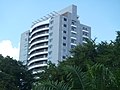
Río Piedras

Cathedral of San Pedro Sula

Source of San Pedro at the exit of Puerto Cortés
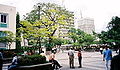
Central square

El Cajón Dam

Omoa Bay

Coca Cola beach

Cusuco National Park

Parque del municipio de Santa Cruz de Yojoa

Estatua de El Forjador, in San Pedro Sula
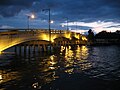
El Malecón, Puerto Cortés

Fortaleza de San Fernando de Omoa

Choloma Outside
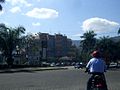
Central street of San Pedro Sula

Sports event
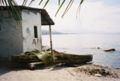
Seaside house in Omoa

University


Contenido relacionado
Kingdom of Iberia
Kazakhstan
Valladolid
Alvaro de Bazan
Colombia's shield