
Bernardo O'Higgins
Bernardo O'Higgins Riquelme (San Bartolomé de Chillán y Gamboa, Spanish Empire, August 20, 1778 – Lima, Peru, October 24, 1842) was a Chilean military and politician recognized as one of the "fathers of the Homeland of Chile" for his crucial participation in the process of independence of Chile from the Spanish Empire, both in the respective war and in the position of ruler as supreme director between 1817 and 1823, when he consolidated his start as a nation.
He was of Spanish and Irish descent. He was the son of Ambrosio O'Higgins, who before he died held the position of viceroy of Peru; and Isabel Riquelme, who accompanied his son during the emancipation process. On his father's instructions, he initially studied in Chillán, then in Lima and then in London, England, where he had his first romance, but it would also be the place where he was stirred up by the secessionist ideas of his mathematics teacher, Francisco de Miranda, who later he would make him a member of the Lodge of Lautaro. In 1801 he returned to Chile and settled in his estate in San José de Las Canteras, received as an inheritance, dedicating himself to agricultural work.
Politically, he was mayor of Chillán in 1806, of Los Angeles in 1810, deputy for the same area before the First National Congress, between July and August 1811, and mayor of Concepción in 1814, later he became a military officer without formation. During the Reconquest period, he organized in Mendoza, together with José de San Martín, the Army of the Andes, and led the Chilean offensive, which achieved the independence of Chile in 1818, after the battle of Maipú. He exercised the head of State under the title of supreme director as interim, being a brigadier. And in that same position he assumed full ownership on March 24, 1818 and resumed on April 1 of that year. He resumed again, on April 14 of the same. He formally resumed, being captain general, on September 3, 1820 and finally on November 25, 1822, being captain general. brought to Chile in 1800– the promulgation of the constitutions of 1818 and 1822, the founding of the Chilean Navy, the Military and Naval schools naming the latter as the Academy of Young Midshipmen, and the organization and dispatch to Peru of the Liberation Expedition. He also ordered the creation of the current Chilean flag and national anthem. On the other hand, measures were taken that generated discontent among the Creole aristocracy, such as the abolition of the mayorazgos and titles of nobility, the suppression of the shields of weapons and the creation of the Legion of Merit. Due to this situation, his political support for his management decreased, and to avoid a major confrontation, he abdicated on January 28, 1823 and went into exile in Lima, Peru, where the Peruvian State granted him a farm where he spent his last days. days.
Considered one of the Liberators of America, along with San Martín, Bolívar and Sucre, he was Captain General of the Chilean Army, Brigadier of the United Provinces of the Río de la Plata, General of Gran Colombia and Grand Marshal of Peru.
Childhood and youth


O'Higgins was born Bernardo Higins, according to his baptismal certificate, on August 20, 1778. He was the natural son of Ambrosio O'Higgins, at that time a 59-year-old lieutenant colonel of the Grenadiers age and who was later Governor of Chile (1788-1796) and Viceroy of Peru (1796-1801), and of the Chilean Isabel Riquelme Meza, a member of one of the oldest and most illustrious families in the Chillán area.
The place of birth of Bernardo O'Higgins is not precise. Although traditionally the Riquelme family house is mentioned, located in what currently corresponds to Chillán Viejo and where Bernardo spent his first years of life without a father. Others affirm that the place would have been on some other family land, either in the Olate sisters' house in the same city or in the nearby El Palpal hacienda, on the land of the current Pemuco commune. baptism appears only that he was born in the territories of the bishopric of Concepción, which includes the previous locations.
Faced with the legal and social ignorance of Ambrosio O'Higgins to exercise his paternity of his natural son (born out of wedlock), Bernardo was called the "guacho Riquelme", although, according to descriptions At the time, he was physically very similar to his father.

.jpg)
Bernardo remained in Chillán until November 1782, when his father sent him to Talca, remaining under the care of the couple formed by the wealthy Portuguese merchant Juan Albano Pereira Márquez and Bartolina de la Cruz y Bahamonde. On January 23, 1783 he was baptized in the parish church of Talca: the recognition of his paternity by Ambrosio O'Higgins; the name of her mother, however, is reserved at her request.Although in her game it appears as "Bernardo Higins", he was known until the age of 24 as "Bernardo Riquelme".
In 1788 he returned to Chillán as an intern at the Colegio de Naturales, directed at that time by the Franciscan Order. He remained under the tutelage of the school's rector, Father Francisco Javier Ramírez, a friend of Ambrosio O'Higgins, who at the time was already Governor of Chile. The children of the Mapuche chiefs of the area also studied in this establishment, for what he learned to speak Mapudungun there. The Riquelme family—his grandparents, his mother, and his half-sister—visited him frequently, which led to a close bond with his mother and his half-sister, Rosa.
In 1790 his father sent him to Lima to continue his studies at the Colegio del Príncipe and the Colegio de San Carlos in that city and in 1794 to Europe to complete his studies. In Lima his attorney was the wealthy merchant Irish Juan Ignacio Blake and in Europe Nicolás de la Cruz y Bahamonde, brother-in-law of Juan Albano Pereira. Upon arriving in Europe, he initially lived in the residence of Nicolás de la Cruz y Bahamonde in Cádiz but later he was sent to London to complete his education. In England, the watch manufacturers, Spencer and Perkins, periodically received remittances of money sent by Don Ambrosio through Nicolás de la Cruz and Bahamonde for the maintenance of his son. This money was considerably cut by these leaders, which meant a constant concern and source of trouble for the young Bernardo Riquelme.

In the UK, Bernardo attended a Catholic boarding school located in Richmond, just outside London. There, he had an affair with Charlotte, the daughter of the venue's owner, Timothy Eeles. He became fluent in English, learned French literature, drawing, history and geography, music, and handling of weapons. Among his teachers, the mathematics one was Francisco de Miranda, precursor of American independence and who imbued him with the libertarian ideas that were debated at that time, the rights of man and popular sovereignty, giving him advice that would help him to take part active in the fight for the emancipation of his country. Years later, Miranda would be the one who would incorporate O'Higgins into what would be the Lautaro Lodge and present him to Minister Portland and Mr. Rufus King, Plenipotentiary of the United States United States, when he went to request their support for the independence of the Spanish colonies.
He spent the summer of 1798 at the Margate spa and when he asked his proxies in London for money to return to Richmond, they denied it, accusing him of wasting it. After breaking relations with the watchmakers Spencer and Perkins for the Lack of money, he decided to return to Spain where Nicolás de la Cruz and Bahamonde. At the end of April 1799, he embarked in the port of Falmouth towards Lisbon and from there continued by land to Cádiz. He intended to enter a military navigation academy but, unable to do so, he asked his father for authorization to return to Chile.. Granted this, he had to wait a while because a new war had broken out between Spain and England. Finally, on April 3, 1800, he sailed aboard the ship La Confianza , which was part of a large convoy. On the 7th of the same month, a powerful English squad captured four ships of the convoy, among which was the one that was transporting Bernardo. All its crew and passengers were taken to Gibraltar where they were later released.
Without luggage or resources, he went on foot to Algeciras and then by ship to Cádiz, again to the house of Nicolás de la Cruz and Bahamonde, but yellow fever had reached the city so De la Cruz with his Family and Bernardo moved to Sanlúcar de Barrameda. There the fever attacked him, the one that had him on the brink of death. Already without salvation he asked to be supplied with quina; They did it out of compassion for the dying man, but miraculously, after a few hours, the fever had gone down and as the days went by it completely improved and he returned with the De la Cruz family to Cádiz.
During his stay in Cádiz, he shared his revolutionary ideas with various people who had been indicated to him by Francisco de Miranda, who from London had an active branch in Cádiz of the Lautaro Lodge. At the beginning of January 1801, De la Cruz told him that his father, indignant with him, ordered him to fire him from his house. Bernardo replied to his father in a letter:
I, sir, do not know what offence I have committed for such punishment, nor do I know what has been ungrateful (one of the most abhorrent crimes) for in all my life I have tried to taste V.E. and seeing now frustrated this my only claim, and irritated my father and protector, I have been confused. A stab wound wasn't so painful! I don't know how I didn't fall out of shame when I heard such reasons! I have never feared death, or poverty; but at this moment I have been harassed, considering myself the last of men and the most unfortunate. I don't know who was the one who had such a bad heart to try to ruin me in V.E.'s opinion, my father and protector! I quote him before the presence of God, for in this world I do not know him, to ask him for the satisfaction required.Letter from Bernardo Riquelme to Ambrosio O'Higgins, 1801
In the letter, Bernardo told him in detail about his sufferings in London and Cádiz and finally asked him to forgive any faults he might have committed. What had given rise to the father's irritation with his son was that, at the end of 1800, the viceroy learned that an accomplice of Francisco de Miranda, the Cuban Pedro José Caro, had denounced before the Spanish court a plan of insurrection of West Indies and informed that Bernardo Riquelme participated in it. The news would have reached the ears of King Carlos IV, who would have decided to remove him from his post.
Bernardo's letter to his father, however, would go unanswered. A few days after being notified by his attorney of his father's determination, the news of the death of Viceroy O'Higgins was received in Cádiz and along with it the information that he had left his son Bernardo a large inheritance. At that precise moment, the situation of the young O'Higgins changed radically and he soon had the necessary money to return to his homeland, embarking on April 14, 1802 on the frigate Aurora, arriving at Valparaíso on September 6, at the age of 24.
In his farm San José de Las Canteras de Vallenar
Upon arriving in Chile, Bernardo stayed in Santiago at the home of his cousin, Captain Tomás O'Higgins, who welcomed him and informed him of the exact contents of Ambrosio O'Higgins' will, consisting of the Las Canteras farm with 3000 head of cattle. As the settlement of the estate was taking place in Lima, he wrote to the executors requesting information and signing, for the first time, with great satisfaction and pride as Bernardo O'Higgins y Riquelme. The executors responded that it was necessary to wait for the end of the residency trial that, in accordance with the law, followed his father. In addition, they informed him that they had instructed the administrator of the Las Canteras farm, Pedro Nolasco del Río, to deliver this to him after granting a bond pending the end of the trial in Peru. Having received this information, he went to Chillán to look for his mother and half-sister Rosa in order to begin living in Los Angeles, since his Riquelme uncles were already living in Los Angeles —after the death of his grandfather Simón Riquelme, in 1801. —, then he met again with the administrator of his ranch, Don Pedro Nolasco del Río, a former friend and assistant of his father Ambrosio O'Higgins, who let him take on bail some heads of cattle from the inheritance and with their sale Pay off travel debts.
Invited by Commander Del Río, and accompanied by his uncle Manuel Riquelme, he attended Negrete's parliament in March 1803, a meeting held with the purpose of maintaining harmony with the indigenous people. that his father had done it 10 years earlier. This meeting helped him to see up close and fraternize with the Mapuche caciques and remember something of his childhood at the Chillán Natural School, where he had lived for a while with the children of the region's caciques.
Two months later, he went to Lima to expedite the inheritance settlement procedures and initiate the legitimation procedures. This last procedure ultimately failed, but he returned with the instructions of the executors so that the administrator of the estate could make final delivery of this. On February 19, 1804, he took possession of the 16,689 blocks of land that the hacienda consisted of, in addition to 4,300 cattle and 540 horses counted after a roundup that lasted 22 days. This difference in the cattle with what was in his will led to a reconciliation with his cousin Tomás de él, to divide the surplus cattle between them.
Once installed on his property, he took his mother, his half-sister Rosa and his uncle Manuel Riquelme to live with him. They accompanied him and helped in the purchase of household goods and in the construction of barns, rooms and a manor house that was completed in 1808. He applied to his land what he had observed in the recent English agricultural revolution, he built ditches, rammed the land cultivable, he rotated crops and introduced new tools such as the iron plow, planted vines and produced wine. In 1810, according to an inventory made by himself, the number of vineyards and fruit trees reached 85,000 plants, he had crops of potatoes, wheat and fodder and had 10,228 heads of cattle. Around 400 tenants worked in agricultural work, most of them through the system of sharecroppers. On several occasions, O'Higgins hired Englishmen who had been shipwrecked on the country's coasts to work on them.
Also, from his installation in Las Canteras, he began to spread the independence ideas that his teacher Francisco de Miranda had instilled in him in London (J. Heise). In Concepción, Juan Martínez de Rosas had been leading a group of young autonomists for some years now. Those who sought to govern themselves freely, but recognizing the authority of the King of Spain, were called autonomists. The independentistas, on the other hand, wanted to install a totally and definitively independent government from any foreign country or leader. This was the idea that Bernardo O'Higgins brought from London and that he fulfilled 16 years later on February 12, 1818 (Lazo, 2010). Soon after, he became involved with the officers who guarded the kingdom's southern border, learning from them the rudiments of warfare. His love for his country, his frank and selfless character, his ability to work, seriousness and correctness in the treatment of his tenants as well as his good education and the fact that he descended from a viceroy made him very popular in the region. He occasionally traveled to the cities of Concepción and Chillán where he stayed for long periods of time. In Concepción he made a great friendship with Juan Martínez de Rozas, a skilled lawyer of great influence in the region and who had worked under his father's orders and who became very fond of him. During these visits he talked about the independence ideas that were circulating in Europe and especially the project elaborated by Francisco Miranda. In Concepción he attended the political gatherings that took place in the house of the lawyer José Antonio Prieto and in Chillán he visited Fray Rosauro Acuña and Pedro Ramón Arriagada in the ranch next to his, whom he converted into unconditional followers of his independence ideas. which consisted mainly of establishing free trade and the creation of a Congress, he also preached the need to form a Creole political elite that, when the time came, would be in a position to replace the authorities of the Spanish crown in America.
In 1806 the town of Chillán elected him mayor of the Cabildo, immediately opposing the attempts of the mayor of Concepción, Luis de Álava, to violate communal rights and he, in turn, began to monitor him for his inclinations pro-English manifested in the acquisition of tools of that nationality for his farm and by the correspondence he maintained with people from Buenos Aires that at that time was threatened by an English invasion. He did not dare to stop him, since O'Higgins was already an esteemed and respected character in the region, but he did annoy him in various ways.
In 1808 he joined a conspiratorial group known as the "Patriotic Goblins" that made up young people belonging to the main families of Concepción, Talcahuano and nearby towns. That year the governor of the kingdom died and after several proceedings led by Juan Martínez de Rozas was designated in his place by Brigadier Francisco Antonio García Carrasco, who appointed Martínez de Rozas as his private secretary. Just as important as the above were the news of Ferdinand VII's captivity by Napoleon Bonaparte. O'Higgins was one of the few who visualized the scope that these events could have for the country. At the end of 1808 Martínez de Rozas returned to Concepción as the governor replaced him due to pressure from the peninsular Spaniards.
O'Higgins did not rest for a moment in continuing to spread his emancipatory ideas but he did fear for his freedom, even more so when in October 1809 his friends Prior Acuña and Pedro Ramón Arriagada. At the end of 1809, the people of Los Angeles elected him as interim sub-delegate of the Isla de La Laja party, which allowed him to later organize the forces of the territory militarily.
Participation in the independence of Chile
He was inspired by the Mapuche Lautaro, who was also educated thanks to the governor of Chile (Pedro de Valdivia) and led his people against the Spanish, during the Arauco War. In early 1810 O'Higgins had news that the Creoles of Chuquisaca and Quito had deposed the Spanish authorities and created Government Juntas. Later, from Spain, he learned of the invasion of Andalusia by the French, but what shocked Las Canteras the most was the news that José Antonio de Rojas, Juan Antonio Ovalle and Bernardo de Vera and Pintado, important neighbors, who were transferred to Valparaíso to be sent to Lima. This action created a violent reaction against García Carrasco, which also coincided with the overthrow, on May 25, of Viceroy Cisneros by the patriots of Buenos Aires, who had installed a Governing Board.
The criollos of Santiago, upon learning of the capture and transfer of Rojas, Ovalle and Vera, were indignant with the governor, already discredited by a scandal related to smuggling, for which the Royal Court finally obtained that, on 16 On July 1, García Carrasco resigned from office and handed over command of the kingdom to Mateo de Toro y Zambrano, an 83-year-old man. O'Higgins for his part estimated that the time for the fight had come, so he decided to prepare for it. He met with the commander of Dragones de la Frontera and proposed to him to execute his plan to organize the military defense of the Concepción region by forming two cavalry regiments and with his tenants of Las Canteras the regiment No. 2 of La Laja..
During the Old Homeland
When O'Higgins found out what had happened in Santiago on September 18, 1810, events that had meant the establishment of a Governing Board in which Juan Martínez de Rozas figured as one of the members, he immediately left for Concepción to meet with him, obtaining from him the assurance that he would propose and fight for the establishment of free trade and the call to elect a Congress of representatives to involve all the people in the revolutionary action that he saw coming. For this, it was necessary to prepare the country militarily to face a war against the royalist forces that the viceroy of Peru would surely send, as he had done with Chuquisaca and Quito, already offering him those that he had formed on the Island of La Laja.
Rozas, once in Santiago and integrated into the Government Junta, obtained the approval of a defense plan for the kingdom, a plan devised with the advice of engineer colonel Juan Mackenna, also a former and close collaborator of Ambrosio O'Higgins. The Board, dated February 28, 1811, appointed Bernardo O'Higgins lieutenant colonel of the 2nd Cavalry Regiment of Disciplined Militia of La Laja, which would be called Lanceros de la Frontera. This appointment caused him great pain and disappointment because, as colonel of the regiment, Rozas appointed his brother-in-law.
After the initial disappointment caused by his postponement in command of the regiment formed by him, he only thought of preparing himself to be able to adequately carry out his military function and for this he asked for support and advice from Colonel Juan Mackenna, a renowned military man, to who he did not know personally, but who he knew professed his same ideas of freedom and in whom he fully trusted. Mackenna, after two months, sent him a response that resembled a military instruction manual, writing and advice that undoubtedly served him well in his future performance.
Deputy - National Congress

It was also around those days that he learned of the Junta's resolution to call for elections of deputies for the formation of a Congress. O'Higgins was elected by acclamation as deputy representative of Los Angeles.On April 5, 1811, he arrived in Santiago to join Congress when it was inaugurated. On April 30, together with the deputies from the provinces, he managed to have them integrated into the Governing Board with the right to speak and vote until Congress was constituted and together they presented a formal protest against the increase from 6 to 12 deputies who would be elected to represent Santiago.
Congress, made up of 42 deputies, was solemnly inaugurated on July 4, 1811, pending the election of a new Governing Board from among them. O'Higgins' group was made up of only 12 representatives. Despite their small number, they managed to prevent funds from being sent from the treasury to Spain to contribute to the war against the French. Then the Congress heatedly debated the question of the election and incorporation into it of the 12 deputies for Santiago instead of the 6 that had been initially agreed. On August 9, in a tumultuous session, O'Higgins and the 12 deputies from his group left the session room, stating that they would inform their peoples of what happened regarding the number of deputies for Santiago. He responded by letter that they approved what had been done and told him not to accept the change in the number of deputies representing Santiago. At the end of August he suffered an attack of rheumatism that confined him to bed for the next two months.
On September 4 of the same year, José Miguel Carrera, through a military coup, closed Congress and dismissed 8 deputies, of whom 7 were from Santiago, and appointed a Governing Board made up of Juan Martínez de Rozas, Juan Enrique Rosales and Juan Mackenna. Congress during that period created the Intendancy of Coquimbo, drew up the bases of a constitutional regulation, declared free the children of slaves who were born in the country (libertad de wombs) and, by special indication of O'Higgins, prohibited the burial of corpses in the temples, creating cemeteries on the outskirts of the cities. On October 19, O'Higgins requested and obtained from Congress a leave of absence to his farm to restore his health. On November 15, when he was ready to leave for the south, José Miguel Carrera once again carried out a military coup and appointed a new Government Junta, this time made up of himself, José Gaspar Marín and Martínez de Rozas, but since the latter was in Concepción, he asked O'Higgins to replace him and join the Board. On December 2, José Miguel Carrera, not happy with the progress of the government, through a new military coup dissolved Congress as a result of which both O'Higgins and Gaspar Marín resigned from the Junta. Thus ended the first national attempt at representative government.
Meanwhile, Juan Martínez de Rozas had set up a Governing Board in Concepción. When José Miguel Carrera found out about it, he went to O'Higgins' house and got him to agree to represent him as a plenipotentiary before the Junta de Concepción to avoid a confrontation that could be fatal for the patriot cause. On December 14, 1811, O'Higgins finally left the capital and headed towards Concepción and his Las Canteras hacienda with the mission of reaching an understanding between both parties. After reaching an agreement with Martínez de Rozas, he found out that Carrera had moved his troops to the Maule River and he realized with displeasure that he had been used by him to gain time. This is how in March 1812 he left Concepción and went to his hacienda, where he took command of his regiment and went to Linares to meet with the troops mobilized by Martínez de Rozas to oppose those of the north..
He begins his service as a soldier
During the month of August 1812 both armies remained immobilized on the banks of the Maule River. O'Higgins had proposed to immediately attack the forces of Santiago, but Martínez de Rozas opposed it, preferring to parley with Carrera, with whom he had a meeting and then both decided to withdraw the troops to their cities and continue the talks ex officio. This inaction of Martínez de Rozas was highly criticized by the southern army officers and when he returned to Concepción he had lost all his prestige. At the end of May, O'Higgins definitely returned to his Las Canteras farm with the intention of exclusively worrying about his land and business in the field.
At the end of March 1813, O'Higgins was on his estate when the shocking news reached him that a royalist contingent had landed in San Vicente Bay. The force sent by the Viceroy of Peru came under the command of Brigadier Antonio Pareja. He immediately gathered the tenants of the hacienda that made up his regiment and with them he left for Los Angeles, hoping that more members would join him during the march. On the way, he learned that this town was in the hands of the royalist forces, so he He went directly to Concepcion. His men already numbered about a hundred, all armed with spears, when he found out that Concepción was also in the hands of the royalists, he decided to disperse his contingent, giving them instructions to return to their homes to await instructions and he, with his assistant and a son of this, they went to Talca to join the patriot army.
Linares - San Carlos - Los Angeles
O'Higgins arrived in Talca on April 5 and on the night of that same day José Miguel Carrera arrived, already inaugurated as Commander-in-Chief of the patriot Army. They had a meeting in which O'Higgins placed himself under his orders and proposed a plan to attack immediately, by surprise, the royalist forces that he had seen camping in Linares. Initially Carrera hesitated, but his military adviser, the United States Consul, Joel Robert Poinsett, advised him to support him, so he placed a detachment made up of 7 officers, 9 hussars, 13 dragoons and 6 militiamen under his command.. That same night he crossed the Maule River and the next day he broke into the Plaza de Linares, seizing a picket of 22 royalist dragoons that were camped there. This was O'Higgins' first military action and the first of the war for independence, then he continued to harass the enemy south of the Maule River and recruit men for the patriot army, both in Linares and Parral.
Carrera organized the patriot army into 3 divisions, handing over command of the first division to his brother Luis and in it he placed O'Higgins, recently promoted by the Government Junta to the rank of colonel, as head of the vanguard, with the mission of continuing south of the Maule River. Due to illness he did not participate in the battle of Yerbas Buenas, but once he had recovered he continued to attack the royalist army in San Carlos, in mid-May, and Chillán. He continued south, taking possession of the towns in his province, Isla de La Laja, including his hacienda, and occupying the city of Los Angeles on May 27, 1813. He recruited militiamen for the army, reaching 1,400 men with whom he he led Chillán to join Carrera's forces.
Chillan
At the beginning of July 1813, O'Higgins and his troops joined Carrera's troops that were besieging Chillán. Commander Juan Francisco Sánchez was in command of the royalist army, who had succeeded Brigadier Pareja who had died of pneumonia on May 21 just last year. Sánchez distributed his men perfectly in the defense of the city, so that all the patriotic attempts to take it failed. O'Higgins, seeing that the demoralization was spreading in the troops, supported by Mackenna, proposed to Carrera to attempt a decisive assault on the city. From July 27 to August 3, no advantage was noted between the contenders, but that morning O'Higgins, at the head of 500 of his men, resolutely entered the city heading towards the square and when he expected reinforcements to take it, he received Carrera's order to withdraw. Finally, on August 8, the patriot army lifted the siege, withdrawing to the north. The result of the siege, carried out in the middle of winter, was disastrous for the patriots: demoralization spread among their ranks and the prestige of José Miguel Carrera was greatly affected.
The Oak

Once the siege of Chillán was lifted, O'Higgins dedicated himself to fighting the royalist guerrillas in the Concepción and Los Angeles areas. He passed through the towns of Yumbel, Tucapel, Huilquilemu, Gomero, Quilacoya, and Rere, seizing men and capturing equipment. On this tour he found out that the royalist forces had burned and reduced to rubble the rooms and buildings of his Las Canteras hacienda.
On October 16, 1813, at sunset, he joined the forces of General José Miguel Carrera at the El Roble ford, on the banks of the Itata River. Don Juan José's division was also encamped nearby. A royalist position with a cannon defended the ford, but Carrera did not attach importance to it due to their small number. At dawn the next day a large royalist force attacked the unaware patriots who found themselves between two fires. Confusion spread and Carrera managed to mount and thanks to his horse he jumped into the river, crossed it and headed to the place where his brother's division was camped. His men, with no one to guide them, were about to suffer a great defeat when suddenly the figure of Bernardo O'Higgins rose up among them, who with a rifle in his hand harangued them: "Or live with honor! or die with glory; whoever is brave, follow me!" This cry was enough for the soldiers in unison to answer with a "Long live the Homeland!", they fixed their bayonets and launched themselves irrepressibly against the royalist soldiers, transforming a sure defeat into a victory from which emerged a hero and new leader.
Even after being shot, he continued to fight until the situation forced him to withdraw. José Miguel Carrera recognized the heroism of O'Higgins, writing in the report of the battle:
I cannot leave in silence the just praise that so dignifiedly deserves the O'Higgins, to whom V.E. must be counted by the first soldier, able in itself to concentrate and heroically unite the merit of glories and triumphs of the Chilean State.José Miguel Carrera, Official Part of the Battle of El Roble October 25, 1813
General in Chief of the army

On October 21, 1813, the members of the Government Junta arrived in the city of Talca. The reason for this displacement was the discontent that existed due to the way in which José Miguel Carrera led the war. They were determined to remove him and his brothers from the army. On November 27, the decree of separation of the Carrera brothers from their military posts was issued and that the command of the army was handed over to Don Bernardo O'Higgins, a transfer of command that only materialized on February 12, 1814 in the city of Concepción because O'Higgins did not want to assume the position, he even went to Talca and met with the members of the Junta, finally his unconditional friend and adviser, Colonel Juan Mackenna, convinced him that for the good of the Homeland accepted the post. O'Higgins took over as Intendant of Concepción in 1814, being the same year replaced by the interim Matías de la Fuente and finally assuming Commander José Berganza, appointed in August by Brigadier Osorio.
In January O'Higgins learned of the landing of the royalist brigadier Gabino Gainza on the coast of Arauco with important reinforcements, to which men brought from Chiloé had been added. On the same date he learned that his mother and his half-sister, prisoners of the royalist forces for some time, had regained their freedom thanks to a prisoner exchange. The royalists conquered the city of Talca on March 3, a fact that produced the resignation of the Governing Board with the purpose of ending the collegiate executive power and concentrating all the command in a single person, who under the title of Supreme Director, direct the destinies of the country. The appointment fell to Colonel Francisco de la Lastra.
Quilo - Membrillar
O'Higgins planned to attack the plazas of Los Ángeles and Nacimiento to cut the line of supply and communication of the royalist forces with Valdivia. For this he ordered Mackenna who was in Quirihue to descend towards Concepción while he gathered and equipped his men. O'Higgins found out that Gainza was also preparing his forces to attack Mackenna's division, which was now at the Membrillar farm, on the north bank of the Itata River, so he decided to go to the rescue. of the. On March 19, 1814, in the town of Quilo, south of the Itata River, near Ñipas, he killed a detachment of royalist troops and the next day he observed from a height how Colonel Mackenna killed Gainza's troops. Then with both divisions he advanced towards Talca to block Gainza's path towards Santiago.
Quechereguas
Both armies advanced north in a parallel race to reach the Maule River. During this displacement, O'Higgins learned that the reinforcements of more than 1,000 men under the command of Captain Manuel Blanco Encalada had been defeated on March 29 at Cancha Rayada. He crossed the Maule River before the royalist army and entrenched himself on the Quechereguas farm, on the southern bank of the Claro de Talca River, and there he resisted the onslaught of Gainza on April 8 who, faced with his failure, decided to return to the city of talca. O'Higgins remained in Quechereguas awaiting a new reinforcement of troops from Santiago.
Treaty of Lircay
De la Lastra called Colonel Mackenna to Santiago to find out the real situation of the patriot army and after listening to him and considering, among other causes, the serious financial crisis in which the country found itself, he accepted the mediation that the English Commodore James Hillyar, representing the Viceroy of Peru, offered to sign a treaty to cease hostilities. Abascal appointed O'Higgins and Mackenna as plenipotentiaries on the Chilean side, previously both officers were promoted to the rank of brigadier, and Gainza acted as viceroy Abascal's representative, but on the condition that what was agreed upon must be ratified by this.
The treaty was signed on May 3, 1814 on the banks of the Lircay River. It was a truce because both parties knew that they would not comply with what was agreed. Gainza fell back to Chillán and O'Higgins remained in Talca. Soon after, information arrived that Viceroy Abascal rejected the treaty and that he had also sent a new expedition under the command of Colonel Mariano Osorio against the Chilean insurgents.
The Three Ditches
O'Higgins was in his camp in Talca commenting on the news of the escape of the Carrera brothers from their captivity in Chillán, when José Miguel and Luis Carrera appeared before him. They stayed several days in Talca and there they found out how unpopular the Lircay treaty was among the patriots. They continued to Santiago and on July 23, by means of a coup, José Miguel Carrera overthrew De la Lastra and established a Governing Board made up of him, Manuel Muñoz Urzúa and Julián Uribe.
O'Higgins, upon learning of this coup d'état, rejected it and mobilized his army towards Santiago with the purpose of reinstating the overthrown Supreme Director in office. On August 26, the vanguard of his army was rejected by a division commanded by Luis Carrera at a place called Las Tres Acequias, a confrontation in which he lost around 150 men and two cannons, which were all his caliber weapons..
After this action, O'Higgins learned of the landing of new royalist troops under the command of Colonel Mariano Osorio, experienced and well-supplied troops with whom he headed towards Santiago without any opposition. Faced with this situation, O'Higgins met with Carrera and both decided to face this new threat together. Osorio arrived in San Fernando with 5,000 men organized into four divisions on September 25, 1814.
Rancagua

Around September 6, Carrera and O'Higgins agreed that José Miguel would remain in Santiago and that O'Higgins and Juan José Carrera with their divisions would try to contain Osorio south of the Cachapoal River and if he did not could do, they would withdraw first to the city of Rancagua and then to the Angostura de Paine. The patriot force managed to keep Osorio south of the Cachapoal until the end of September.
On October 1, the royalist forces undertook the crossing of the Cachapoal River. Juan José Carrera's division, unable to contain the enemy advance, fell back and took refuge in Rancagua. O & # 39; Higgins with his division also went to Rancagua to reinforce Juan José's division, resisting in that place until October 2, the day Bernardo O & # 39; Higgins decided to force the withdrawal of his people by a cavalry charge. Of the nine hundred patriots who started the fight, only around two hundred managed to escape. This defeat marked the end of the Patria Vieja.
During the Spanish Reconquest

On the morning of October 3, O'Higgins arrived in Santiago and immediately met with José Miguel Carrera. He wanted an explanation of his behavior the day before in Rancagua when he arrived with his division at the gates of the city and, between the two of them, they could have defeated the royalist troops, he withdrew unexpectedly. No explanation from Carrera satisfied him, but he was interested in the next step to follow, he considered defending Santiago on the banks of the Maipo River and Carrera was resolved to withdraw to the north of the country. They did not reach any agreement. So he decided to go into exile with his family.
On October 8, he undertook to cross the mountain range with his mother and half-sister and with many other soldiers and citizens who with their families had chosen to emigrate to neighboring Mendoza. On the 12th they began to go down to Argentina, camping in the Las Cuevas refuge and arriving the next day at Uspallata where General José de San Martín, governor of Cuyo, was waiting for them with all kinds of aid. A couple of days later, José Miguel Carrera also arrived, who had decided to follow the same path as O'Higgins, exile.
While in Mendoza, he learned of the death of his friend, Brigadier Juan Mackenna, in a duel with Luis Carrera that occurred in Buenos Aires on November 21, 1814. This news affected him deeply, so he decided to move to Buenos Aires to find out what happened. He was accompanied by his mother and his half-sister Rosa de él, arriving in the capital in January 1815, where he stayed for about a year. In Buenos Aires, the government recognized him as a brigadier in the army of the United Provinces of the Río de la Plata. In January 1816, the Supreme Director, Ignacio Álvarez Thomas, told him to return to Mendoza to join the army organized there by General San Martín.
General José de San Martín

He left Buenos Aires at the age of 7 and returned at 31 with the rank of lieutenant colonel in the Spanish army. His performances were a reflection of the experiences gained in Europe. He dreamed of a great America with the virtues of Europe, but without its vices of the time. He loved the cause of American independence as a whole.
He also imported the institution of Masonic lodges from Europe. In 1812 with the help of other heroes he founded the Lautaro Lodge in Buenos Aires, then in 1814 the Mendoza Lodge and in 1817, shortly after the battle of Chacabuco, the Santiago Lodge. The purpose of these Lodges was to expel the royalists from Spanish America. To them belonged almost all the Chilean and Argentine patriots, both civil and military.
From the moment he took command of the army of Salta, he understood that with the means available it was impossible to conquer Upper Peru and since then he devoted all his efforts to organizing an army to liberate Chile and attack the capital directly by sea of the viceroyalty, Lima.
As soon as he arrived in Mendoza, he began the arduous task of imposing his project on the Buenos Aires leaders of organizing the bases of an army in Cuyo, gathering money, weapons, ammunition, food, horses, clothes, etc. and start a sapper war in Chile. Only an individual like him could successfully carry out a feat such as the passage of the Andes, one of the highest mountain ranges in the world, with an army of 4,000 men without losing a cannon or a load of ammunition.
Army of the Andes


O'Higgins arrived in Mendoza during the second half of February 1816. General San Martín had imposed heavy taxes especially on the royalists to contribute to the war effort and had transformed the city into a large barracks in which the activity and training did not stop. The warlike spirit was so accentuated that even the schoolchildren carried out military exercises.
San Martín organized an espionage service to find out what was happening in Chile and spread false news about what was happening in Mendoza. The most useful of all the spies was Manuel Rodríguez, former secretary of the race, but who gave himself completely to the cause of the patriotic forces, his name came to be loved by the people and feared by the new governor of Chile, Casimiro Marcó del Pont who put a price on his head.
The first task that San Martín assigned to O'Higgins was to prepare the town of El Plumerillo, a league from Mendoza, to move the camp of his troops there, since he wanted to keep his men away from distractions of the city that could affect discipline and military spirit. The camp was ready and received the army at the end of September. This is how General San Martín managed to leave with a well-provisioned and better organized army, in which there was order, great discipline, thorough instruction and high morale. According to the state of force, on December 31, 1816, it was made up of 4,045 men.
On January 21, 1817, O'Higgins, in command of the second division made up of 1,000 men, began the march from Mendoza towards the mountains towards the Homeland. In front marched the first division under the command of Brigadier Estanislao Soler and in the rear the headquarters, the maestranza and the hospital. The Army of the Andes fought under the flag with the light blue and white colors of the United Provinces of the Río de la Plata.
Chacabuco
Everyone knew they would be leaving soon, but very few knew the day and the route they would follow. O'Higgins, Soler and San Martín followed the route of the Paso de los Patos. They reached the Los Patos River and then turned south to gain the 3,650 meter summit. On February 2 they began their descent towards the Putaendo valley and on February 8 O'Higgins reached the town of San Felipe. The divisions concentrated the following day south of Curimón.
In the early morning of February 12, 1817, O'Higgins' second division began to move, following the main road to fall head-on on the enemy. He went down the Ñipa ravine, crossed the Margaritas stream and faced the royalist army that was entrenched in the place. After noon the battle was over and O'Higgins entered the houses of Chacabuco where General San Martín arrived shortly after.
Three days later, already in Santiago, the Cabildo offered General San Martín the direction of the country, but he refused to accept the position. The next day the residents of Santiago proclaimed Bernardo O'Higgins Supreme Director of the young nation. This fact gave rise to the so-called New Homeland.
During the New Homeland
Supreme Director
On February 16, 1817, General San Martín, by means of an edict, summoned the inhabitants of the city of Santiago to an open town hall with the purpose of electing three representatives, one for each of the three provinces in which the country was divided: Coquimbo, Santiago and Concepción, and that these later elected a Supreme Director to govern the country. The assembly deemed this step unnecessary and elected General José de San Martín by acclamation, twice, as Supreme Director. A new assembly was called for the 16th, which also by acclamation appointed Brigadier Bernardo O'Higgins as Supreme Director.
O'Higgins' first proclamation as Supreme Director was to thank those who had helped restore the freedom of the Homeland. The proclamation read in part:
Our friends, the children of the provinces of the Rio de la Plata, of that nation that has proclaimed its independence as the precious fruit of its constancy and patriotism, have just sought us freedom usurped by the tyrants...
One of his first acts was to order the repatriation of the patriots that the royalist government had exiled to Juan Fernández Island. His first cabinet was formed by Miguel Zañartu as Minister of the Interior and Foreign Relations, José Ignacio Zenteno Minister of War and later created the Ministry of Finance under Hipólito de Villegas.
San Martín established in Santiago a branch of the Lautarina Lodge, all matters of importance should be dealt with and approved by the Lodge, of course O'Higgins was a member of this Lodge. The growing intervention of Argentines in public affairs began to change the feeling of the people towards their Argentine friends, public opinion began to feel a deaf antipathy towards them, except towards General San Martín who, thanks to his tact and skill, was always admired and loved by the Chilean people.
One of the Supreme Director's priorities was to organize a national army, the Chilean Army, and for the training of his own officers he created the Military Academy, which would later become the Bernardo O'Higgins Military School. Soon the army had 4,700 troops. The royalist forces entrenched themselves in the city of Talcahuano under the orders of Colonel José Ordóñez.
In April he headed south in command of a reinforcement division and assumed command of the operations that were taking place to take Talcahuano, operations that were unsuccessful. On December 17, a courier from San Martín confirmed that a large royalist force was on the way from Peru again under the command of General Mariano Osorio and advised him to leave the siege of Talcahuano and withdraw with his army to Santiago, taking with him as much as possible. resource could collect: horses, cattle and crops. San Martín estimated that both armies together would form a force of about 9,000 men. During his stay in the Concepción area, he had an affair with Rosario Puga and Vidaurre.

O'Higgins decided to undertake the march northward but along with it he materialized his idea of informing all nations of the independence of Chile and for this he had an Act drawn up that he signed in a solemn ceremony in the city of Talca on February 12, 1818, although the document dated it in Concepción and dated January 1.
General San Martín arrived in Talca on February 18 accompanied only by his assistants. His army was stationed in Las Tablas, a farm near Valparaíso. Shortly after they found out that the royalist troops had landed in Talcahuano and that they were rapidly advancing north, so they decided to concentrate both armies in Chimbarongo, which materialized in the first days of March.
Striped Court Surprise
On the afternoon of March 19, the patriot army camped about two kilometers north of Talca, ready to spend the night. San Martín, seeing that his position was unfavorable, decided to change the location of the troops before dawn, but General Ordóñez attacked them in the dark, causing great confusion and panic in the patriotic forces. During the fight, O'Higgins was wounded by a bullet that fractured his right arm and was surrounded by the royalists, being saved by Lieutenant Colonel Santiago Bueras and his squad of hunters. This combat produced more casualties among the royalists than among the patriotic forces, but the exaggeration caused panic to spread in Santiago and it was even commented that San Martín and O'Higgins had died in action.
The wound on his arm gave him a fever and he had to stay in bed in San Fernando, but upon learning of the events that were occurring in Santiago, among them that Manuel Rodríguez had been designated to share command of the nation and that he had formed a corps of armed volunteers, the Húsares de la Muerte, headed for the capital, arriving in the early hours of March 24 and immediately reassuming command of the nation and restoring order in the city. The next day General San Martín arrived, which brought more peace of mind to the inhabitants of Santiago and after a war meeting they decided to confront Osorio's troops on the Maipo plain.
Battle of Maipú

On April 5, the patriot troops under the command of General San Martín overwhelmed the royalists and when O'Higgins reached the battlefield, victory was already complete. San Martín and O'Higgins merged into a big hug. This battle secured the independence of Chile and is considered the first great American battle.
Maipú's triumph coincided with two events that directly affected O'Higgins, these were the news of the execution of the brothers Juan José and Luis Carrera, which occurred on April 8 in the city of Mendoza, and the murder of Manuel Rodríguez, which occurred in Til Til on May 26.
Once the battle was won, O'Higgins endorsed a vow made by the people to the Virgen del Carmen that if the battle was won, a temple would be built in her honor, giving rise to the Chapel of Victory, predecessor of the current Maipú Votive Temple, by decree of May 7, 1818.
First National Squad
O'Higgins resumed his efforts to build a squadron that would allow him to dominate the Pacific. After the victory at Chacabuco he would have said: "This victory and a hundred more will become insignificant if we do not dominate the sea." To achieve this he sent representatives to England and the United States with the mission of acquiring or building ships and hiring officers. Thanks to the tireless work of Minister José Ignacio Zenteno and the will of the Supreme Director, this great undertaking could materialize. In April the frigate Lautaro was purchased, then the corvette Chacabuco, in June the ship San Martín and the brig Galvarino and the Argentine Supreme Director sent the brig Intrepid. The organization of these ships was entrusted to Captain Manuel Blanco Encalada. Previously, an Organic Provisional Regulation of the Navy had been issued, which established the endowments, salaries, grades and equivalences with those of the army. On August 4, he signed a decree that created an academy for young midshipmen in the department of Valparaíso, which would eventually become the Arturo Prat Naval School.
Shortly thereafter, O'Higgins received information that the King of Spain had sent a new force of 2,000 men to Chile, a force that had set sail from Cádiz on May 21 in 11 transports escorted by the frigate Queen Mary Elizabeth. The Supreme Director ordered the seizure of the neutral ships and ordered the preparation of the squadron, which, under the command of the now ship captain Don Manuel Blanco Encalada, set sail from Valparaíso on October 10. O'Higgins from one of the hills of the port witnessed the departure of this First National Squad, stating: «Three small boats gave Spain the American continent; these four ships will take it away." The ships were the ship San Martín, the frigate Lautaro, the corvette Chacabuco and the brig Araucano. On October 28, Blanco Encalada in the Talcahuano Bay captured the frigate María Isabel and later five transport ships.
The agent sent to England managed to hire the prominent English sailor Lord Thomas Cochrane to assume command of the Chilean naval force with the power to hire English officers as commanders of his ships. Cochrane, his wife and his two youngest children were received in Valparaíso by O'Higgins himself on November 28, 1818.
O'Higgins was determined to end the war in the south before attempting the expedition to Peru. When Osorio withdrew to Peru, he left 1,500 men in the Concepción area under the command of Colonel Juan Francisco Sánchez, a force that increased with the troops arriving on the ships that the frigate María Isabel escorted to Talcahuano. With the purpose of reinforcing the patriot army from the south, at the beginning of January Brigadier Don Antonio González Balcarce was sent from Santiago, who took command of the army and at the end of the same month occupied Concepción, forcing the royalist troops to withdraw to the south of the Bio river. Bio in the direction of Valdivia. This withdrawal began what would be called The War to the Death, in which Captain Vicente Benavides stood out on the royalist side.
The previous success made O'Higgins decide to send the squadron, under the command of his newly appointed admiral, to blockade the port of El Callao and, if possible, beat the Spanish naval force. Cochrane set sail from Valparaíso on January 14, 1819 with the first division made up of 4 ships and days later the second division made up of 3 ships did so. He returned to Valparaíso on June 16 after having complied with the blockade, captured several prizes including the schooner Moctezuma and raided various Peruvian ports to stock up.
On September 12, 8 ships set sail from Valparaíso for El Callao, all under the command of Admiral Cochrane. He maintained the blockade of the port with some ships and with the rest he continued to Guayaquil, disembarked and occupied the city of Pisco for a few days and then returned to Valparaíso.
Take of Valdivia
On his return from Peru, Lord Cochrane surveyed Corral Bay and planned to conquer its forts by amphibious landing. For this, he contacted Colonel Ramón Freire who was in charge of the patriot forces in Concepción and with the approval of O'Higgins, on February 3 and 4, with 3 ships in which he embarked 250 Freire soldiers, he conquered the assault the squares of Corral and Valdivia. After the success of the capture of Valdivia, Cochrane proposed to O'Higgins to attack by surprise, as soon as possible, with a force of 2,000 men under the command of Freire, the viceroyalty of Peru. O'Higgins, thinking of San Martín, did not accept the idea.
San Martín kept his Army of the Andes stationed in Rancagua under the command of Colonel Juan Gregorio de Las Heras, while he recovered from his rheumatism in the baths of Cauquenes. At the beginning of March he learned of the fall of the government of Buenos Aires and the triumph of the revolutionaries against him. He then thought of separating the army and its command from the authorities of the Río de la Plata and transferring them to those of the Chilean government. With the complete approval of O & # 39; Higgins, on April 2 in Rancagua he met his senior staff and in a letter he explained the situation in his homeland: "Congress and the Supreme Director of the United Provinces do not exist. Mine as Commander-in-Chief of the Army of the Andes emanated from these authorities... »and he went on to explain why from that moment on they should look among themselves for a new Commander-in-Chief since he was resigning. The assembled officers unanimously voted for the election of San Martín, which was ratified by means of an act. When O'Higgins was officially informed of the agreement made by San Martín's officials, he informed Cochrane that the government had decided that the expedition to Peru would be carried out with an army of 4,000 men commanded by General San Martín. This was the beginning of a tense relationship between Cochrane and San Martín that the Supreme Director had to overcome with tact, patience and will.
On April 8, he aborted a plot planned by a group of aristocratic supporters of Carrera to overthrow him. They were put on trial and the Chamber of Justice on May 24 sentenced them to be shot, but O'Higgins commuted their sentence to perpetual banishment.
Peruvian Liberation Expedition
O'Higgins and the entire government dedicated themselves entirely to preparing the expedition: the clothing, food, weapons, horses and mules to operate on land, money for salaries, but there was the problem of flag under which the troops would go to Peru. Most of the officers were Argentine, but they had been granted their ranks in the ranks of the Chilean Army in accordance with the Rancagua act in which they had disassociated themselves from the trans-Andean authorities, in addition to the fact that almost all of the soldiers were Chilean. as were the Squad and the ships that would transport them. Until in a meeting the question was put directly to the generalissimo, who replied: "With the Chilean, Mr. Marín." The Senate drew up complete and detailed instructions that General San Martín should adhere to during his term. O'Higgins received them and did not transmit them to San Martín, trusting the judgment and criteria of his friend.
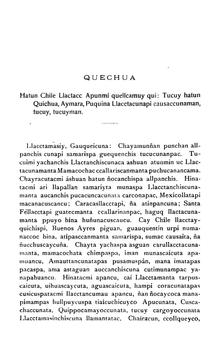
On August 18 in Valparaíso the embarkation of the regiments began and on August 20 in 22 transports escorted by 9 warships, under the command of Cochrane and the army under the command of San Martín, the Liberation Expedition of the Peru. O'Higgins, after setting sail, sent a proclamation written in Spanish and Quechua addressed to the Peruvian people and another addressed to the inhabitants of the Río de la Plata provinces. Thousands of copies of both proclamations were printed and distributed in both territories. Upon his return to Santiago, the Senate, as a sign of gratitude, conferred on him the rank of Captain General, making it effective retroactively to December 14, 1818.
The economic effort that the enlistment of the Liberating Expedition meant seriously affected the finances of the Republic and also those of O'Higgins, but in the political field he began to have problems, he was criticized for the all-encompassing power he possessed, The appointment of Rodríguez Aldea as Minister of Finance was criticized, who was linked to the April plot and finally the Senate, when it learned that he had not delivered his instructions to San Martín, on October 2 completely disapproved of his decision, making it know in writing and by representing to you future problems that could arise.
At the end of the year, San Martín informed him of the great blow that Admiral Cochrane had inflicted on Spanish naval power when on the night of November 5-6, in the port of El Callao, he had taken the frigate Esmeralda by assault, the most powerful ship in the Viceroy's fleet.
It endowed the capital with a theater that was inaugurated the same day the Liberation Expedition of Peru set sail. It had a capacity for 1,500 spectators spread over the stalls, two boxes and the gallery, where soldiers were allowed free entry.
War to the death
The preparation and enlistment of the Expedición Libertadora del Perú took away men and resources from the patriotic force that was fighting against the royalist guerrillas in the south, which from May was used by Vicente Benavides to intensify his actions against the patriots and even trying to advance towards the capital with a force that came to have around 3,000 men, half of whom were Pehuenche Indians. In this period the battles of Pangal took place, on September 22 and between the 26 and 28 of the same month the horrible day of Tarpellanca in which about 400 patriots were massacred. Given the seriousness of the situation, he arranged for Colonel Joaquín Prieto to move to the Itata region to organize resistance against Benavides with the local militias. Bernardo O'Higgins once planned to expand Chile by liberating the Philippines from Spain and incorporating the islands. In this regard he charged the Scottish naval officer, Lord Thomas Cochrane, in a letter dated November 12, 1821, expressing his plan to conquer Guayaquil, the Galapagos Islands and the Philippines. There were preparations, but the plan did not prosper because O'Higgins was exiled.
At the end of 1821, Colonel Joaquín Prieto achieved a great victory on the banks of the Chillán River over the royalist montoneros of Benavides and later recovered several towns for the Homeland. Soon after, Benavides was captured and taken to Santiago where, after a trial, at the end of February he was hanged. The guerrillas, now without a leader, laid down their arms, accepting the amnesty offered by the government.
Administrative work
O'Higgins ordered the design of a new flag to replace the first of José Miguel Carrera's period, so there was a second transition flag that was raised for the first time on May 26 until a few months later it was approved definitely the tricolor flag of the lone star that waved as the emblem of Chile from October 18.
The bishop of Santiago, José Santiago Rodríguez Zorrilla, during the Spanish Reconquest had openly adhered to the royalist cause, knowing of this, O'Higgins deported him to the city of Mendoza, which was not well received by the aristocracy. He also set a period of 8 days for the coats of arms and insignia of nobility to be removed from the fronts of houses. He abolished the use of hereditary titles and instead created the Chilean Legion of Merit to reward civic and military virtues.
To improve public lighting, he arranged for the residents to put light on the doors of their houses. He edited a weekly newspaper entitled "Gaceta del gobierno de Chile" to publicize administrative provisions and both national and foreign news. He substituted the coin with the effigy of Ferdinand VII for one with the government seal.
He personally designed and directed, in the capital Santiago, the transformation of La Cañada, the bed of an old river turned into a garbage dump, into a beautiful and welcoming boulevard; to carry out this work he employed royalist prisoners. To stimulate reading he reopened the National Library founded in 1813 and which had been closed during the Spanish Reconquest. On June 29, Mrs. Rosario Puga, who had settled in Santiago, gave birth to a boy who was baptized Pedro and of unknown parents according to the parish register of the church of San Isidro, this infant was her son, whom Mrs. Isabel Riquelme, her paternal grandmother, never lost sight of her and was privately called Pedro Demetrio.
O'Higgins appointed a commission to draft a constitutional charter, which was presented to him on August 8. This established individual freedom and civil equality, no one could be punished or detained without a trial, it enshrined the inviolability of private property and established freedom of opinion. He also created a Senate whose word was to be heard on financial, diplomatic, and war matters. This Constitution was approved unanimously. The town was consulted through books, records that were opened in parishes throughout the territory. She was solemnly sworn in on October 23 in the Consulate Court room.
O'Higgins with the approval of the Senate reopened with a solemn act the classes of the National Institute closed by the royalists during the Reconquest and for the celebrations of September 18 he commissioned Bernardo de Vera y Pintado to compose the anthem nationality that the country did not yet have.
Second phase of the O'Higgins Government
O'Higgins had supported the construction of the Maipo canal, a work that would irrigate for the first time the extensive plain of the Maipo river located to the south of the capital and there he thought of building a villa where the retired military could settle, the widows and orphans of the wars of independence, for their happiness on February 9 the layout of that new town was made that took the name of San Bernardo in their honor.
With great joy, O'Higgins and the people of Santiago received the information from San Martín that on July 2 he had entered Lima without firing a single shot, since the Viceroy had preferred to leave the city to prepare the resistance inside and together with the news he sent him four Chilean flags as a gift, taken by the royalist forces at the siege of Rancagua, which were kept in a church in Lima.
In September, O'Higgins received the news that on the 4th of that month in the city of Mendoza, after a trial, Mr. José Miguel Carrera had been executed, news that brought him peace of mind because with it he eliminated a focus of concern for the stability of the country. O'Higgins publicly showed his satisfaction.
Towards the end of the year, O'Higgins's concern centered on the definitive break between San Martín and Cochrane and on the growing rumors that, in Peru, San Martín and his officers were determined to erase all vestiges of the participation that Chile had in the organization and realization of the liberating expedition. Furthermore, no one approved of San Martín ruling in Peru under the title of Protector.
O'Higgins' relations with the Senate were increasingly strained, and on the advice of his minister Rodríguez Aldea, he was not willing to give up on his prerogatives. Father Camilo Henríquez made him see the discredit that the government had abroad and advised him to give the country democratic institutions. O'Higgins called on the councils to send a deputy to an upcoming convention, deputies that O'Higgins himself had previously chosen in a reserved manner. On July 23, the Preparatory Convention was inaugurated and before it O'Higgins resigned so that she could designate his successor, but the deputies unanimously rejected the resignation and reiterated his mandate. His supporters were happy with the step taken in favor of greater democracy, but his opponents spread the machination that the government had used in the appointment of deputies.
At the beginning of September, Mary Graham, a writer and widow of a British Army officer who died aboard her ship while crossing Cape Horn, arrived in Santiago. She buried him in Valparaíso and stayed for a while in Chile. She was received by O'Higgins and in her detailed Diary she left her impression of the Supreme Director:
It is low and thick, but very active and agile; its blue eyes, its blond hair, its burning complexion and its somewhat coarse factions do not detract from its Irish origin, while the smallness of its feet and hands are signs of its indigenous origin... It is modest, open, simple manners, without pretensions of any kind. If he has done great deeds, he attributes them to the influence of fatherly love, which, as he says, can inspire a vulgar man the noblest feelings.
As part of the celebrations for September 18, O'Higgins sent to the Convention a draft amnesty for all expatriate prisoners or prisoners confined for political reasons. The deputies approved it immediately and praised the generosity of the Supreme Director, but public opinion remained indifferent and saw it as a new political maneuver to regain the popularity lost with the corrupt generation in the election of deputies to the Convention. The government also presented a draft Political Constitution to the assembly, but public opinion also saw in its elaboration the hand of Minister Rodríguez Aldea and the purpose of O'Higgins to perpetuate himself in command. The Constitution was promulgated on October 30, 1822.
On October 12, General José de San Martín arrived in Valparaíso by surprise. Tired and sick, he had handed over the command of Peru to Congress and now he just wanted to rest. A few weeks after he was in Santiago, he contracted typhoid fever that kept him in bed for two months and gave O'Higgins and his family and his neighbors the opportunity to express the love they felt for him.
The lack of payment of the salaries of the crews of the Squad raised fears that the sailors of some ships would revolt. O'Higgins in the first days of November moved to Valparaíso to personally stop this situation. While he was solving the problem of salaries by resorting to a loan, he called a ship from Talcahuano that confirmed what Freire had already told him about the horrible situation in which the citizens of the Concepción area found themselves; the misery became desperate as hunger harassed the survivors of the long war they had endured. The dead already number hundreds. The government opened a public subscription to go to the aid of the unfortunate province. Finally, on November 19, a great earthquake was felt in the central area and practically destroyed the city of Valparaíso and almost caused the death of O'Higgins, who was in the Governor's Office that day, and the collapse of a wall was close to about to bury him.
O'Higgins returned to the capital and went to rest at his farm in the Conventillo, where General San Martín was recovering from typhoid, he wanted to be with his friend. There he received the first news of the indignation that he had caused in Ramón Freire and in the Concepción assembly by the knowledge of the new Constitution. They did not agree with the renewal of the mandate of the Supreme Director and mainly with the disposition to fragment the province into various departments. On November 28, he received a letter from Lord Cochrane in which he requested his withdrawal, since his disagreements with Minister Rodríguez Aldea had reached an extreme point. Shortly after, the Concepción assembly notified him that he would not abide by the provisions of the central government. At the end of December, General San Martín undertook the crossing of the Andes back to his homeland, days later Lord Cochrane headed by sea towards Rio de Janeiro. Both very sad because they saw what was coming to their friend O'Higgins.
The revolutionary attitude of the Concepción assembly was welcomed in the province of Coquimbo, who also expressed their rejection of the provisions of the new constitution. On January 7, Minister Rodríguez Aldea presented his resignation to O'Higgins, leaving him alone to face the situation.
Abdication

In Santiago it was learned that the troops from the provinces of Coquimbo and Concepción were already marching towards the capital. This news made the population uneasy, who saw the proximity of a civil war with the consequences that everyone imagined. In view of this, the mayor governor of Santiago, José María de Guzmán, on the night of January 27, gathered the most renowned aristocrats in his home to make the last adjustments to a revolutionary plan aimed at overthrowing the Supreme Director in order to avoid confrontation with the other provinces.
On the morning of the following day, January 28, posters called for an open meeting for noon in the bishop's house where the administration had been working since the earthquake. The reason was to ask the Supreme Director to step down, but they did not know how the military forces in the capital would react. When consulted, the commanders stated that they would not act against the people, but this was subordinated to the respect that should be shown to the Supreme Director. An emissary was sent to ask O'Higgins to attend the town hall and he replied that he did not recognize the representation of the people in the assembly. After several errands, O'Higgins finally dressed in his gala uniform and accompanied by his two aides-de-camp went on horseback to the Honor Guard barracks and made them leave in formation towards the square; it was already four in the afternoon. Subsequently, he had his command insignia brought, he tied his band and pinned the star of the Grand Officer of the Legion of Merit on the left side of the jacket and headed towards the Consulate where the assembly members were gathered. It was approximately five thirty in the afternoon. Upon entering the room, all the attendees stood up respectfully, O'Higgins advanced and with great confidence and aplomb stood before the assembly; there were about three hundred people who looked at him immobile and in silence. O'Higgins then addressed the assembly and asked them to appoint a commission of reputable individuals with whom to further discuss the matter. Mariano Egaña proposed the names of the members of the commission, 11 in total and the rest left the room awaiting the events.
After an exchange of opinions between the members of the commission and O'Higgins, the latter agreed to immediately relinquish command to the authority appointed by the Cabildo abierto. This was communicated to the assembly members who, by acclamation, chose that the members of the commission designate a Board instead of a Supreme Director. The commissioners immediately named the members of the Board, who were Agustín de Eyzaguirre, Fernando Errázuriz and José Miguel Infante. An Act was drawn up and among other points it was established that the Board should convene a Congress for the appointment of the rest of the authorities. The Minutes were signed by O'Higgins and Secretary Egaña. The Minutes were read in front of the entire assembly and then O'Higgins swore in the three members, who went on to preside over the act amid the acclamations of those present. O'Higgins, moved, said goodbye to the audience with the following words:
I am sorry that I did not deposit this badge before the national assembly, of whom I had recently received it; I am sorry to retire without having consolidated the institutions that she had believed to be proper to the country and that I had sworn to defend; but I bear at least the comfort of leaving Chile independent of all foreign domination, respected abroad, covered with glory for her weapons facts.I give thanks to the Divine Providence that has chosen me an instrument of such goods, and that has given me the strength of encouragement necessary to resist the immense weight that has made over me gravitate the random circumstances in which I have exercised command.
Now I'm a simple citizen. While I have been invested in the first dignity of the republic, respect, but to my person, at least to that high job, must have put silence on your complaints. Now you can talk without convenience. Show my accusers! I want to know the evils I have caused, the tears I have shed! accuse me! If the misfortunes that you cast on my face have been, not the precise effect of the time when it has touched me to exercise the sum of power, but the misery of my bad passions, those misfortunes cannot be purged but with my blood. Take from me the revenge you want, that I will not resist you! Here's my chest!
And giving a violent yank to his coat, he presented it uncovered. A single spontaneous cry was heard in the hall, 'We have nothing against General O'Higgins! Long live O'Higgins!' An emotional O'Higgins thanked those present for their statements.
It was already night when Don Bernardo O'Higgins left the Consulate hall to return to the palace. A cheering crowd followed him.
Exile in Peru - Last years
Between the years 1823 and 1833
O'Higgins wanted to go to Peru or Europe, so he decided to leave Santiago as soon as possible and in the first days of February 1823 he moved to Valparaíso. A few hours after his arrival in the city, four ships carrying General Freire and the Army of the South anchored in the bay. In April he learned that the Government Junta had handed over control to a Provincial Assembly and that it had appointed General Ramón Freire as Supreme Director. O'Higgins remained in Valparaíso until the end of June waiting for it to be decided whether he would be subjected to a residency trial. On June 30, the Senate sent a note to General Freire stating that there was no objection to General O'Higgins being granted the Chilean passport that he had requested months before. Freire immediately granted him the passport.
On July 17, he embarked for Callao on the English frigate Fly. His mother, his half-sister Rosita, his son Pedro Demetrio, just over 4 years old, were with him, as well as two Mapuche indigenous people who at the time were presented as "adopted", one of whom has been proven to be the liberator's natural daughter., named Petronila Riquelme and the other was her mother Patricia Rodríguez.
With the government's authorization, he had the following proclamation printed, which was distributed in the cities of Santiago and Valparaíso after sailing.
Compatriots! Since I can't hold you in my farewell, let me last speak to you. With the anguished heart and the trémula voice I give you this last farewell; the feeling with which I am separated from you is only comparable to my gratitude; I have asked, I have requested this departure, which is now so sensitive, but so demand the circumstances that you have witnessed and that I have forgotten forever. Whatever the place I come to, there I am with you and with my face homeland; I am always a subject of it and your fellow citizen. Here my services are already useless to you and you are at the head of the government who can make you vicious. The Congress will be set up and he will second his efforts; your docility will make them profitable. You must receive in brief wise institutions, accommodated in time and your social position; but they will be useless if you do not adopt them with that generous deference that gave Solon all the parties that devoured Athens.May heaven make you happy, lovers of order and obscure to the one who leads you!... Virtuous army! arms dealers! I carry with me the sweet memory of your triumphs and I will always be gracious those that the homeland expects of you to consolidate your independence.
He arrived in Callao on July 28, being received by the Lima authorities presided over by the Marquis of Torre Tagle, a childhood friend and classmate. He settled with his family in Lima in the same residence where General San Martín had lived when he was there, on Jesús María street. During the government of San Martín, Peru, in recognition of his efforts to organize and carry out the Liberation Expedition, had granted him ownership of two haciendas, these were Moltalván and Cuiba, located in the Cañete valley, some 150 kilometers to the south. south of Lima, territory that at that time was occupied by the royalist forces.
The political situation in Peru was chaotic. O'Higgins realized that all the effort involved in the Liberation Expedition was about to be lost due to the quarrels between the different patriot factions that were fighting for power, in addition to the fact that almost the entire country was under royalist control. Given this, he decided to put himself at the service of Peru. He was in Lima when he learned that Simón Bolívar had disembarked in El Callao willing to take the lead in the war at the request of the Peruvian Congress. At the end of 1823, due to the terrible political situation in Lima, he moved with his entire family to Huanchaco, the port of Trujillo where Bolívar was with his army.
O'Higgins only wanted to be part of Bolívar's army to cooperate in the fight against the royalist troops. Bolívar moved his army to the mountains and O'Higgins could not leave with him because he was in bed for two months with a fever. Convalescing, he left on July 9, 1824 for the mountains, leaving his family in Trujillo. He initially traveled along the coast and on July 19 he arrived at the town of Yungay, on August 14 he arrived at the Junín plain where days before Simón Bolívar had defeated the cavalry of the royalist general José de Canterac and finally on August 18 he reached the Libertador in Huancayo. Bolívar presented him with the officer rank of the army, but did not give him any position of responsibility as he had offered, O'Higgins suffered a great disappointment.
In October, Bolívar arrived with his army on the banks of the Apurímac River, at the gates of Cuzco, where he handed over command to General Sucre and he withdrew to Lima to receive the reinforcement troops coming from Colombia. O'Higgins also went to Lima because no one believed that a new confrontation would take place until the rainy season was over. There he received the information that Sucre, on December 9 in Ayacucho, had completely defeated the army of Viceroy La Serna and General de Canterac. At the banquet that Bolívar offered in celebration of the triumph, O'Higgins attended in civilian clothes and when asked, he replied: "From today General O'Higgins no longer exists, I am only the private citizen Bernardo O' 39;Higgins. After Ayacucho my American mission is over.”
In 1825, O'Higgins and his family settled on the Montalván hacienda. For this he previously sent his friend John Thomas to prepare the property for the transfer. He hired an administrator for Montalván and Cuiba, Juan de Guevara, who had previously administered both haciendas. There, information began to reach him about the situation of anarchy in Chile; His friends asked him to prepare for his return to take command, but O'Higgins resisted. A permanent informant was San Martín who from La Plata kept him informed of the situation in Chile.
In December, his friends Zenteno, Zañartu, Rodríguez Aldea and Fontecilla were exiled by Freire to Lima and made contact with O'Higgins. In March 1826, he moved to the capital at the insistence of the Chilean exiles and with the consent of the Peruvian government they finalized the details of a plan destined to conquer Chiloé, from where they would promote the uprising of Valdivia and the entire south in favor of from O'Higgins. Initially this plan gave results, as Chiloé revolted in his favor, but the rest of the south did not follow it and soon General Freire regained control of Chiloé, O'Higgins returned to his Montalván hacienda determined not to participate again. in this kind of adventure.
During 1827, anarchy took hold of the Chilean government. The governments succeeded each other: Blanco Encalada was followed by Eyzaguirre, who was overthrown by a mutiny five months after taking office. Then General Freire returned to govern who later handed over the presidency to Francisco Antonio Pinto. There was a federal government trial that was disastrous. Bandits, like the Pincheira brothers, ravaged the provinces. Many blamed O'Higgins for wanting to return to power through a coup. To stop this gossip he sent a statement to the editors of El Mercurio Peruano in September 1827 in which he expressed his decision not to get involved in the contingent politics of his homeland.

In Lima, he rented a good house where his mother and sister spent long periods of time, but he stayed on his farm doing his own work in the fields and where he received his friends. John Thomas was working tirelessly to write a book about the period of Chilean independence. At the beginning of 1828, the work was completed, which was sent to England for its edition to the great satisfaction of O'Higgins.
As a consequence of the abdication of O'Higgins, several political groups had been formed in Chile, which around the year 1828 were:
- The “nipples” formed by the most conservative members of the Castilian-vasca aristocracy, landowners of great social influence and fervent Catholics that attracted them the support of the majority of the clergy.
- The “Liberals”, small group of aristocrats worshipped and traveled.
- The “pipiolos” formed by restless individuals, with little social figure, international adventurers or exalted criollos, wished to break immediately with the past and impose democracy.
- The “pondros” that promoted a strong, honest and efficient government, and
- The “o'higginistas“that were those who aspired to the return of O’Higgins to take over the nation.
In 1828, the pipiolo government of Francisco Antonio Pinto was victorious in the elections that resulted in the drafting and approval of the liberal Constitution of 1828. Meanwhile, anarchy continued: successive governments, congresses and constitutions to which conspiracies and uprisings had to be added until a civil war began in 1829 that concluded on April 17, 1830 with the battle of Lircay, a battle that would put an end to the anarchy in Chile with the coming to power of the group of the pelucones and the tankers, General Joaquín Prieto Vial taking command of the nation and Diego Portales Palazuelos as vice president.
O'Higgins followed the events in Chile with keen interest and when he learned of the triumph of General Prieto, his friend, in Lircay and his subsequent assumption of command of the Republic, the future of Chile filled him with confidence. He began to dream of his return to his homeland, in addition to the fact that his economic situation in Peru was quite difficult since he had to request frequent loans whose interests made Montalván's income barely enough to subsist; he was sure that his farm in Las Canteras would bring him greater benefits, but he did not want to return in any way, but rather in a decent way.
In the long hours that he spent in Montalván, he dreamed of the reforms and advances that should take place in his distant homeland. These ideas were transmitted by letter to President Prieto. The incorporation into the Chilean nationality of the indigenous peoples: Mapuches, Pehuenches, Puelches and Patagones. Another of his ideas was to improve the quality of the wines in order to export them to England and improve the cultivation of oats in Chiloé. Internationally, he was concerned that Chile would ally with Great Britain to prevent actions of vindication by Spain and contain the expansionism in America manifested by the United States.
But O'Higgins and his supporters had not counted on the personality of Diego Portales. This was against dictatorships and personal governments. He wanted to make forget the past regimes and guide Chile towards the observance and compliance with the Law and precisely O'Higgins, according to him, would cause the resurgence of caudillismo, for which he advised Prieto not to agree or to delay his intended return as long as possible..
In the middle of 1832, his friends began talks with President Prieto to present a bill to Congress aimed at restoring his job as captain general of the army. Prieto initially supported the initiative, but as soon as Portales found out, he changed the position of the President who, in a letter dated July 17, told him that he sponsored his return to Chile but that he was not in a position to propose before Congress a law for the rehabilitation of his grade and that, according to him, it was preferable for O'Higgins himself to request this restitution once he was in the country. At the same time he had to face a claim action on the Montalván farm presented to the Peruvian Congress by the wife of the former royalist owner of the farm, Congress confirmed the possession of it by O & # 39; Higgins.
Diplomatic differences between the governments of Chile and Peru for commercial reasons had intensified for some time and there was also a glimpse of a forthcoming break in relations between the latter country and Bolivia. In April 1833 it was learned in Lima that a conspiracy against the Chilean government had been discovered and aborted, hatched in Santiago by fervent o'higginists. As a result of this, Carlos Rodríguez, brother of Manuel Rodríguez, exiled at that time in Lima and staunch opponent of O & # 39; Higgins published a "Scope to El Mercurio Peruano" in which he insulted O & # 39; Higgins. In August, he sued for libel and the jury sentenced Rodríguez to two months in prison and a fine of 150 pesos. The sentence could not be carried out because Rodríguez fled the city.
Between the years 1834 and 1842
During the year 1834 he was bedridden for several months, first with an attack of tertian and then erysipelas. O'Higgins had remained oblivious to the political ups and downs of Peru and was a friend of both the Peruvian generals Agustín Gamarra and Felipe Santiago Salaverry as well as the Bolivian general Andrés de Santa Cruz.
Santa Cruz defeated Gamarra and Salaverry. In 1836 he created the Peru-Bolivian Confederation and supported Ramón Freire in organizing an armed expedition against the Prieto government. O'Higgins informed Prieto by letter of Freire's departure and his probable intentions, but assured him that General Santa Cruz was oblivious to it, which he firmly believed. The force set sail from El Callao on July 7, 1836 in two ships and ended in failure, with Freire taken prisoner, tried, and banished to Australia. As a result of this action and other problems between these nations, in November, Chile declared war on the Confederation. In 1837 Diego Portales was assassinated. The Chilean government decided to send an expeditionary force to Peru under the command of Admiral Manuel Blanco Encalada, which landed near Arequipa, signed the Paucarpata treaty, and returned to Chile. The Chilean government rejected the treaty and sent a new army, this time under the command of General Manuel Bulnes, which was also joined by General Gamarra and other Peruvian exiles who were in Chile. The army landed in Ancón on August 7, 1838 and fifteen days later it entered Lima. An assembly appointed General Gamarra provisional president of Peru.
O'Higgins earned his income from the Montalván sugar cane plantation and the sale of hacienda products in the Lima market. To do this, he had a store next to the house he rented in Lima that his half-sister Rosita ran and in which his son Demetrio and the husband of one of the adopted indigenous women also worked, the other had formed a family by getting married and ran a candy business in a nearby location. In May 1838, he managed to mechanize sugarcane work by installing machinery that caused excitement among the surrounding farmers. But what worried him the most in this period was the war that Chile and Peru plunged into and that not even the death of Diego Portales could stop.
When General Bulnes's expedition arrived in Lima, he went to visit him several times. The weather affected the health of the expeditionary troops, among them the Chief of the General Staff, General José María de la Cruz, whom he welcomed in his house and provided him with all kinds of care. In all that time he never, as far as is known, introduced his son to the Chilean officials who visited him. In those days he agreed to sell his Las Canteras farm to General Bulnes and expressed his desire to make a short trip to Chile to visit friends and mainly to manage the recovery of possession of his military ranks, an issue that was undoubtedly what he was more concerned.
On November 8, 1838, the Chilean army left Lima and headed north to improve the health and discipline of its soldiers. On the 10th of the same month, General Santa Cruz occupied the city. O'Higgins offered to mediate between the two armies, to avoid bloodshed between brothers. Both Bulnes and Santa Cruz accepted the offer, but it was ultimately unsuccessful as the requests of both were totally unacceptable to the other. Santa Cruz advanced with his army north in search of the Chilean army, which he surprised on the banks of the Buin River, but on January 20, 1839, in the vicinity of the village of Yungay, next to the Ancach River, the Chilean troops defeated totally to the soldiers of the Confederacy.
In February, a serious illness prostrated Isabel Riquelme, which worried O'Higgins and the entire family who spared no effort in her care, but she passed away on April 21. Chilean troops escorted her remains to the cemetery. In May, O'Higgins himself fell ill in bed with high fevers. On September 18, already recovered from the illness and happy to have recently received the news that the Chilean government had restored his title of Captain General of the Chilean Army, he participated as a guest of honor at the party with which the occupation army celebrated the anniversary of the First Governing Board.
He spent the year 1840 on his Montalván farm worrying during the day about the work of the slaves and peasants and at night studying and dispatching correspondence to his friends. He was especially concerned about the situation of the indigenous tribes, which had to be integrated into civilization and the Catholic faith. He was also concerned with the integration and colonization of the Magellanic lands. He learned of the latest explorations by Commander Robert Fitzroy in the Patagonian channels, which is why he considered that the government should urgently exercise its sovereignty in the region and facilitate navigation through the Strait of Magellan through the use of steam tugboats.
In January 1841, he moved to his home in Lima because when he was riding a horse or moving around, he felt anguish in his chest. The medical diagnosis was that he suffered from heart hypertrophy. The seriousness of the ailment did not make him embittered and he sought the tranquility of his soul in God. He went daily to the temple of La Merced, read the Gospel and did not miss the ninth of the Virgin of Dolores. At the end of June, despite the care and remedies, the disease did not subside, so his half-sister, Rosita, who was in charge of the farm, returned to his side to care for him. In August he had an improvement that led him to plan the long-awaited trip to his Chile. The doctors recommended that he travel during the summer and that he take advantage of going to the thermal baths. He planned to make the trip on the steamer Chile that set sail from Callao on December 27, but on the day of boarding he suffered a severe heart attack that prevented him from embarking. He postponed the trip for the month of February, this time on the steamer Peru , but again shortly before boarding the chest pains returned. Now the doctors informed him that he could not make the trip because his heart was very weak. In September and October he had new attacks, so he definitely returned to his house in Lima.
On October 8, 1842, he sent for the notary Jerónimo Villafuerte and before him he drew up his will in which he designated his half-sister Rosita as heir to the remainder of the assets that remained after fulfilling certain secret orders. The most important of these orders was to deliver a good part of the remainder to Pedro Demetrio. Days later, he drew up a document for President Bulnes in which he requested that the State compensate him for the disbursements he had made on the dates and under the circumstances indicated, giving them the equivalent amount to the Santiago Agricultural Society so that it could allocate half of it to the construction of an agricultural school in Concepción where a church was to be built where his remains would rest forever. With the other half, an astronomical observatory was to be built on the Santa Lucía hill in Santiago and a lighthouse at the tip of the port of Valparaíso.

In his bedroom he had an altar built where holy mass was officiated every morning. The rest of the day he listened to the service of the dying. On the morning of October 24, he felt energized so he got dressed, he wanted to be seated in an armchair, but he could not bear it, so they laid him down again in his bed. Suddenly, between his gasping breaths, he exclaimed: "Magellan!" and he expired.[citation needed]
His remains were buried on Peruvian soil thanks to the charity of his neighborhood, resting near his mother in the Presbítero Matías Maestro Cemetery, where he remained until they were repatriated by the Chilean State on January 11, 1869, when the Corvettes of war O'Higgins, Esmeralda and Chacabuco called at Valparaíso, under the command of Vice Admiral Manuel Blanco Encalada, bringing their remains from the port of Callao, to be buried in the General Cemetery of Santiago. However, contrary to his express wishes to be buried in the city of Concepción. For a long time they remained in a Carrara marble sarcophagus in the General Cemetery, until on August 20, 1979 the urn was transferred by order of Augusto Pinochet to the Altar de la Patria, at the entrance of Bulnes Avenue, in front of the La Moneda Palace, remaining covered by the national flag and illuminated by the Flame of Liberty.
On October 18, 2004, the remains of O'Higgins were temporarily taken to the Military School, due to the construction of the new Plaza de la Ciudadanía. They remained there until March 8, 2006 when his body it was transferred, now definitively, to the new underground crypt of the liberator, in the same space that was occupied by the Altar de la Patria.
On August 15, 2007, the house where he lived his last years in San Vicente de Cañete was seriously affected by an earthquake. Currently, most of the descendants of Demetrio O&# 39;Higgins, only son of the Chilean hero, who died in 1868.
At the beginning of 2009, the restoration works of the house where he lived in Lima were handed over, now being managed by the Pontificia Universidad Católica del Perú.
Legacy


Considered one of the Fathers of the Nation and one of the Liberators of South America, his legacy lasts until now, the beginning of the century XXI.
On February 12, 1818, he proclaimed the Independence of Chile, an ideal that he had brought to the country in 1802. He also established Chilean citizenship.
He organized the Chilean Army and created the Military Academy, which later became the Bernardo O'Higgins Military School. He created the national flag, the Lone Star Tricolor.
He founded and formed the Chilean Navy and created an Academy for young midshipmen in Valparaíso, currently the Arturo Prat Naval School.
He organized and launched the Expedición Libertadora del Perú with General José de San Martín in command of the Army and Admiral Lord Thomas Cochrane in command of the Navy.
He proclaimed the constitutional letters of 1818 and 1822 that modeled the legal organization of the nascent Chilean Republic.
Completed the works on the Maipo Canal that made it possible to irrigate arid agricultural areas of the capital, transforming them into fertile ones.
He ordered the creation of public cemeteries, established free primary education. He started the Normal School for teacher training.
He ordered the reopening of the National Library and the National Institute. He commissioned the composition of the National Anthem that the country did not yet have. He ordered the construction of the Maipú Votive Temple. He abolished titles of nobility and mayorazgos. He personally designed and directed a mall in Santiago, currently Avenida Libertador General Bernardo O'Higgins.
The Order of Bernardo O'Higgins, was created in 1956 by expanding the degrees of the Order of Merit after the degree of Knight and as a continuation of these the degrees of Bernardo O'Higgins Medal of First Class and Second Class Bernardo O'Higgins Medal.
Used bibliography
- Amunátegui, Miguel Luis (1914). O'Higgins' dictatorship. Santiago: Printing, Lithography and Coating Barcelona. Archived from the original on 21 May 2006.
- Barros Arana, Diego (1854). General History of Chile. Santiago: Imprenta Cervantes.
- Campos Harriet, Fernando (1980) [1979]. History of Concepción 1550-1970 (II edition). Santiago de Chile: Editorial Universitaria. p. 382.
- Contreras Gómez, Domingo (1942). The City of Santa Maria de Los Angeles, Tomo I.
- Encina, Francisco Antonio (1976). Summary of the history of Chile. Santiago: Zig-Zag.
- Eyzaguirre, Jaime (1965). O'Higgins. Santiago: Zig-Zag.
- Feliú Cruz, Guillermo (1954). The political thought of O'Higgins: historical study. Santiago: University.
- Heise, July (1975). O'Higgins, forging a democratic tradition. Santiago: Imprenta Netipert.
- Ibáñez, Jorge (2009). O'Higgins the liberator (PDF). Archived from the original on 22 November 2011.
- Lazo, Waldo (2010). Travelers and botanists in Chile during the 18th and 19th centuries. University of Chile. Editorial Universitaria. 311 pp.
- O'Higgins, Bernardo (1946). Archive of Don Bernardo O'Higgins - 36 volumes. Santiago: Nascimiento.
- Orrego Vicuña, Eugenio (1957). O'Higgins, life and time. Buenos Aires: Losada.
- Sepúlveda, Alfredo (2007). Bernardo. Santiago: Vergara.
- Valencia Avaria, Luis (1980). Bernardo O'Higgins, America's "good genius". Santiago: University.
- Valenzuela, Renato. Bernardo O'Higgins. The State of Chile and the naval power. Santiago: Andrés Bello. ISBN 956-13-1604-8.
- Vicuña Mackenna, Benjamin (1860). The ostracism of the jeneral D. Bernardo O'Higgins. Santiago: Print and Bookshop of Mercury. Archived from the original on November 4, 2005.
- Palma Zuniga, Luis (1956). O'Higgins, American citizen. Santiago: University.
Contenido relacionado
Departments of Colombia
Lydia Gueiler
Old and bearded